
Last updated on April 22nd, 2026 at 07:15 pm
Fresh coffee doesn’t go stale overnight—but it starts degrading the moment it’s exposed to air. Within hours of opening a bag, oxygen begins breaking down volatile flavor compounds, causing your coffee to lose its aroma, sweetness, and complexity. That’s why storage is often the hidden factor behind bad-tasting coffee—not the beans themselves.
In this coffeevac coffee container review, we’ll examine whether this widely used storage solution actually protects your coffee from oxidation, how it performs compared to alternatives, and whether it’s worth using for daily brewing.
You’ll learn exactly how it works, how long it preserves freshness, and where it falls short. If you’re a home brewer, espresso enthusiast, or someone who buys coffee in bulk, this review will help you decide if Coffeevac fits your workflow.
What Is the Coffeevac Coffee Container?
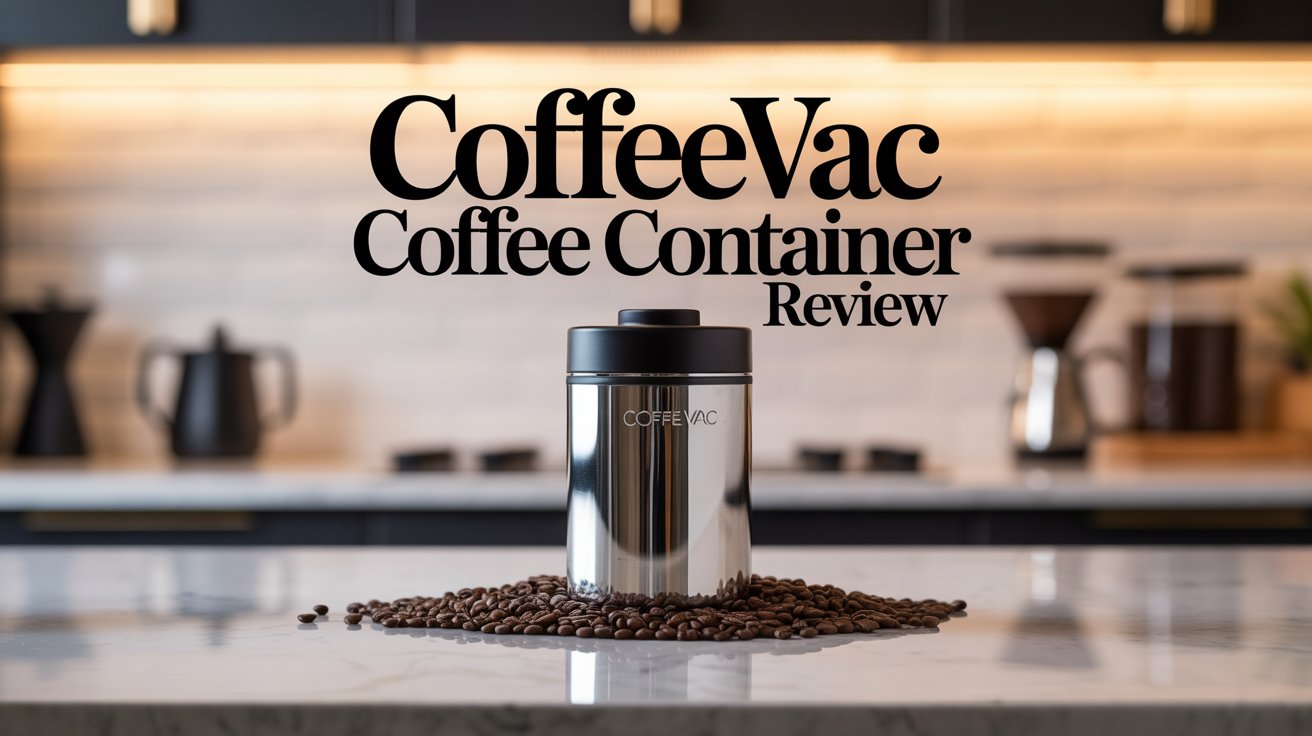
The Coffeevac is a press-seal coffee storage container designed to reduce air exposure inside the canister. Unlike ordinary airtight jars that simply trap air inside, Coffeevac actively pushes excess air out when you close the lid.
In most coffeevac review analyses, it’s positioned as a budget-friendly alternative to vacuum canisters, offering better freshness than standard storage without the complexity or cost of pump-based systems.
It’s important to understand: Coffeevac is not a high-tech vacuum device—it’s a practical, mechanical solution for everyday coffee storage.
Key Features at a Glance
- One-way valve system
Releases excess internal air when the lid is pressed down - BPA-free plastic construction
Lightweight, food-safe, and resistant to breakage - Multiple size options
Suitable for small daily use or bulk bean storage - Press-to-seal lid mechanism
No pumps, batteries, or manual vacuuming required
How Coffeevac Works (Vacuum System)
To properly evaluate performance, you need to understand how Coffeevac works—and what it doesn’t do.
Coffeevac uses an air displacement mechanism, not a true vacuum system. When you press the lid down:
- Air inside the container is forced out through a valve
- The lid seals once pressure equalizes
- Less oxygen remains trapped inside compared to a normal container
However, it does not remove all air. There’s no pump creating negative pressure, so technically it’s a low-oxygen environment—not a vacuum.
Why This Still Matters
Coffee freshness is heavily affected by oxygen exposure. The less oxygen present, the slower the degradation process.
- Oxygen causes oxidation, breaking down flavor oils
- This leads to flat, bitter, or cardboard-like taste over time
By reducing (not eliminating) oxygen, Coffeevac slows this process significantly compared to:
- Open bags
- Standard airtight containers
Do Coffee Containers Actually Keep Coffee Fresh?
Yes—but their effectiveness depends on how well they control air, light, heat, and moisture.
Coffee loses freshness due to two key processes:
1. Oxidation (Primary Cause of Staling)
When oxygen interacts with coffee oils and compounds:
- Aromas dissipate
- Flavor becomes dull and lifeless
2. CO₂ Degassing (Natural Process After Roasting)
Freshly roasted coffee releases carbon dioxide for several days:
- This gas initially protects the beans from oxygen
- Over time, as CO₂ escapes, beans become more vulnerable
Where Coffeevac Helps
- Reduces oxygen exposure after sealing
- Slows down oxidation rate
- Maintains aroma longer than standard containers
Where It Falls Short
- Cannot stop degassing (no container can)
- Does not remove all oxygen
- Not as effective as true vacuum-sealed systems
Bottom line:
Coffeevac extends freshness, but doesn’t preserve coffee indefinitely.
How Long Do Coffee Beans Stay Fresh in an Airtight Container?
Freshness isn’t binary—it declines gradually. Storage determines how fast that decline happens.
With Coffeevac (Air-Reduced Storage)
- Peak flavor: 7–14 days after opening
- Acceptable freshness: up to 2–3 weeks
Standard Airtight Container
- Peak flavor: 5–10 days
- Noticeable decline after ~2 weeks
Open Bag (No Proper Storage)
- Peak flavor: 2–5 days
- Rapid staling within a week
Quick Comparison
- Open bag: Maximum oxygen exposure → fastest flavor loss
- Airtight container: Slows staling but traps oxygen inside
- Coffeevac: Reduces oxygen → better freshness retention
Important Real-World Insight
Even with perfect storage:
- Coffee is best consumed within 2–4 weeks of roasting
- Grinding accelerates staling dramatically (minutes vs days)
So while Coffeevac improves storage, buying fresher coffee and storing whole beans still matters more.
Coffeevac Performance Test
To evaluate Coffeevac properly, performance should be judged under realistic home-use conditions—opening the container 1–2 times daily, storing whole beans at room temperature (away from light and heat), and comparing flavor over time.
Freshness Retention (Flavor Stability Over Time)
Coffeevac’s core job is slowing oxidation, and in real use it performs consistently better than standard airtight containers, though not at true vacuum level.
Observed freshness curve (whole beans):
- Days 1–5: Peak aromatics—bright acidity, sweetness, and origin notes remain intact
- Days 6–10: Slight reduction in aroma intensity; flavor still balanced and enjoyable
- Days 11–14: Noticeable flattening begins; complexity starts to fade
- Days 15–21: Muted aroma, reduced sweetness, more generic “coffee” taste
Why this happens:
- Coffeevac lowers oxygen exposure but doesn’t eliminate it
- Each opening introduces fresh oxygen, gradually accelerating staling
Key takeaway:
Coffeevac reliably extends the “good drinking window” to about 2–3 weeks, which is a meaningful improvement over bags or basic containers.
Ease of Use (One-Hand Usability & Daily Workflow)
Ease of use is one of Coffeevac’s strongest advantages.
- Press-down lid creates the seal instantly
- No alignment issues or mechanical parts
- Can be opened and resealed in seconds
In a daily routine (especially espresso prep), this matters:
- Faster than pump-based vacuum canisters
- Less friction → more consistent usage (important for real-world results)
Compared to competitors, Coffeevac is one of the most user-friendly options available.
Build Quality (Durability vs Premium Feel)
Coffeevac uses thick, BPA-free plastic, which prioritizes practicality over luxury.
Strengths:
- Impact-resistant (ideal for kitchens)
- Lightweight and portable
- No risk of shattering like glass
Limitations:
- Lacks premium tactile feel of stainless steel
- Can develop light scratches over time
- Seal performance depends on lid condition staying clean and intact
Structurally reliable, but visually and materially mid-tier rather than premium.
Smell Containment (Aroma Sealing Performance)
A good coffee container should trap volatile aromatic compounds—and Coffeevac performs well here.
- Minimal odor leakage in normal conditions
- Helps maintain a neutral kitchen environment
- Strong indicator of reduced air exchange
However:
- Not completely airtight at a molecular level
- Slight aroma release may occur over longer storage periods
Conclusion: Strong aroma containment, clearly better than standard jars, but not perfect.
Coffeevac vs Airscape (Which Is Better?)
The Airscape coffee canister is one of Coffeevac’s closest competitors, but the two use fundamentally different approaches to air control.
Core Technology Difference
- Coffeevac:
Uses pressure to push air out through a valve (air displacement) - Airscape:
Uses an inner compression lid to physically reduce the air volume inside
Airscape minimizes the air around the beans, while Coffeevac reduces air inside the container overall.
Detailed Pros & Cons Comparison
1. Freshness Performance
- Airscape:
More consistent freshness over longer periods (especially beyond 2 weeks) - Coffeevac:
Very effective short-term (up to ~2–3 weeks), slightly less stable long-term
2. Ease of Use
- Coffeevac:
Faster, simpler, one-press operation - Airscape:
Requires controlled lid placement and adjustment
3. Durability & Materials
- Airscape:
Stainless steel → more durable, premium, opaque (better light protection) - Coffeevac:
Plastic → durable but less premium, may allow minimal light exposure
4. Price & Value
- Coffeevac:
Lower cost, high value for everyday users - Airscape:
Higher cost, justified by build and slightly better performance
Verdict: Which Is Better for You?
- Choose Coffeevac if you:
- Open your container frequently
- Want fast, effortless usability
- Prefer a budget-friendly option
- Choose Airscape if you:
- Store coffee for longer periods
- Prioritize maximum freshness retention
- Want a premium, long-lasting build
Bottom line:
Coffeevac is optimized for convenience and value, while Airscape is optimized for precision and performance.
Vacuum vs Airtight Coffee Container (Which Is Better?)
This is one of the most misunderstood areas in coffee storage.
Airtight Container (Standard)
- Prevents new air from entering
- Traps existing oxygen inside
- Slows—but does not significantly reduce—oxidation
Vacuum Container (True Vacuum)
- Uses a pump or mechanism to remove air
- Creates low-pressure environment
- Provides maximum oxidation resistance
Where Coffeevac Fits
Coffeevac sits between these two categories:
- Not fully airtight in the traditional sense
- Not a true vacuum system
- Best described as an air-reduction container
This distinction is important for setting realistic expectations.
Which Should You Choose?
- Fast consumption (within 1–2 weeks):
Coffeevac is more than sufficient - Slow consumption / bulk storage:
Vacuum or Airscape-style systems perform better - Convenience-first users:
Coffeevac offers the best usability-to-performance ratio
Is Coffeevac One of the Best Airtight Coffee Containers?
Within its category, Coffeevac is one of the strongest value options, but it’s not the absolute top performer in every scenario.
Comparison Positioning
- vs Airscape:
Easier and cheaper, but slightly less effective for long-term freshness - vs Veken canisters:
Coffeevac generally offers better air control, while Veken focuses more on design and materials
Where Coffeevac Excels
- Simplicity and speed
- Consistent everyday performance
- Strong price-to-performance ratio
Where It Falls Short
- Not a true vacuum system
- Less premium materials
- Slightly weaker long-term freshness vs top-tier competitors
Final Positioning
Coffeevac is best described as:
A high-value, mid-performance coffee storage solution
It’s ideal for most users who:
- Buy coffee regularly
- Consume within a few weeks
- Want better freshness without complexity
Coffeevac vs Veken Coffee Canister
When comparing Coffeevac with the Veken coffee canister, the real difference is not just design—it’s how each one manages oxygen exposure and long-term flavor stability.
Build Quality (Plastic vs Stainless Steel)
- Coffeevac: BPA-free thick plastic, lightweight, impact-resistant, practical for daily kitchen use
- Veken: Stainless steel exterior, more premium feel, better light protection, more rigid structure
Key insight:
Stainless steel (Veken) better protects from light and heat, while Coffeevac focuses on functional usability and affordability.
Seal System (Critical Difference)
- Coffeevac: Uses an air displacement system that pushes air out when closing
- Veken: Uses a traditional airtight lid with silicone gasket seal
Important technical distinction:
- Coffeevac = reduces internal oxygen level (not fully vacuum)
- Veken = blocks new air entry but does not remove trapped oxygen
This means Coffeevac may perform slightly better in short-term freshness, while Veken provides stable passive sealing.
Value for Money
- Coffeevac: Strong value for everyday users who prioritize convenience and functional freshness improvement
- Veken: Better for users who want aesthetic, durable kitchen storage with solid but basic airtight performance
Verdict:
- Choose Coffeevac if you prioritize freshness improvement + ease of use + affordability
- Choose Veken if you prioritize design, durability, and kitchen presentation
In performance terms: Coffeevac has a slight edge
In premium feel: Veken wins clearly
Best Coffee Storage Method for Freshness
The container matters, but storage conditions often matter even more.
1. Store in Dark, Cool, Dry Environment
Coffee deteriorates faster due to:
- Heat → accelerates oil breakdown
- Light → degrades aromatic compounds
- Moisture → introduces instability and stale flavors
Best practice:
Keep beans in a sealed container inside a pantry or cabinet away from sunlight and heat sources.
2. Avoid Refrigerator and Freezer (Daily Use)
Despite popular belief, refrigeration is usually harmful for daily coffee storage:
- Temperature changes create condensation inside the container
- Coffee absorbs surrounding odors (fridge smell contamination risk)
- Repeated opening causes moisture cycles
Exception:
Freezing is only useful for long-term bulk storage in sealed portioned bags, not for daily use.
3. Whole Beans vs Ground Coffee
- Whole beans: slower oxidation, longer shelf life
- Ground coffee: rapid oxidation due to large surface exposure
Rule of thumb:
Grinding should happen just before brewing for maximum flavor preservation.
Glass vs Stainless Steel vs Plastic Coffee Canisters
Different materials impact freshness indirectly through light exposure, sealing reliability, and durability.
Plastic (Coffeevac Style)
- Lightweight and practical
- Good impact resistance
- May allow slight light penetration depending on thickness
Best for: daily convenience and budget-friendly storage
Stainless Steel
- Fully blocks light
- Highly durable and long-lasting
- Often used in premium storage systems
Best for: maximum protection and long-term durability
Glass
- Aesthetic and visually appealing
- Allows visibility of beans
- Poor protection against light and breakage risk
Best for: short-term display, not optimal freshness storage
Summary:
- Best performance: Stainless steel
- Best practicality: Plastic (Coffeevac type)
- Best aesthetics: Glass
How to Choose a Coffee Storage Container
Choosing correctly depends on how you consume coffee.
1. Airtight Efficiency
Look for:
- Strong seal design
- Minimal oxygen exchange
- Consistent closure system
Better seal = slower oxidation = better flavor retention
2. Material Choice
- Plastic → practical, lightweight
- Stainless steel → premium, protective
- Glass → aesthetic but fragile
3. Size Matching
- Small containers = less air exposure after opening
- Oversized containers = more trapped oxygen
Ideal strategy: match container size to weekly consumption
4. Ease of Use
A complex system reduces real-world usage consistency.
Best container = one you will actually use daily without friction
Is Coffeevac Worth It?
Coffeevac is not a luxury product—it is a functional freshness improvement tool.
Best For:
- Daily coffee drinkers
- Budget-conscious users
- People who finish beans within 2–3 weeks
- Users who want simple, fast storage
Not Ideal For:
- Premium aesthetics-focused users
- Long-term storage beyond 3–4 weeks
- Users expecting true vacuum-level preservation
Final Decision Logic
- If your priority is convenience + decent freshness improvement → YES, Coffeevac is worth it
- If your priority is maximum preservation + premium build → consider higher-end systems
Pros and Cons Summary
Pros
- Easy and fast to use
- Affordable compared to premium containers
- Noticeably improves freshness vs standard storage
Cons
- Not a true vacuum system
- Plastic build lacks premium feel
- Limited long-term preservation capability
FAQ
How does Coffeevac keep coffee fresh?
Coffeevac reduces oxygen inside the container by pushing air out during sealing. This slows oxidation, which is the main cause of coffee flavor loss.
Is Coffeevac better than Airscape?
Coffeevac is easier and cheaper, while Airscape provides slightly better long-term freshness due to its inner compression lid system. Airscape wins on performance; Coffeevac wins on convenience.
Can Coffeevac remove all air?
No. Coffeevac does not create a true vacuum. It reduces internal air but cannot fully eliminate oxygen.
How long can coffee last in Coffeevac?
Whole beans typically maintain good flavor for about 2–3 weeks under proper storage conditions.
Conclusion
This coffeevac coffee container review shows that Coffeevac is not a laboratory-grade preservation system—but it is a highly practical and effective everyday coffee storage solution.
It delivers a strong balance of:
- Simplicity
- Improved freshness retention
- Affordable pricing
For most coffee drinkers, especially those who consume beans within a few weeks, Coffeevac is a high-value upgrade over basic storage methods.
However, if your goal is maximum long-term preservation or premium build quality, alternatives like Airscape-style systems or stainless steel containers may be more suitable.
Coffeevac is not perfect—but for everyday use, it is one of the most practical and cost-effective options available.

Shahriar brings a unique blend of storytelling prowess and digital expertise to Daily Coffee Guide. With a background in SEO and content strategy, he ensures our articles on Beans, Coffee, Tea, and Drinks are both engaging and discoverable. His passion for coffee culture drives him to explore and share the rich narratives behind every cup.