
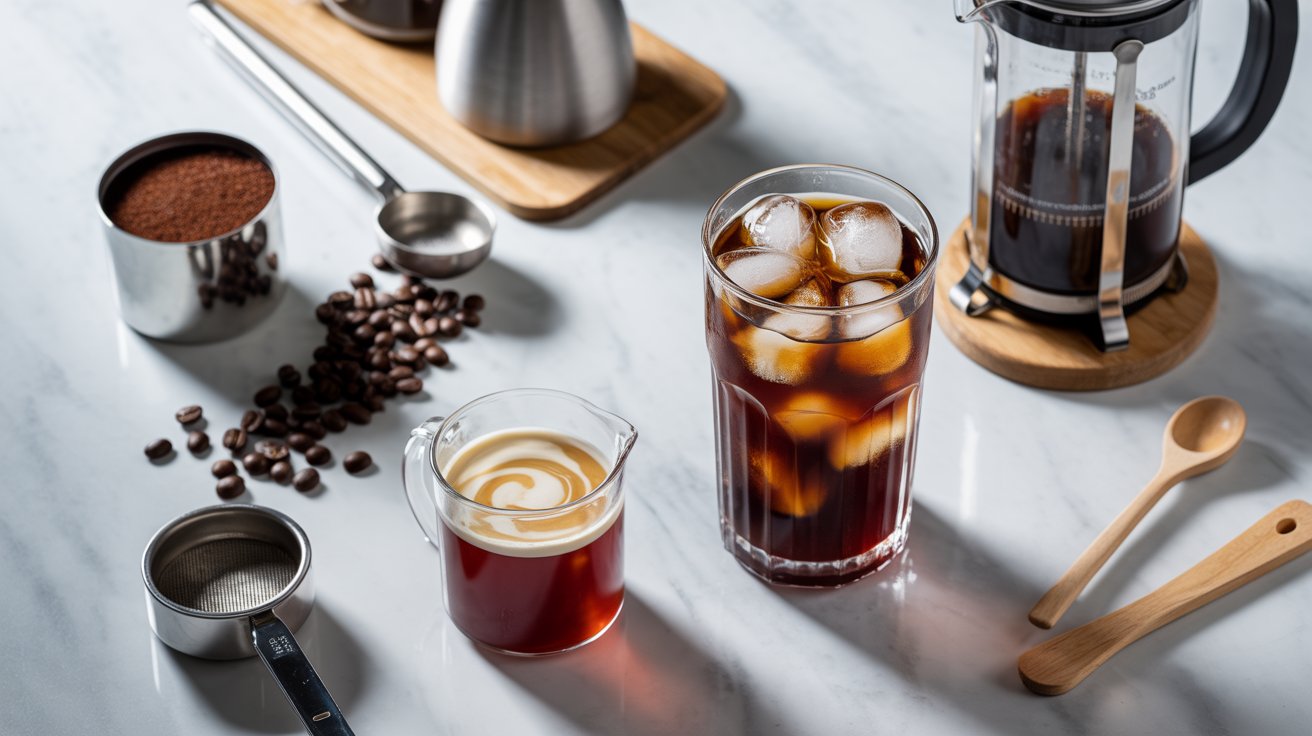
You want to know how to make decaf iced coffee that actually tastes like the real thing — smooth, bold, and refreshing, not weak or watery. Here’s the truth: it’s 100% possible… if you brew it the right way.
Most people think decaf means “flavorless.” I used to think the same — until I started experimenting with different brewing ratios and bean types. My early attempts? Flat, bitter, and barely worth drinking. But once I figured out how to unlock flavor without caffeine, everything changed.
Here’s the kicker: it’s not about fancy gear or barista tricks. It’s about a few small tweaks — the kind that make your iced coffee taste rich, balanced, and café-level good, even when it’s decaf.
In the next few minutes, you’ll learn exactly how to do it — step-by-step, no guesswork, no wasted beans. Ready to make the best-tasting decaf iced coffee you’ve ever had? Let’s dive in.
Why Decaf Iced Coffee Deserves a Spot in Your Routine
Let’s be honest — we love coffee. But caffeine doesn’t always love us back.
If you’ve ever had the 3 p.m. caffeine crash, restless sleep, or racing heart after one too many cold brews, you’re not alone. According to the National Coffee Association (NCA), 66% of Americans drink coffee daily — yet more than 25% of them actively seek low- or no-caffeine options. According to the National Coffee Association, methods like the Swiss Water Process retain up to 97% of a bean’s natural taste and aroma, giving you the same bold experience — just without the caffeine.
That’s where decaf iced coffee steps in. It gives you the same ritual — the clink of ice, the aroma, the cool sip — without the side effects. Perfect for:
Late-night coffee lovers
Pregnant or breastfeeding individuals (with doctor approval)
Anyone sensitive to caffeine or managing anxiety
People who simply want better sleep and steady energy
I switched to decaf iced coffee when my afternoon cold brew started wrecking my focus. Within a week, I was sleeping better and still getting that satisfying “coffee moment” every afternoon. No jitters. No crash. Just calm energy.
Health and Lifestyle Benefits (Better Sleep, No Jitters, All Flavor)
Decaf doesn’t mean “anti-coffee.” It means smarter coffee.
Here’s why more baristas — from Blue Bottle Coffee to Intelligentsia — are highlighting decaf on their menus:
Better Sleep Quality: Caffeine stays in your system for up to 10 hours. Switching your afternoon drink to decaf means deeper, faster sleep.
Reduced Anxiety and Heart Rate Spikes: Decaf keeps your cortisol (the stress hormone) stable — no post-coffee shakes.
Gentler on the Stomach: Decaf tends to be less acidic, especially when brewed cold, making it easier on digestion.
All the Antioxidants, Less of the Buzz: Decaffeination (especially via the Swiss Water Process) removes caffeine while keeping the polyphenols — the compounds that give coffee its health perks and bold taste.
Think of it this way: decaf iced coffee lets you enjoy café-level flavor and still wind down peacefully at night.
Quick Myth-Buster — Is Decaf Iced Coffee Flavorless? (Spoiler: No.)
This one’s easy — only if you brew it wrong.
Flavor loss happens when you use low-quality beans or over-dilute your coffee with ice. The fix? Use medium-roast, Swiss Water Process decaf beans from trusted roasters like Volcanica Coffee, Lifeboost, or Kicking Horse. These retain natural oils and flavor compounds, giving your iced coffee that caramel-smooth body you expect from the real thing.
Decaf iced coffee brewed right tastes bold, nutty, and refreshing — especially when cold brewed. Cold brewing reduces bitterness by 60–70% (source: Toddy Cold Brew Research), meaning your decaf actually tastes better than many hot-brewed versions.
Decaf vs Regular Iced Coffee — Taste, Caffeine, Health
| Aspect | Regular Iced Coffee | Decaf Iced Coffee |
|---|---|---|
| Caffeine (8 oz) | ~95 mg | ~2–5 mg |
| Acidity | Medium–High | Lower |
| Flavor | Bold, bitter if over-extracted | Smooth, balanced |
| Sleep Impact | Disruptive after 3 p.m. | None |
Read Also:
What You’ll Need to Make the Perfect Decaf Iced Coffee
For iced coffee, bean selection is everything.
Light Roast: Bright, citrusy, and tea-like. Works great if you enjoy crisp, refreshing notes.
Medium Roast: Balanced, chocolatey, and smooth — perfect for that “coffee shop” flavor at home.
Dark Roast: Often overpowers when iced; tends to taste smoky or flat once cooled.
Choose decaf beans made via the Swiss Water Process (used by brands like Koffee Kult, No Fun Jo, and Lavazza Decaffeinato). This chemical-free decaffeination preserves 99% of flavor compounds.
If you want something foolproof: medium-roast Colombian or Ethiopian decaf brings a caramel-sweet profile that holds up beautifully over ice.
Grind Size, Water Ratio, and Why It Matters for Decaf
Your grind determines your flavor. Period.
Cold Brew Method: Use coarse grind (similar to sea salt). Ratio: 1 cup coffee → 4 cups cold water. Steep 12–18 hours.
Classic Iced Coffee Method: Use medium grind. Brew hot (1 tablespoon per 6 oz water), then cool.
Instant Decaf Shortcut: Mix 2 teaspoons instant decaf with 6 oz cold water. Add milk and ice. Done.
Pro Tip: Because decaf beans are slightly drier (from the caffeine extraction process), use 5–10% more grounds than usual to maintain strength.
Gear Guide (Budget → Pro Setups: Mason Jar to Cold Brew System)
You don’t need a barista setup to make killer decaf iced coffee. Here’s your spectrum:
Budget Setup: Mason jar + fine mesh strainer or paper filter.
Mid-Range Setup: French press or AeroPress for hot-over-ice brewing.
Pro Setup: OXO Cold Brew System, Toddy Brewer, or Hario Mizudashi for consistent results.
Want to level up? Pair with a Burr Grinder (like the Baratza Encore) for even extraction and better control.
Optional Add-Ins for Flavor — Milk, Syrups, Spices
Here’s where decaf iced coffee gets personal.
For Creaminess: Whole milk, oat milk, or half-and-half.
For Sweetness: Homemade vanilla syrup, caramel drizzle, or honey.
For Spice: Cinnamon, cardamom, or nutmeg.
For Extra Smoothness: A dash of simple syrup (it dissolves better in cold drinks than sugar).
Flavor Hack: Make coffee ice cubes — freeze leftover decaf brew to keep your drink cold without dilution.
Step-by-Step: How to Make Decaf Iced Coffee at Home
Option 1
If you want coffee now, this is your fastest route to barista-quality decaf iced coffee.
You’ll Need:
Freshly ground decaf beans (medium roast preferred — e.g., Lifeboost Decaf Medium Roast or Lavazza Decaffeinato)
Filtered water
Brewer: Drip machine, Chemex, or AeroPress
Ice cubes
Steps:
Grind and Measure: Use a medium grind — 1 tablespoon of grounds per 6 oz water.
Brew Hot: Brew your decaf as you normally would, aiming for a strong extraction (slightly stronger than usual).
Cool Fast: Pour into a heat-safe carafe, then place it in the fridge or freezer for 10–15 minutes.
Serve: Pour over ice in a glass, leaving space for milk or syrups.
Pro Tip: Use coffee ice cubes instead of regular ones to prevent watering down your brew (see “Bonus” below).
Option 2
The gold standard for smooth, low-acid coffee — and perfect for decaf.
You’ll Need:
Coarse-ground Swiss Water Process decaf beans (brands: Kicking Horse, Volcanica, No Fun Jo)
Cold filtered water
A jar, French press, or OXO Cold Brew System
Steps:
Combine: Add 1 cup grounds to 4 cups cold water in your container.
Stir & Steep: Mix well, then cover and refrigerate for 12–24 hours.
Strain: Use a fine mesh filter, cheesecloth, or press down gently with your French press plunger.
Serve: Pour over ice. Dilute with water or milk to taste.
Steep Timer Tip: For bolder flavor, go 20–24 hours. For a smoother taste, 12–16 hours works beautifully.
Option 3
No gear? No problem. This one’s your weekday lifesaver.
You’ll Need:
2 teaspoons of instant decaf coffee (try Mount Hagen or Nescafé Taster’s Choice Decaf)
6 oz cold or room-temperature water
Ice, milk, or flavor add-ins
Steps:
Mix instant decaf with 2 tablespoons of hot water to dissolve.
Add cold water and stir briskly.
Fill a glass with ice and pour the mixture over.
Customize — add oat milk, caramel syrup, or a sprinkle of cinnamon.
Pro Tip: Shake it in a mason jar or cocktail shaker for that creamy, frothy top layer.
Bonus
Ever sip iced coffee that tasted like flavored water halfway through? This fixes that.
How-To:
Brew any decaf coffee (classic or cold brew).
Cool to room temperature.
Pour into an ice tray and freeze overnight.
Use these cubes in any iced coffee — they melt into flavor, not water.
Hack: Add a dash of vanilla extract or oat milk to your ice cubes for a subtle flavor boost.
Expert Tips for Full Flavor (Without the Caffeine)
Even the best decaf beans can taste weak if your ratio’s off. Here’s the sweet spot:
| Brew Method | Coffee-to-Water Ratio | Ideal Brew Time | Flavor Profile |
|---|---|---|---|
| Hot Brew (Iced) | 1:12 | 4–6 min | Bright, balanced |
| Cold Brew | 1:4 | 12–24 hrs | Smooth, low-acid |
| Instant | 1 tsp per 3 oz | 30 sec stir | Light, quick |
Insider Tip: Because decaf beans lose a touch of density during caffeine removal, add 10% more grounds for full-bodied flavor.
Storage Hacks — Keep Flavor for 3 Days+
You can store cold brew concentrate for up to 7 days in an airtight glass bottle (like Takeya Cold Brew Pitcher).
For ready-to-drink iced coffee, aim to consume within 72 hours. Keep it sealed to prevent oxidation — the main cause of “stale” flavor.
Avoid plastic containers; they trap odors. Glass = fresher, cleaner taste.
Decaf Beans That Shine Iced (Swiss Water vs Solvent Process)
Not all decaf is created equal.
Swiss Water Process: 100% chemical-free, uses osmosis and water filtration to remove caffeine. Retains up to 99% of the original flavor.
Solvent-Based Process (Methylene Chloride or Ethyl Acetate): Safe, but often flattens taste over time.
For iced coffee, Swiss Water Process wins — especially from roasters like Volcanica, Kicking Horse, or Blue Bottle’s decaf lineup.
Pairing Ideas — Milk, Creamers, and Flavor Infusions
Level up your decaf iced coffee with intentional pairings:
Milks: Oat milk (sweet and creamy), almond milk (nutty), or whole milk (classic).
Creamers: Vanilla, caramel, or coconut-based for tropical notes.
Infusions: Add orange peel, cinnamon sticks, or even lavender for café-level aroma.
Pro Tip: Chill your milk before pouring — warm milk kills cold brew’s texture.
Common Mistakes People Make (and How to Fix Them)
A weak or flat-tasting decaf iced coffee almost always comes down to one thing: wrong ratio.
Decaf beans, especially those processed via Swiss Water or CO₂ decaffeination, are slightly less dense — meaning they extract faster but also dilute easily if under-brewed.
Fix It Fast 🔧
Brew 10–15% stronger than you would regular coffee.
For cold brew, use a 1:4 ratio (1 cup grounds to 4 cups water).
For hot brew, reduce ice volume by one-third to avoid over-dilution.
Try brands like Volcanica Decaf Espresso or Kicking Horse Decaf — they’re crafted for richer flavor retention when chilled.
Pro insight: Always cool your brew before adding ice. Pouring hot coffee directly over ice instantly kills concentration and balance.
Using Hot Brew Directly Over Ice → Flavor Dilution Explained
That “meh” taste you get halfway through your drink? That’s thermal shock and rapid dilution at work.
When boiling coffee hits ice, you don’t just melt cubes — you destabilize flavor compounds and flatten aromatic oils like chlorogenic acids and melanoidins that give coffee its depth.
Fix It Fast 🔧
Flash-chill your hot decaf before icing: refrigerate 10–15 minutes.
Or skip the heat: go with a cold brew method for naturally smooth, consistent flavor.
If you love hot brew’s brightness, use coffee ice cubes to retain strength while chilling.
Storing Decaf Coffee Wrong → Oxidation & Taste Loss
Stale-tasting decaf is often storage sabotage. Once brewed, oxygen and light start breaking down flavor molecules — faster than you think.
Fix It Fast 🔧
Store in airtight glass (avoid plastic; it traps odors).
Keep your decaf cold brew or concentrate for up to 7 days max.
Never freeze brewed coffee; it alters its oils and texture.
Buy beans in vacuum-sealed bags and grind right before brewing.
Quick data point: According to the National Coffee Association, brewed coffee loses 40% of its aromatics within 3 hours if left uncovered.
Assuming All Decaf = Zero Caffeine → Reality Check
Here’s the truth: decaf doesn’t mean caffeine-free.
Most decaf coffees retain about 2–5 mg of caffeine per 8 oz, compared to 95 mg in regular. It’s small — but not zero. That’s why some people still feel a mild energy lift after a few cups.
Fix It Fast 🔧
If you’re ultra-sensitive, look for Swiss Water Process decaf labeled “99.9% caffeine-free.”
Avoid “naturally decaffeinated” options using ethyl acetate, which can leave trace caffeine behind.
Double-check brand lab results; Lifeboost Decaf and Peet’s Decaf Major Dickason’s Blend are tested for <0.1% caffeine.
Decaf vs Regular Iced Coffee: Flavor & Experience Compared
Regular coffee tends to carry more bite and aroma due to caffeine’s natural bitterness. Decaf, on the other hand, leans smoother, sweeter, and slightly nutty — ideal for iced drinks.
Real-World Flavor Snapshot:
| Type | Taste Profile | Acidity | Mouthfeel | Ideal For |
|---|---|---|---|---|
| Regular Iced Coffee | Bold, sharp, aromatic | High | Crisp | Morning energy |
| Decaf Iced Coffee | Smooth, mellow, chocolatey | Low | Silky | Afternoon/evening enjoyment |
Expert insight: Because caffeine influences perception of bitterness, removing it reveals natural sweetness — especially in medium roast decafs like Blue Bottle Decaf Noir or Stumptown Trapper Creek.
Brew Method Adjustments for Decaf
Decaf beans are more porous post-decaffeination. That means they extract flavor faster — but also risk over-extraction if left too long.
Pro Ratios:
Hot brew: Brew 5–10 seconds shorter than with regular beans.
Cold brew: Stick to 12–18 hours (not 24+).
Grind: Slightly coarser grind prevents bitterness.
Science note: The Swiss Water Process removes caffeine using osmosis and carbon filtration — but it also softens the bean matrix, making time and grind precision critical.
Cost Comparison (Home vs Café)
Iced coffee at a café averages $4–6 per cup, while homemade decaf versions cost around $0.60–$1.20 — even with premium beans.
Quick Breakdown:
| Source | Average Cost | Control Over Brew | Freshness |
|---|---|---|---|
| Starbucks / Dunkin’ | $4.25–$6.00 | Low | Medium |
| Home Brew (Decaf) | $0.80 | High | Highest |
Money-Saving Hack: Buy whole decaf beans in bulk from roasters like Volcanica, No Fun Jo, or Kicking Horse. Grind fresh weekly for peak flavor and minimal waste.
Health Effects and Caffeine Chart
Decaf retains antioxidants like polyphenols and hydrocinnamic acids — so you still get most of coffee’s health benefits without caffeine-induced anxiety, insomnia, or acid reflux.
| Drink Type | Avg. Caffeine (8 oz) | Key Health Impact |
|---|---|---|
| Regular Iced Coffee | 95 mg | Boosts alertness but may cause jitters |
| Decaf Iced Coffee | 2–5 mg | Supports relaxation and better sleep |
| Half-Caf | 45–50 mg | Mild energy boost, lower crash risk |
Backed by: Harvard Health, National Library of Medicine, and Healthline research on decaf’s antioxidant retention and minimal caffeine traces.
FAQs
Is decaf iced coffee really caffeine-free?
Not quite — most decaf iced coffee contains about 2–5 mg of caffeine per 8 oz, compared to ~95 mg in regular iced coffee. If you’re highly sensitive, go for beans processed with the Swiss Water Process (chemical-free method) which removes ~99% of caffeine.
Can I use instant decaf coffee for iced coffee?
Yes — instant decaf is a legit shortcut. Just dissolve 2 teaspoons of your fav brand (e.g., Mount Hagen or Nescafé Taster’s Choice Decaf) in a bit of hot water, then add ice and cold water. It won’t match a full cold brew’s depth, but it works when you’re short on time.
How long does decaf cold brew last?
If you store it correctly — in an airtight glass bottle, refrigerated — your decaf cold brew can stay fresh for up to 7 days. Many at-home brewers report flavor begins to fade after day 5.
What’s the best decaf coffee for iced drinks?
Look for medium-roast decaf beans processed via Swiss Water or supercritical CO₂ methods. Brands like Volcanica Coffee, Kicking Horse and Blue Bottle Coffee decaf lines showcase smooth chocolatey or nutty flavor profiles that hold up well over ice.
Conclusion: Your Decaf Iced Coffee Era Starts Now
You don’t need caffeine to craft coffee that hits all the right notes. You just need the right beans, a smart brew method, and the confidence to chill your way to café-level flavor — minus the jitters.
Now it’s your turn. Grab your decaf beans, set your ratio, and start brewing your first smooth, flavor-rich glass today. The first sip will prove it’s not “just decaf” — it’s your new ritual.

Shahriar brings a unique blend of storytelling prowess and digital expertise to Daily Coffee Guide. With a background in SEO and content strategy, he ensures our articles on Beans, Coffee, Tea, and Drinks are both engaging and discoverable. His passion for coffee culture drives him to explore and share the rich narratives behind every cup.