
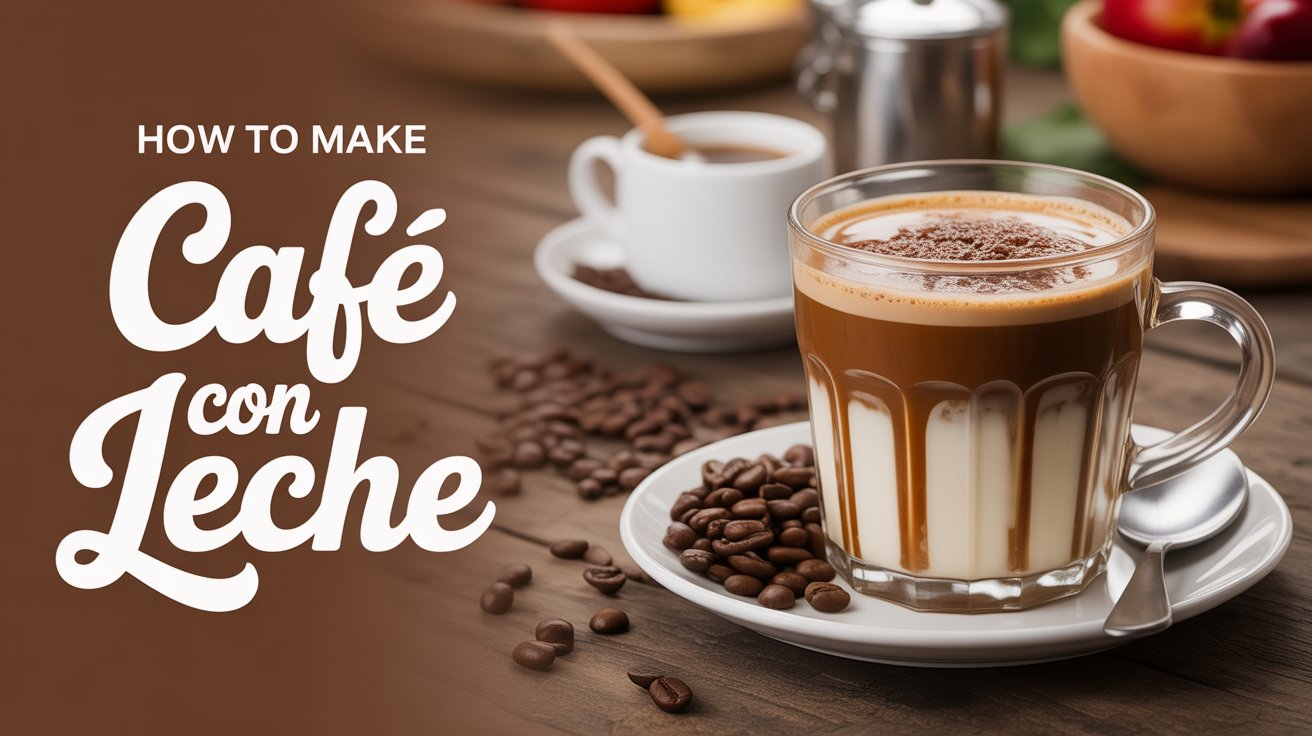
Tired of watery, bland coffee at home? Want to know how to make café con leche that’s rich, creamy, and café-quality without leaving your kitchen?
Making café con leche isn’t just about pouring milk into coffee. The right ratio, proper milk texture, and brewing method make all the difference. I’ve spent years testing espresso machines, moka pots, and frothers to perfect this classic drink — and in this guide, I’ll show you exactly how to make café con leche that tastes like a pro made it.
What Is Café Con Leche?
Café con leche is not just coffee with milk. It’s a carefully balanced drink where strong, robust coffee meets perfectly heated milk, creating a creamy, flavorful beverage that reflects centuries of Spanish and Latin American tradition. If your goal is to make café-quality coffee at home, understanding what makes this drink distinct is the first step.
Experience & Depth
In Spain, café con leche is a breakfast staple, often enjoyed with a croissant or toasted bread. In Cuba or Puerto Rico, it can include sweetened condensed milk, creating a richer, dessert-like version. The secret lies in the technique: the coffee must be concentrated and bold, and the milk must be heated to just the right temperature to preserve sweetness without scalding. Over the years, I’ve experimented with espresso machines, moka pots, and even stovetop espresso makers to capture the authentic flavor at home — each method slightly tweaks the drink’s texture and aroma.
Key Insight:
Café con leche isn’t defined by the milk alone — it’s the harmony between a strong, aromatic coffee base and milk that’s heated and poured with precision. The ratio, technique, and cultural tradition make all the difference, turning a simple cup of coffee into a nuanced, café-quality experience.
Ingredients & Tools You’ll Need
To make café con leche that rivals a café, you need the right ingredients and equipment.
Core Ingredients
Experience & Depth:
Coffee: Use strong, concentrated coffee. Espresso is ideal, but a moka pot brew works perfectly for stovetop enthusiasts. Avoid weak drip coffee if you want that classic depth.
Milk: Whole milk gives richness, but plant-based options like oat or almond can create silky textures too. Heat carefully to maintain sweetness.
Optional Sweeteners: Some variations call for sugar or sweetened condensed milk, especially in Cuban-style café con leche. Taste and adjust according to preference.
Tools & Equipment
Experience & Depth:
Espresso machine: Fast, precise, produces authentic crema. Perfect for café-style preparation.
Moka pot: Affordable, stovetop-friendly, delivers concentrated coffee with minimal fuss.
French Press: Good for bold coffee, but may require additional techniques to mimic espresso strength.
Milk frother / steam wand / whisk: Key for achieving creamy, airy milk. Even a hand frother can transform texture.
Digital thermometer: Optional but invaluable for heating milk to the ideal 60–65°C (140–149°F) without scalding.
Pro Tip:
Invest in a reliable frother or thermometer. The difference between mediocre and café-quality milk is subtle but critical. Small tools create big flavor impact.
Step‑by‑Step Process (How To Make Café Con Leche)
This is the core of making café con leche at home. Want clear, actionable instructions you can follow in one go — whether they have an espresso machine, a moka pot, or just basic kitchen tools? This directly supports the goal: achieving café-quality results quickly and reliably.
Traditional Spanish Method (Espresso + Steamed Milk)
Experience & Depth:
Prep espresso: Brew a strong, concentrated shot using an espresso machine. Freshly ground arabica beans yield the best aroma.
Scald/steam milk: Heat milk to 60–65°C (140–149°F) using a steam wand or frother. Avoid boiling; it kills natural sweetness.
Combine & serve: Pour milk slowly into the espresso, creating a creamy texture and gentle foam on top.
Pro Tip:
A small frothing pitcher and thermometer make a big difference in achieving silky microfoam that blends perfectly with espresso.
Moka Pot Method (No Espresso Machine Needed)
Experience & Depth:
Brew concentrated coffee: Fill the moka pot with finely ground coffee and water. Heat over medium flame until you hear the signature gurgle.
Ratio guidance: Use equal parts strong coffee and milk for a classic café con leche. Adjust slightly for preference — more coffee for intensity, more milk for creaminess.
Pro Tip:
Swirl the milk gently after steaming to create uniform texture. Even without a steam wand, hand frothing can mimic the classic mouthfeel.
Variations
Experience & Depth:
Cuban version: Incorporates sugar paste or espuma for a sweeter, richer drink. Beat sugar into espresso until thick and frothy before adding milk.
Puerto Rican / Latin American style: Often uses sweetened condensed milk and may adjust the coffee-to-milk ratio for local taste preferences.
Pro Tip:
Experiment with spice additions like cinnamon or vanilla to add depth without overpowering the coffee.
Quick Printable Recipe Card
Experience & Depth:
Ingredients list: Espresso or strong coffee, milk (or alternative), optional sugar/condensed milk
Steps + timing: Brew coffee (2–3 min), heat milk (2–3 min), combine and serve
Nutrition (optional): Calories, sugar content, milk alternatives
Pro Tip:
Keep a printed or digital card handy in your kitchen for consistent results, especially if making multiple variations for family or guests.
Ratio, Texture & Flavor Mastery
Achieving café-quality café con leche depends on more than following steps. This section addresses common performance pain points like strength, sweetness, and texture — essential for first-time home baristas.
Ideal Coffee : Milk Ratios
Experience & Depth:
Start with a 1:1 ratio (coffee:milk) for balanced flavor.
Adjust according to preference:
More coffee → stronger, slightly bitter profile
More milk → creamier, sweeter mouthfeel
Pro Tip:
Experiment with ratios using a small 100ml cup first — easier to tweak before scaling up.
Milk Temperature for Best Texture
Experience & Depth:
Heat milk to 60–65°C. Below 60°C, it feels cold; above 70°C, sweetness diminishes.
Non-dairy alternatives: oat or almond milk can foam differently; gently whisk to avoid separation.
Pro Tip:
Use a thermometer for precision, or learn the fingertip test: milk should feel hot but not scalding.
Sweetening Options & Flavor Twist Ideas
Experience & Depth:
Sugar: Granulated or brown, adjust to taste
Condensed milk: Cuban-style richness
Spices: Cinnamon, vanilla, or nutmeg can enhance aroma and complexity
Pro Tip:
Add spices to milk while heating, not espresso, to prevent bitterness and achieve uniform flavor.
Expert Tips & Troubleshooting
Struggling to get that café-quality café con leche at home? One wrong move — overboiled milk, weak coffee, or lumpy sugar — and your cup falls flat. Master these simple tricks, perfect your ratios, and unlock creamy, aromatic perfection with every sip.
Common Mistakes & Myths
Experience & Depth:
Too watery / not strong enough: Using weak drip coffee dilutes flavor. Concentrated espresso or moka pot brew is essential for richness.
Using regular brewed coffee vs strong brew: Standard coffee lacks the intensity to balance steamed milk; always prioritize espresso-style extraction.
Skipping proper milk heating: Milk that is underheated produces thin, flat texture; overheated milk loses sweetness and scorches easily.
Pro Tip:
Always measure coffee and milk by volume or weight to maintain consistent flavor — a small oversight can drastically alter taste.
Pro Barista Techniques
Experience & Depth:
Perfect crema/foam: Use fresh, fine-ground arabica beans. Froth milk in a circular motion for smooth microfoam that integrates seamlessly with espresso.
Latte art vs classic café con leche look: While latte art is optional, a gentle pour enhances texture and presentation. Classic café con leche favors a creamy surface without elaborate patterns.
Pro Tip:
Even a basic frothing wand can create café-level texture. Focus on gentle aeration to avoid large bubbles.
Red Flags & How to Fix Them
Experience & Depth:
Milk scalded/burnt: Quickly whisk milk off heat or lower temperature to 60–65°C to preserve sweetness.
Bitter coffee: Over-extracted espresso or stale beans are the usual culprits; grind fresh and calibrate your machine.
Lumpy sugar paste: Dissolve sugar into hot espresso before adding milk; for condensed milk, whisk gently to achieve smooth consistency.
Pro Tip:
Taste as you go. Adjust extraction time, milk heat, and sweetener gradually to match desired flavor profile.
Café Con Leche vs Similar Drinks
Café con leche blends strong coffee or espresso with hot milk, giving a bold yet creamy cup. Unlike a latte, it uses less milk and no microfoam, and unlike café au lait, it relies on espresso or very strong coffee for intensity. Regional variations also matter — Cuban versions are sweeter, while Spanish-style stays balanced and smooth.
Café Con Leche vs Latte vs Café au Lait
Experience & Depth:
Café con leche: Equal parts strong coffee and milk, creamy texture, often slightly sweet.
Latte: Espresso-based, higher milk-to-coffee ratio, microfoam creates light, airy texture.
Café au lait: French-style, uses drip or brewed coffee with hot milk, generally less intense than espresso-based café con leche.
Pro Tip:
Understanding ratios is key: café con leche is robust but balanced, latte leans milk-forward, café au lait emphasizes brewed coffee flavor.
Cuban Café Con Leche vs Spanish Version
Experience & Depth:
Cuban: Often sweeter, uses sugar paste or condensed milk, served small and intensely flavored.
Spanish: Equal milk-to-coffee ratio, usually unsweetened or lightly sweetened, smooth crema on top.
Pro Tip:
Adjust sweetness and milk technique depending on regional style to replicate authentic flavor at home.
When & How People Enjoy It
Café con leche is more than a morning pick-me-up — it’s a cultural ritual. In Spain, it pairs with toasted bread or croissants for breakfast. In Cuba and Puerto Rico, it’s often enjoyed with sweet pastries or mid-morning snacks. The creamy, balanced flavor makes it perfect for leisurely mornings, social coffee breaks, or anytime you want a comforting, café-quality experience at home.
Breakfast Traditions Around the World
Experience & Depth:
Spain: Served alongside toasted bread or croissants for a morning ritual.
Cuba: Small, strong cups accompany pastries like pastelitos.
Puerto Rico & Latin America: Often enjoyed with sweet breads, local desserts, or as a mid-morning pick-me-up.
Pro Tip:
Pairing café con leche with complementary pastries enhances flavor perception and provides a richer sensory experience.
Best Pairings (Pastries, Toast, Sweet Breads)
Experience & Depth:
Croissants, pain au chocolat, or lightly buttered toast
Sweet breads like Cuban pan de manteca or Puerto Rican pan de Mallorca
Optional: cinnamon rolls or nutty biscotti for contrast
Pro Tip:
Consider texture and sweetness: soft, buttery pastries enhance the creamy coffee, while crisp items add contrast.
FAQ
What’s the best way to make café con leche at home?
Start with strong coffee or espresso and hot milk in roughly equal parts — that balance is what gives café con leche its classic flavor and texture. Using espresso or a moka pot brew instead of weak drip coffee makes a big difference in richness.
Do I have to use an espresso machine?
No — a moka pot, stovetop espresso maker, or strong brew from a French press works fine as long as the coffee is bold and concentrated. It won’t be identical to machine espresso, but it captures the right intensity.
How much milk should I add?
Traditional café con leche is close to a 1:1 ratio of coffee to milk, but you can adjust toward more milk for creaminess or more coffee for strength.
Should I heat the milk?
Yes. Heat the milk until it’s hot and steaming but not boiling — this preserves sweetness and smooth texture. Microwaving or stovetop heating both work if you don’t have a steam wand.
Can I sweeten café con leche?
Absolutely. Many people add sugar, condensed milk, or sweeteners to taste — especially in Cuban and Latin American versions — but it’s optional depending on how you like your coffee.
Is café con leche the same as a latte?
No. While both mix coffee and milk, café con leche usually uses stronger coffee and less milk than a latte, and it typically doesn’t have the microfoam layer found in a latte.
Conclusion
You now know how to make café con leche that’s rich, creamy, and café-quality — from choosing the right coffee to mastering milk texture and ratios.
Take what you’ve learned, experiment with your preferred brewing method, and enjoy a perfectly balanced cup every time.

Shahriar brings a unique blend of storytelling prowess and digital expertise to Daily Coffee Guide. With a background in SEO and content strategy, he ensures our articles on Beans, Coffee, Tea, and Drinks are both engaging and discoverable. His passion for coffee culture drives him to explore and share the rich narratives behind every cup.