
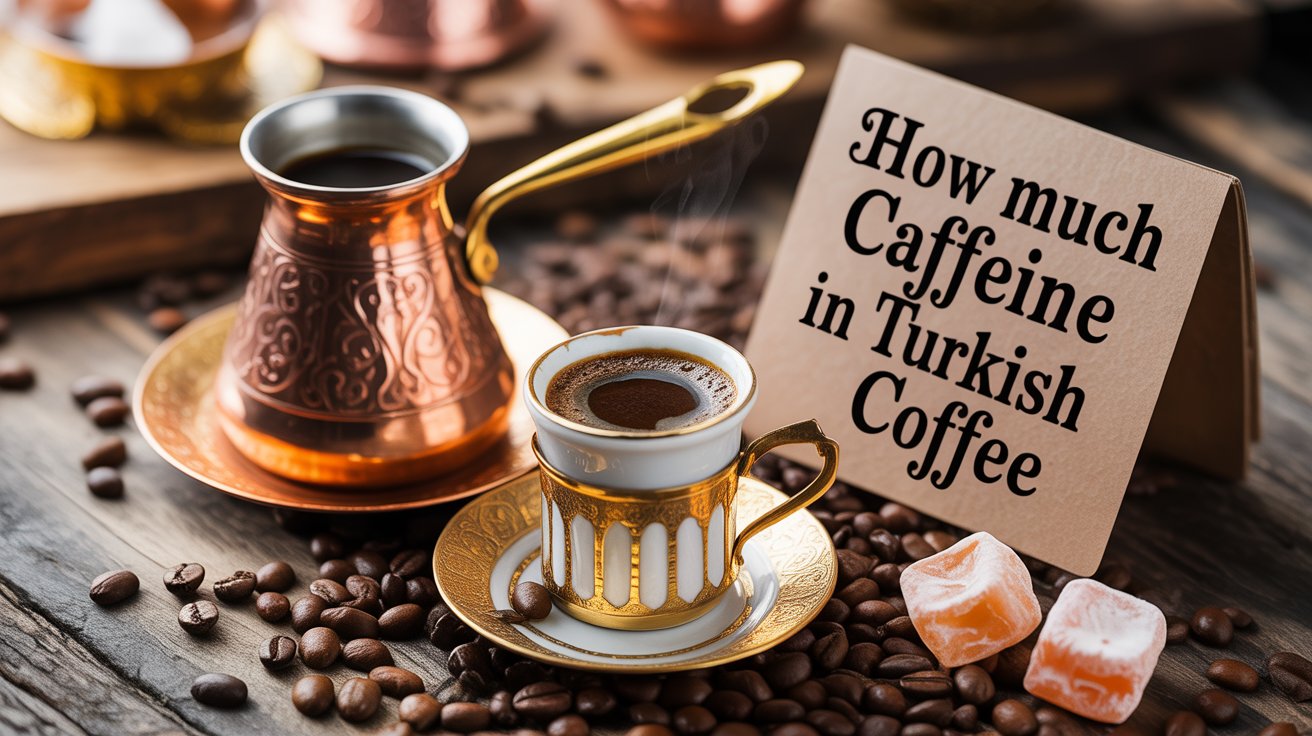
When I brew Turkish coffee, a typical small cup contains about 50–65 mg of caffeine. The serving size is small—usually 60–70 ml (about 2–2.4 oz)—but the coffee itself is very concentrated because it uses an ultra-fine grind and a high coffee-to-water ratio.
In This Article
ToggleCompared with many brewing styles, Turkish coffee has higher caffeine concentration per ounce, but the total caffeine per cup stays moderate due to the small serving size.
Key facts I rely on:
Average caffeine: 50–65 mg per cup
Typical serving: 60–70 ml
Brewing method: unfiltered coffee prepared in a Cezve
Grind size: extremely fine, almost powder-like
Caffeine Per Ounce in Turkish Coffee
In my measurements, Turkish coffee contains about 25–30 mg of caffeine per ounce.
Example breakdown:
| Serving | Approximate Caffeine |
|---|---|
| 1 oz Turkish coffee | 25–30 mg |
| 2 oz cup | 50–60 mg |
| 2.4 oz cup | 60–70 mg |
This makes Turkish coffee more concentrated per ounce than many brewing methods.
For comparison:
| Coffee Type | Caffeine per oz |
|---|---|
| Turkish coffee | ~25–30 mg |
| Espresso | ~63 mg per oz |
| Drip coffee | ~12–15 mg per oz |
Even though espresso is slightly stronger per ounce, Turkish coffee still delivers a dense caffeine profile.
Turkish Coffee Caffeine Per 100ml
When I convert the numbers to a larger measurement, Turkish coffee contains roughly:
80–110 mg of caffeine per 100 ml.
The variation depends on:
bean type (Arabica vs Robusta)
coffee dose used during brewing
grind fineness
brewing time
Because Turkish coffee is unfiltered and fully extracted, caffeine dissolves efficiently into the liquid.
How Much Caffeine in a Small Cup of Turkish Coffee
A traditional serving of Turkish coffee is small. I typically serve it in a cup holding 60–70 ml, sometimes called a demitasse-style cup.
In that serving, caffeine usually ranges between:
50–65 mg per cup
This size developed historically in Ottoman coffee culture, where coffee was brewed thick and concentrated and served in small portions.
Typical serving structure:
| Cup Size | Caffeine |
|---|---|
| 60 ml (2 oz) | ~50 mg |
| 70 ml (2.4 oz) | ~60–65 mg |
So even though Turkish coffee tastes strong, the total caffeine intake per cup stays similar to a single shot of espresso.
Does Turkish Coffee Have More Caffeine Than Other Coffee?
When I compare caffeine levels, Turkish coffee does not always contain more total caffeine than other coffee types. It has high caffeine concentration per ounce, but the serving size is much smaller, so the total caffeine per cup is usually similar to espresso and lower than many larger coffee drinks.
A typical Turkish coffee serving (about 60–70 ml) contains 50–65 mg of caffeine. Many other brewing styles serve larger cups, which increases the total caffeine.
Turkish Coffee Caffeine vs Espresso
When I compare Turkish coffee caffeine vs espresso, the numbers are very close.
| Coffee Type | Typical Serving | Average Caffeine |
|---|---|---|
| Turkish coffee | 60–70 ml (2–2.4 oz) | 50–65 mg |
| Espresso | 30 ml (1 oz) | ~63 mg |
Espresso has slightly higher caffeine per ounce, but Turkish coffee uses a larger serving, so the final caffeine amount is very similar.
Caffeine in Espresso Shot
A standard espresso shot contains about 60–65 mg of caffeine in 30 ml (1 oz). Espresso extraction uses high pressure and a short brewing time, producing a dense caffeine concentration. Because the serving size is small, most espresso drinks contain 1–2 shots, increasing the total caffeine.
Caffeine in Drip Coffee
A standard cup of Drip coffee usually contains 95–120 mg of caffeine per 8 oz (240 ml). Drip coffee is less concentrated per ounce than Turkish coffee, but the larger cup size results in higher total caffeine.
Caffeine in Cold Brew Coffee
Cold brew coffee often contains 150–200 mg of caffeine per 12 oz (355 ml) depending on the brew ratio. Cold brew extracts caffeine slowly over many hours, creating a high total caffeine content, especially when served in large cups.
Caffeine in Moka Pot Coffee
Coffee made with a Moka pot coffee typically contains 80–120 mg of caffeine per 3–4 oz serving. The moka pot produces a strong, concentrated coffee that sits between espresso and drip coffee in caffeine strength.
Coffee Caffeine Comparison
| Coffee Type | Serving Size | Average Caffeine |
|---|---|---|
| Turkish coffee | 2–2.4 oz | 50–65 mg |
| Espresso | 1 oz | ~63 mg |
| Drip coffee | 8 oz | 95–120 mg |
| Cold brew coffee | 12 oz | 150–200 mg |
| Moka pot coffee | 3–4 oz | 80–120 mg |
Is Turkish Coffee Strong?
Yes, Turkish coffee is strong, but the strength people notice usually comes from flavor intensity and concentration, not necessarily from higher total caffeine.
Turkish coffee feels strong because it is:
brewed with extremely fine coffee grounds
prepared without filtration
served in a concentrated form
These factors create a dense, bold cup.
Coffee Strength vs Caffeine Content
Many people assume that stronger taste means more caffeine. In reality, coffee strength and caffeine content are different.
Strength refers to flavor concentration and body.
Caffeine content refers to the total milligrams of caffeine in the drink.
For example, Turkish coffee tastes stronger than drip coffee, but a large drip coffee often contains more total caffeine.
Why Turkish Coffee Feels Stronger
The reason why Turkish coffee feels stronger comes down to its brewing method. I see three main factors:
Ultra-fine grind – the coffee is ground to a powder, increasing extraction.
Unfiltered brewing – the grounds remain in the cup, creating a thicker body.
High coffee-to-water ratio – more coffee is used for a small amount of water.
Because of this process, Turkish coffee produces a dense, intense flavor that many people interpret as higher caffeine, even when the total caffeine is similar to espresso.
Why Turkish Coffee Has High Caffeine Concentration
When I brew Turkish coffee, the caffeine concentration becomes high because the brewing process extracts a large amount of soluble compounds from very finely ground coffee. The method combines ultra-fine grind, high coffee dose, and unfiltered brewing, which increases how much caffeine dissolves into a small volume of liquid.
The drink is concentrated rather than large in volume. That means the caffeine per ounce is high, even though the total caffeine per cup remains moderate.
Fine Grind Coffee Caffeine Extraction
Turkish coffee uses one of the finest grind sizes in coffee preparation, almost like powder. When I grind coffee this fine, the surface area increases dramatically. More surface area means water can contact more coffee particles at once.
Because of this:
caffeine dissolves faster
extraction becomes more efficient
the brew becomes more concentrated
The fine grind also stays suspended in the cup during brewing, allowing the water to continue extracting caffeine while the coffee heats.
Coffee to Water Ratio in Turkish Coffee
The coffee to water ratio in Turkish coffee is stronger than most brewing methods. I typically use 1:8 to 1:10 ratio, meaning one part coffee to eight or ten parts water.
Example:
| Coffee | Water | Result |
|---|---|---|
| 7 g coffee | 60–70 ml water | strong concentrated brew |
This higher coffee dose increases the amount of caffeine extracted into the final drink.
Unfiltered Coffee Caffeine Levels
Turkish coffee is an unfiltered brewing method. Unlike filter coffee, the grounds remain in the cup and settle at the bottom after brewing.
Because no paper filter removes oils or microscopic particles:
more dissolved compounds stay in the liquid
the body becomes thicker
caffeine extraction remains high during brewing
This unfiltered process helps explain the dense caffeine concentration and strong flavor.
Brewing Method and Its Effect on Caffeine
The turkish coffee brewing method caffeine level depends heavily on how the coffee is prepared. The traditional process heats coffee slowly with water and sometimes sugar, allowing caffeine and flavor compounds to extract gradually.
Key brewing variables affecting caffeine:
grind size
coffee dose
brewing time
heat level
When these variables are balanced correctly, the brew becomes concentrated and aromatic without excessive bitterness.
Traditional Turkish Coffee Preparation
Measure Coffee and Water
I use 1 heaping teaspoon (about 7 g) of ultra-fine coffee per 60–70 ml of cold water. Adjust the ratio slightly for taste or cup size. Use cold water to allow gradual extraction.Add Sugar (Optional)
If I want sweet coffee, I add sugar before brewing. Common levels:Sade (no sugar)
Az şekerli (little sugar)
Orta (medium sugar)
Şekerli (sweet)
Mix Coffee and Water
I stir the mixture briefly to combine the coffee with water. No vigorous stirring—just enough to dissolve the grounds evenly.Place in Cezve
I transfer the mixture to a cezve, a small pot with a wide bottom and narrow neck, designed for Turkish coffee brewing.Heat Slowly
I place the cezve over low heat. The goal is gradual heating, which allows caffeine and flavor compounds to extract efficiently.Watch for Foam
I let the coffee heat until foam rises to the top. I never let it boil over. The foam is key to texture and presentation.Remove from Heat
When the foam is about to overflow, I remove the cezve from heat. Some repeat heating 1–2 times to enhance foam and flavor.Pour into Cup
I pour the coffee gently into a small demitasse-style cup, keeping the foam on top. The grounds stay in the cup—they are not filtered.Serve Immediately
I serve Turkish coffee fresh and hot, often accompanied by water and a small sweet (like Turkish delight).
Cezve Coffee Pot and Brewing Technique
Choose the Right Cezve
I use a small cezve, usually copper or brass, with a wide bottom and narrow neck. The shape ensures even heating and foam formation.Control the Heat
I keep the heat low and consistent. High heat can scorch the coffee or cause the foam to collapse.Foam Formation
The narrow neck traps foam, allowing it to rise gently. I monitor the foam carefully—this is essential for traditional texture and flavor.Full Extraction
The combination of slow heat, fine grind, and high coffee-to-water ratio in the cezve ensures maximum caffeine and flavor extraction.Pouring Technique
I tilt the cezve slowly to preserve foam. I never stir once poured; the grounds settle naturally at the bottom, giving authentic Turkish coffee texture.
Key Notes for Perfect Caffeine Extraction:
Use ultra-fine grind
Use cold water at the start
Use low, controlled heat
Do not boil rapidly
Preserve foam when pouring
Leave grounds in the cup
How Coffee Beans Affect Caffeine Levels
When I brew Turkish coffee, the type of coffee bean significantly affects caffeine content. I use either Arabica or Robusta beans, and the choice changes both flavor and caffeine concentration. Bean origin, processing, and roast also influence how much caffeine ends up in the cup.
Arabica vs Robusta Caffeine Levels
I know that Arabica beans contain about 1–1.5% caffeine by weight, while Robusta beans contain about 2–2.5%. Using Robusta in Turkish coffee increases caffeine per cup significantly. Most traditional Turkish coffee uses Arabica, but blends with Robusta are common for a stronger caffeine kick.
Roast Level Caffeine Impact
I also consider roast level. Light roasts retain slightly more caffeine by volume than dark roasts because darker roasting reduces bean density. However, when I measure by weight, the difference is minimal. So, caffeine content varies more with bean type than roast.
Turkish Coffee Caffeine by Measurement
I measure caffeine in Turkish coffee using practical kitchen units, which helps when brewing at home.
Turkish Coffee Caffeine Per Gram
One gram of finely ground Turkish coffee contains about 12–15 mg of caffeine. I adjust based on the number of grams I use per cup to calculate total caffeine.
Turkish Coffee Caffeine Per Teaspoon
I know that one heaping teaspoon (≈7 g) of Turkish coffee provides roughly 85–105 mg of caffeine before dilution with water. This is why even a small cup delivers a strong, concentrated caffeine dose.
How Much Turkish Coffee Is Safe to Drink?
I consider caffeine limits when I drink Turkish coffee. One small cup contains 50–65 mg of caffeine, so it’s easy to enjoy multiple cups without exceeding safe daily intake.
Daily Caffeine Intake Limit
I follow the guideline of up to 400 mg of caffeine per day for healthy adults. That equals about 6–8 small cups of Turkish coffee, depending on how strong I brew it. Staying within this limit avoids side effects like jitteriness or insomnia.
Caffeine Sensitivity and Individual Tolerance
I know that caffeine sensitivity varies. Some people feel effects with a single cup, while others tolerate several cups. I adjust consumption based on my caffeine sensitivity to prevent heart palpitations or restlessness.
Cultural Context of Turkish Coffee
I respect that Turkish coffee has a deep history. It’s not just a drink—it’s a cultural tradition that shaped social rituals.
Ottoman Coffee Culture
I trace Turkish coffee back to the Ottoman coffee culture. In the 16th century, it became central to hospitality, social gatherings, and ceremonies across the Ottoman Empire. Coffeehouses were hubs of conversation and culture.
Traditional Turkish Coffee Cup Size and Serving Style
I serve Turkish coffee in a small demitasse-style cup, holding 60–70 ml. The cup size is designed for concentrated flavor and moderate caffeine intake, often accompanied by a glass of water and a small sweet. The small serving highlights aroma, foam, and the unique thick texture that defines Turkish coffee.
Key Takeaways
Caffeine per cup: 50–65 mg in a small 60–70 ml serving.
Comparison with other coffee: More concentrated than drip, similar to espresso per serving, less than large cold brew or drip cups.
Why Turkish coffee feels stronger: Fine grind, unfiltered brew, high coffee-to-water ratio, dense foam.
Safe consumption levels: Up to 6–8 small cups per day for healthy adults; adjust for caffeine sensitivity.
Conclusion
I drink Turkish coffee for its strong flavor and concentrated caffeine. One small cup has 50–65 mg, making it potent per ounce but moderate per serving. Its fine grind, unfiltered brew, and high coffee-to-water ratio create the dense taste.
Compared to other coffees, it’s similar to espresso per cup and more concentrated than drip coffee. I keep consumption within safe daily limits and adjust for caffeine sensitivity.
Turkish coffee also reflects Ottoman coffee culture, served in small cups with thick foam for a complete traditional experience.

Shahriar brings a unique blend of storytelling prowess and digital expertise to Daily Coffee Guide. With a background in SEO and content strategy, he ensures our articles on Beans, Coffee, Tea, and Drinks are both engaging and discoverable. His passion for coffee culture drives him to explore and share the rich narratives behind every cup.