
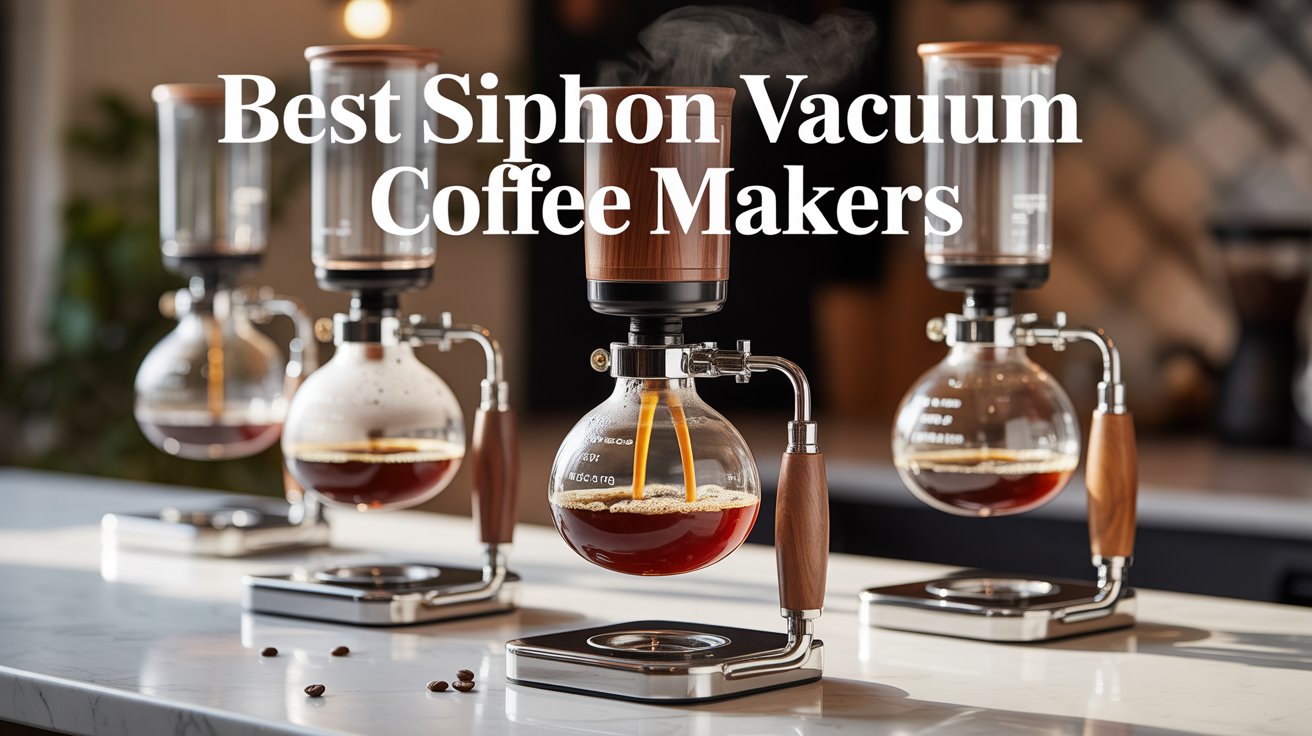
If you want coffee with exceptional clarity, smooth texture, and a brewing process that looks like science in action, siphon brewing stands out from every other method. It doesn’t just make coffee—it creates a clean, aromatic cup while delivering a visually satisfying experience as water rises and falls between chambers.
In This Article
ToggleThe best siphon vacuum coffee makers combine precise heat control, durable heat-resistant glass, and consistent extraction, giving you full control over flavor without complicated machines. Whether you’re searching for the best siphon coffee maker for daily use or a high-end vacuum siphon coffee maker for a premium setup, this method offers a perfect balance of performance and experience.
Siphon brewers are ideal for beginners who want to explore manual brewing, home brewers looking for better flavor clarity, and coffee enthusiasts who enjoy precision and craft in every cup.
What Is a Siphon Coffee Maker?
A siphon coffee maker is a manual brewing device that uses heat, vapor pressure, and vacuum force to brew coffee. It’s also commonly called a vacuum coffee maker or vacuum coffee brewer, all referring to the same unique brewing method.
If you’re wondering what is a siphon coffee maker, think of it as a two-chamber system designed to extract coffee in a clean and controlled way.
Key Components:
- Lower Chamber (Water Vessel): Holds water and sits on the heat source
- Upper Chamber (Coffee Vessel): Where coffee grounds and brewing happen
- Filter: Separates coffee grounds from the final brew (cloth, metal, or paper)
- Heat Source: Can be a gas burner, alcohol burner, or electric base
This design allows the coffee to brew evenly, producing a clean, sediment-free cup with bright flavors.
How a Siphon Coffee Maker Works (Simple Step-by-Step)
Understanding how a siphon coffee maker works is simple once you break it into three stages. The siphon vacuum coffee brewing method relies on pressure and temperature changes to move water and extract coffee.
Step 1: Water Heats and Moves Upward
Water in the lower chamber heats up, creating vapor pressure that pushes the hot water into the upper chamber.
Step 2: Coffee Brews in the Upper Chamber
Ground coffee is added, and it mixes with the hot water. This stage allows for full immersion brewing, similar to a French press but cleaner.
Step 3: Vacuum Pulls Coffee Down
Once heat is removed, the lower chamber cools, creating a vacuum that pulls the brewed coffee back down through the filter—leaving the grounds behind.
The result is a smooth, balanced, and highly aromatic cup with minimal bitterness and excellent clarity.
Quick Comparison – Best Siphon Coffee Makers at a Glance
| Model | Capacity | Type | Best For | Real Price (USD) |
|---|---|---|---|---|
| Hario Technica Siphon | 2–5 cups (240–600 ml) | Manual | Best overall performance | $95 – $150 |
| Hario Nouveau Siphon Brewer | ~5 cups | Manual | Premium design | $130 – $180 |
| KitchenAid Siphon Coffee Brewer | ~8 cups (1L) | Electric | Automatic brewing | $220 – $250 |
| Bodum Pebo Siphon Coffee Maker | ~8 cups (1L) | Manual | Budget-friendly | $60 – $100 |
| Kazumi Siphon Coffee Brewer | 3–5 cups | Manual | Beginner-friendly | $150 – $200 |
Best Siphon Vacuum Coffee Makers (Top Picks)
Hario Technica Siphon – Best Overall
This is the most trusted option in the market and often considered the best siphon vacuum coffee maker. It uses heatproof borosilicate glass, stable metal frame, and precise vacuum extraction, giving consistent results every time.
- Real Price: Around $95 – $130 depending on size
- Why it stands out: Reliable brewing + excellent flavor clarity
- Best for: Daily use and balanced coffee
Hario Nouveau Siphon Coffee Brewer – Best Design
An upgraded version with a more refined frame and premium finish. It keeps the same brewing quality but focuses more on visual appeal and build quality.
- Real Price: $130 – $180
- Why it stands out: Elegant design + strong performance
- Best for: Aesthetic setups and premium users
KitchenAid Siphon Coffee Brewer – Best Electric Option
One of the only fully automated models, making it the best electric siphon coffee maker. It controls heat and timing automatically, which removes the manual complexity.
- Real Price: $220 – $250
- Why it stands out: One-touch brewing system
- Best for: Convenience and consistent results
Bodum Pebo Siphon Coffee Maker – Best Budget
A well-known entry-level option with a simple stovetop design and large capacity. It doesn’t match Hario in build quality but still delivers good results.
- Real Price: $60 – $90
- Why it stands out: Affordable and easy to use
- Best for: Budget buyers
Important truth: Real siphon coffee makers rarely go under $50, so “under $25” options are usually low-quality or not true siphon systems.
Kazumi Siphon Coffee Brewer – Best for Beginners
Designed with a modern look and simplified setup, making it easier for new users to get started without confusion.
- Real Price: Around $180 – $200
- Why it stands out: Beginner-friendly + premium feel
- Best for: First-time users
How to Choose the Best Siphon Coffee Maker
Build Quality
Always choose models with borosilicate (heat-resistant) glass.
- Strong frame = safer and more stable
- Better filters = cleaner coffee
Capacity Options
Choose based on your daily usage:
- Under 15 oz: 1–2 cups (solo use)
- 15–24 oz: Personal daily brewing
- 24–40 oz: Multiple servings
- 40 oz+: Large siphon coffee maker for families
Manual vs Electric
Manual (most common):
- Full control
- Better for enthusiasts
- True professional siphon coffee maker experience
Electric:
- Automatic heat control
- Easier for beginners
- More consistent
Budget Considerations
- $60 – $90: Entry-level (Bodum)
- $90 – $150: Mid-range (Hario standard models)
- $150 – $250+: Premium & electric (KitchenAid, high-end designs)
A luxury siphon coffee maker gives you:
- Better durability
- More stable brewing
- Cleaner, more consistent flavor
Where to Buy Siphon Vacuum Coffee Makers
When it comes to buy siphon vacuum coffee makers, you have two main options: online stores or local retailers.
Online Shopping:
- Platforms like Amazon, specialty coffee shops, and manufacturer websites offer a wide range of models.
- Pros: Greater selection, easy price comparison, user reviews available.
- Cons: Shipping costs and risk of counterfeit items if not from verified sellers.
Local Stores:
- Coffee equipment shops, department stores, or specialty kitchenware stores may stock siphon brewers.
- Pros: Can inspect glass and frame quality in person, immediate pickup, sometimes free setup advice.
- Cons: Limited stock and fewer model options.
Tips Before Buying:
- Check authenticity: Ensure you are buying from an official brand or verified retailer.
- Warranty & support: Look for at least 1-year coverage for glass breakage or manufacturing defects.
- Price comparison: Match your budget with features, e.g., manual vs electric, small vs large capacity.
Pros and Cons of Siphon Coffee Makers
Pros
- Clean, smooth flavor: Full immersion brewing extracts all coffee nuances without bitterness.
- Visual brewing experience: The glass chambers and rising coffee create a visually stunning experience.
- Full extraction control: Manual control of heat and brew time allows precise flavor adjustments.
Cons
- Fragile glass: Borosilicate glass is durable but can still break if mishandled.
- Requires practice: Beginners may need multiple attempts to perfect timing and technique.
- Slower than drip machines: Brewing typically takes 6–8 minutes, so not ideal for fast mornings.
Community Insights (Real User Reviews)
Real user feedback consistently highlights the unique flavor and experience of siphon brewing:
- Flavor quality praised: Users frequently comment that siphon coffee is cleaner, brighter, and more balanced compared to drip or French press.
- Learning curve mentioned: Many reviews note that it takes practice to control heat and brew time, but once mastered, the results are very rewarding.
Popular discussion points from communities include:
- Hario Technica and Hario Nouveau are often called the most reliable for flavor clarity.
- Bodum is affordable for beginners, but some users report slightly less consistent temperature control.
- Electric models like KitchenAid are easy for hands-off brewing, but purists prefer manual control.
FAQs – Siphon Coffee Makers
Is a siphon coffee maker better than drip?
Siphon brewers produce a cleaner, more nuanced cup compared to most drip machines. Drip coffee is faster but often lacks the clarity and vibrancy of siphon coffee. The “better” choice depends on whether you value flavor precision or convenience.
Are siphon coffee makers hard to use?
They require some practice, mainly controlling heat and timing. However, most beginners can master the process in a few attempts. Electric models simplify this and reduce the learning curve.
What coffee grind is best?
Use a medium-fine grind:
- Too coarse → under-extracted, weak flavor
- Too fine → over-extracted, bitter
The medium-fine grind allows proper vacuum extraction and smooth clarity.
Do siphon coffee makers make stronger coffee?
Siphon brewers don’t necessarily produce stronger coffee by caffeine, but the flavor is more concentrated and balanced due to full immersion. Strength is more about taste clarity than intensity.
Final Verdict
For anyone looking for the best siphon vacuum coffee makers, your choice depends on your budget, experience, and brewing preferences. The Hario Technica Siphon stands out as the best overall, offering unmatched flavor clarity and reliable performance. If convenience and automation are your priority, the KitchenAid Siphon Coffee Brewer is the best electric option, providing hands-free brewing without sacrificing quality.
For those on a budget, the Bodum Pebo delivers a solid, affordable siphon experience without compromising the essential clean, smooth taste. Ultimately, whether you’re a beginner, a home brewing enthusiast, or a coffee connoisseur, selecting the best vacuum siphon coffee maker should balance price, skill level, and desired coffee experience.

Shahriar brings a unique blend of storytelling prowess and digital expertise to Daily Coffee Guide. With a background in SEO and content strategy, he ensures our articles on Beans, Coffee, Tea, and Drinks are both engaging and discoverable. His passion for coffee culture drives him to explore and share the rich narratives behind every cup.