
Last updated on November 16th, 2025 at 11:04 pm
You want a coffee-cake that’s easy, reliable—and actually delivers that perfect crumb and streusel crunch.
Well, with Bisquick Coffee Cake, you’ll get exactly that: a shortcut baking mix turned into a crowd-pleasing brunch hero.
I’ve baked dozens of cakes and seen it all—toppings that collapse, dry crumb, or flavorless sponge. I’ve also learned what works—and why this cake gets it right: simple ingredients, a proven technique, and one small tweak that changes everything.
In this recipe (and the breakdown you’re about to read) you’ll learn how to take the humble box of Bisquick and turn it into a coffee-cake your guests will ask for again. No fluff. Just results, step-by-step, from someone who’s been in the kitchen and been burned (literally) so you don’t have to.
Why This Bisquick Coffee Cake Recipe Works
Bisquick works because it removes all the friction from baking.
You skip the flour–baking powder–salt juggling act. You get consistent rise, predictable texture, and zero measuring mistakes—because General Mills already calibrated the leavening ratios inside the mix.
This means you go from idea → oven in under 10 minutes.
>No sifting. No mixing bowls everywhere. No “Did I forget the baking powder?” panic.
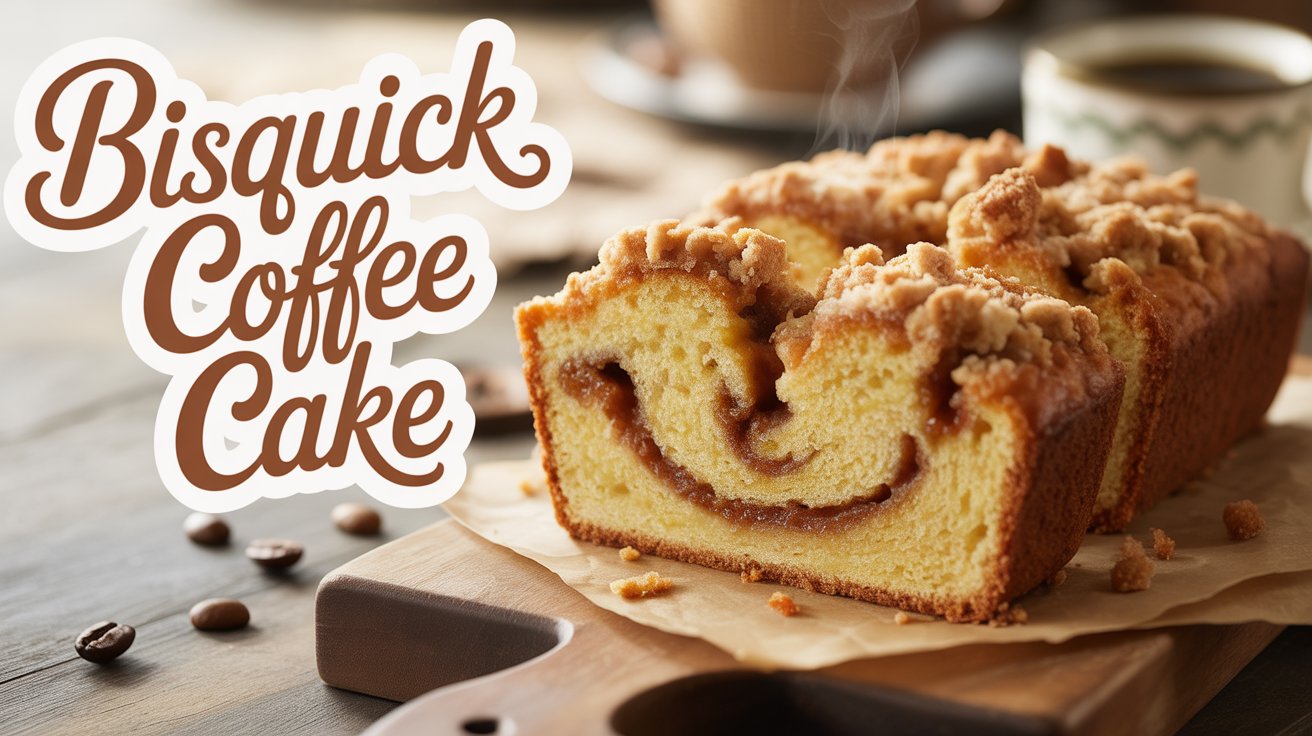
The flavor and texture feel like a classic diner coffee cake—soft, fluffy, and a little springy, thanks to the pre-balanced mix.
The crumble topping adds that nostalgic cinnamon-sugar crunch you see in Starbucks’ classic coffee cake or Entenmann’s crumb squares. Only simpler.
And the timing?
Perfect for…
Breakfast when you want something warm right now.
Holiday mornings when the whole house is already buzzing.
Last-minute guests when you need a “wow” dessert but only have 20 minutes to prep.
This is the kind of recipe your future self will thank you for.
Ingredients You’ll Need
All you need are pantry staples—Bisquick, sugar, milk, eggs, and vanilla—plus a simple crumble of brown sugar, cinnamon, and butter. Optional add-ins like blueberries, chocolate chips, or sour cream let you customize flavor and texture without fuss.
For the Cake Batter
These are the core building blocks behind the light, tender crumb.
Bisquick mix – A pre-mixed blend of flour, shortening, salt, and leavening agents.
Sugar – Adds sweetness and browning.
Milk – Creates moisture and activates the leavening in Bisquick.
Egg – Adds structure and richness.
Vanilla – Enhances aroma and rounds out the cinnamon topping.
For the Cinnamon Crumble Topping
This is the signature element—what transforms a simple cake into a proper coffee cake.
Brown sugar – Deep caramel notes thanks to the molasses.
Bisquick – Helps bind the crumble and gives it structure.
Cinnamon – The classic warm spice every coffee cake needs.
Butter – Creates that golden, slightly crunchy topping.
Optional Add-Ins / Substitutions
Use these variations to customize the cake for seasons, dietary needs, or your own creativity.
Cream cheese swirl – Adds a cheesecake-like ribbon; great for holiday brunches.
Blueberries – Fresh or frozen; turns this into a shortcut version of a New England blueberry buckle.
Chocolate chips – For a sweeter, kid-friendly twist.
Gluten-free Bisquick – A seamless swap; the structure remains the same thanks to the built-in stabilizers.
Non-dairy milk substitutions – Almond, oat, soy—each works because Bisquick already contains fat and emulsifiers.
Step-by-Step: How to Make Bisquick Coffee Cake
Follow a simple, fast process: mix the batter, prepare the crumble, layer, and bake. This method delivers a moist, fluffy coffee cake every time and keeps the iconic crumb topping perfectly golden.
1. Prepare the Batter
Preheat your oven to 350°F (177°C).
Lightly grease an 8×8-inch baking pan with butter or nonstick spray like Pam for an even release.
In a medium bowl, mix together:
Bisquick
Sugar
Milk
Egg
Vanilla
Stir just until combined.
You want the batter smooth but not overmixed—Bisquick already includes leavening (baking soda + baking powder), so too much stirring deflates it.
Pro tip: If the batter looks thicker than pancake batter, it’s normal. Bisquick absorbs liquid quickly because of its pre-mixed shortening.
2. Make the Crumble Topping
In a separate bowl, combine:
Brown sugar
Bisquick
Cinnamon
Cold butter
Use a fork or pastry cutter (or even your hands) to mash everything until you get sandy crumbs.
Think “soft streusel,” not coarse granola.
This topping gives you that recognizable crumb layer similar to the Starbucks coffee cake but without the long ingredient list.
3. Layer + Bake
Pour the batter into your prepared pan and spread it evenly.
Sprinkle the cinnamon crumble evenly over the top.
Don’t pack it down—loose crumbs bake into a better crust.
Bake for 22–28 minutes, depending on your oven.
You want a golden top and a toothpick that comes out clean from the center.
For convection ovens like GE Profile or KitchenAid, check 2–3 minutes earlier, since convection bakes faster.
4. Cool, Slice, and Serve
Let the cake cool for at least 10 minutes.
This helps the crumb set so it slices cleanly.
Serve warm with coffee, chai, or a cold glass of milk.
Leftovers reheat beautifully in the microwave for 10–12 seconds.
Bisquick Coffee Cake — Quick Recipe
Prep Time: 10 min
Cook Time: 25 min
Yield: 8 servings
Ingredients:
2 cups Bisquick
2 tbsp sugar
⅔ cup milk
1 egg
1 tsp vanilla
Crumble:⅓ cup brown sugar
¼ cup Bisquick
1 tsp cinnamon
2 tbsp butter
Steps:
Mix batter ingredients.
Mix crumble ingredients.
Layer batter in pan, add crumble on top.
Bake 22–28 minutes at 350°F.
Expert Tips for a Better Bisquick coffee cake
Small tweaks make a big difference: add sour cream for extra moisture, use cold butter for a thicker crumble, adjust liquid if the batter seems off, and avoid overbaking to maintain a soft center.
How to Keep It Moist
Add 2 tablespoons of oil or 2 tablespoons sour cream to the batter.
Both ingredients increase fat content, which protects moisture during baking.
Avoid baking past 28 minutes.
Most dry Bisquick cakes come from overbaking, not bad ratios.
Store your cake in an airtight container like a Rubbermaid Brilliance box to prevent air exposure.
How to Make a Thicker Crumble Crust
Double the crumble mixture.
Yes—double.
Use cold butter, not melted. Cold butter creates distinct crumbs that hold shape.
Add ½ teaspoon cornstarch for a firmer, bakery-style topping.
This trick comes straight from professional pastry kitchens.
What to Do if Your Batter Seems Too Thick or Too Watery
Too thick?
Add 1–2 tablespoons of milk.
Bisquick absorbs liquid rapidly, especially in dry climates (Arizona, Nevada).
Too runny?
Add 1–2 tablespoons of Bisquick until it reaches a pancake-batter consistency.
Humidity and temperature shifts (like baking in Florida vs. Colorado) affect batter hydration more than people think.
How to Avoid Overbaking
Set a timer for 22 minutes and check early.
Test with a toothpick inserted into the center.
If crumbs cling but nothing wet appears, it’s done.
Rotate the pan halfway through if you use older ovens like classic Whirlpool or Frigidaire models with uneven heat zones.
Variations to Try (SERP-Inspired Section)
Turn the classic into something new: fold in blueberries, swirl in cinnamon sugar like a cinnamon roll, add diced apples, or swap part of the milk for sour cream for extra moistness. Overnight prep also creates a tender, café-style crumb.
Blueberry Bisquick Coffee Cake
Fold 1 cup of blueberries—fresh or frozen—directly into the batter.
Frozen berries from brands like Dole or Wyman’s work perfectly because Bisquick’s built-in stabilizers help prevent the batter from turning purple.
Add a squeeze of lemon or ½ teaspoon zest for brightness.
This version tastes like a shortcut blueberry buckle with zero extra effort.
Cinnamon Roll Style Version
Swirl in a mixture of:
¼ cup brown sugar
1–2 teaspoons cinnamon
1 tablespoon melted butter
Drag a butter knife through the batter in “S” patterns to mimic the spiral of a real cinnamon roll.
Finish with a quick glaze made from powdered sugar and a splash of milk (think Cinnabon, but weeknight-easy).
Apple Cinnamon Bisquick Coffee Cake
Dice 1 small Honeycrisp or Granny Smith apple and mix it into the batter.
The tartness balances the sweet crumble beautifully.
Sprinkle extra cinnamon on top before baking.
This variation feels like a scaled-down, homemade version of New York–style apple crumb cake.
Sour Cream Bisquick Coffee Cake (Extra Moist)
Replace ⅓ of the milk with sour cream.
This boosts fat and acidity, which improves moisture retention—similar to how sour cream enriches classic cakes like Black Forest or Bundt cakes.
This version stays soft longer than the standard cake, making it ideal for make-ahead breakfasts.
Overnight Bisquick Coffee Cake
Mix the batter the night before and refrigerate it in a covered bowl.
Add the crumble just before baking.
The rest helps hydrate the flour and gives you a softer, tighter crumb—like something you’d find at a boutique café in Seattle or Portland.
If the batter thickens overnight, stir in 1–2 tablespoons milk to restore consistency.
Common Mistakes & How to Fix Them
Avoid dry cake, melting crumble, or sunken centers by monitoring bake times, keeping butter cold for the topping, and choosing the right pan. Overmixing and wrong pan size are common pitfalls—correcting these ensures bakery-quality results.
Cake Turns Out Dry
You likely baked past 28 minutes.
Even 3 extra minutes can pull too much moisture from Bisquick’s pre-mixed shortening.
Fix it:
Add 2 tbsp sour cream or oil next time.
Bake on the middle rack for even heat.
Use an oven thermometer—most home ovens run 15–25°F off.
Crumble Melts Instead of Staying Crisp
Warm butter is the culprit.
However, if the butter softens too soon, it sinks into the batter instead of creating a crisp crumble.
Fix it:
Use cold butter straight from the fridge.
Add 1 tbsp extra Bisquick for firmer streusel.
Chill the crumble 5 minutes before topping the cake.
Center Sinks
A sinking center usually means the oven wasn’t fully preheated or the batter was overmixed.
Underbaking is another common cause.
Fix it:
Preheat the oven for at least 10–15 minutes.
Mix batter just until combined.
Bake until the center springs back when touched.
Overmixing Bisquick Batter
Bisquick contains built-in leavening agents (baking soda + baking powder), so overmixing knocks out the air and yields a tough, flat cake.
Fix it:
Mix with a spoon, not a whisk.
Stop as soon as the batter turns smooth.
Let the batter rest 1 minute so bubbles can reform.
Using the Wrong Pan Size
An 8×8 pan bakes evenly.
A 9×9 pan spreads the batter too thin, causing dry edges and a sunken middle.
A loaf pan increases bake time by 10–15 minutes.
Fix it:
Stick to 8×8 for best results.
If using a metal pan vs. glass (like Pyrex), reduce baking time by 2–3 minutes.
Storage, Freezing, and Reheating Guide
Store at room temperature for 2–3 days in an airtight container, refrigerate cautiously to prevent drying, or freeze slices up to 2 months. Reheat gently in the microwave or oven to restore soft, moist texture.
Counter Storage (Timeline)
Store the cake in an airtight container—Rubbermaid Brilliance, OXO, or any sealed container.
It stays fresh 2–3 days at room temperature.
Bisquick-based cakes hold moisture better than standard cakes because of the built-in shortening, but they still lose softness once exposed to air.
Refrigerator (Why It May Dry Out)
Refrigeration pulls moisture from baked goods quickly.
The cake lasts up to 5 days in the fridge, but the crumb becomes noticeably firmer.
If you must refrigerate it:
Wrap slices individually with plastic wrap.
Place them in an airtight container afterward.
This double barrier prevents the refrigerator from drying out the cake’s edges.
Freezer-Friendly Instructions
Bisquick coffee cake freezes extremely well because the fat content helps protect it from freezer burn.
Freeze it like this:
Cool the cake completely.
Wrap slices tightly in plastic wrap.
Place wrapped pieces in a freezer-safe bag like Ziploc Freezer Bags.
Freeze for up to 2 months.
Label the bag with the date to avoid forgetting it behind the frozen peas.
Best Ways to Reheat Without Drying
Microwave for 10–15 seconds with a damp paper towel on top.
This traps steam and restores moisture to the crumb.
To reheat a full pan:
Cover with foil and warm in a 300°F (150°C) oven for 10–12 minutes.
The foil keeps the crumble from over-browning while reheating the center evenly.
Nutrition Information (Per Serving)
Each slice delivers approximately 245 calories, 7g fat, 40g carbs, and 4g protein. Variations with fruit or sour cream slightly change values, but the recipe remains a balanced, indulgent breakfast or snack option.
Calories: ~245
Total Fat: 7g
Saturated Fat: 3g
Carbohydrates: 40g
Sugar: 19g
Protein: 4g
Sodium: 370mg
Fiber: <1g
Values change slightly depending on add-ins (blueberries, apples, sour cream).
Bisquick Coffee Cake FAQs
Can I make this without eggs?
Yes — you can substitute each egg with ¼ cup applesauce or one mashed ripe banana. These swaps bind and moisten the batter without altering the signature crumb. (See vegan attempts in r/veganrecipes).
Can I double the recipe?
Absolutely. Just use a larger pan (9×13-inch) and increase bake time by 6–8 minutes, watching the center with a toothpick for doneness.
Can I make it in a microwave?
Yes — in a pinch. Use a microwave-safe dish, cook in 1-2 minute bursts until set and golden. Texture will differ from oven-baked, but it works for breakfast or snack.
Can I make it dairy-free?
Certainly. Swap milk for almond, oat, or soy milk and butter for a plant-based alternative. The built-in mix in Bisquick still provides structure and lift.
Conclusion
You now have a fast, reliable recipe for how to make a truly satisfying Bisquick coffee cake—one that delivers that tender crumb, the golden crumble topping, and no guess-work in the kitchen.
Take that insight and put it to work: grab your box of Bisquick, set your timer, and go bake something your family will ask for again.

Shahriar brings a unique blend of storytelling prowess and digital expertise to Daily Coffee Guide. With a background in SEO and content strategy, he ensures our articles on Beans, Coffee, Tea, and Drinks are both engaging and discoverable. His passion for coffee culture drives him to explore and share the rich narratives behind every cup.