
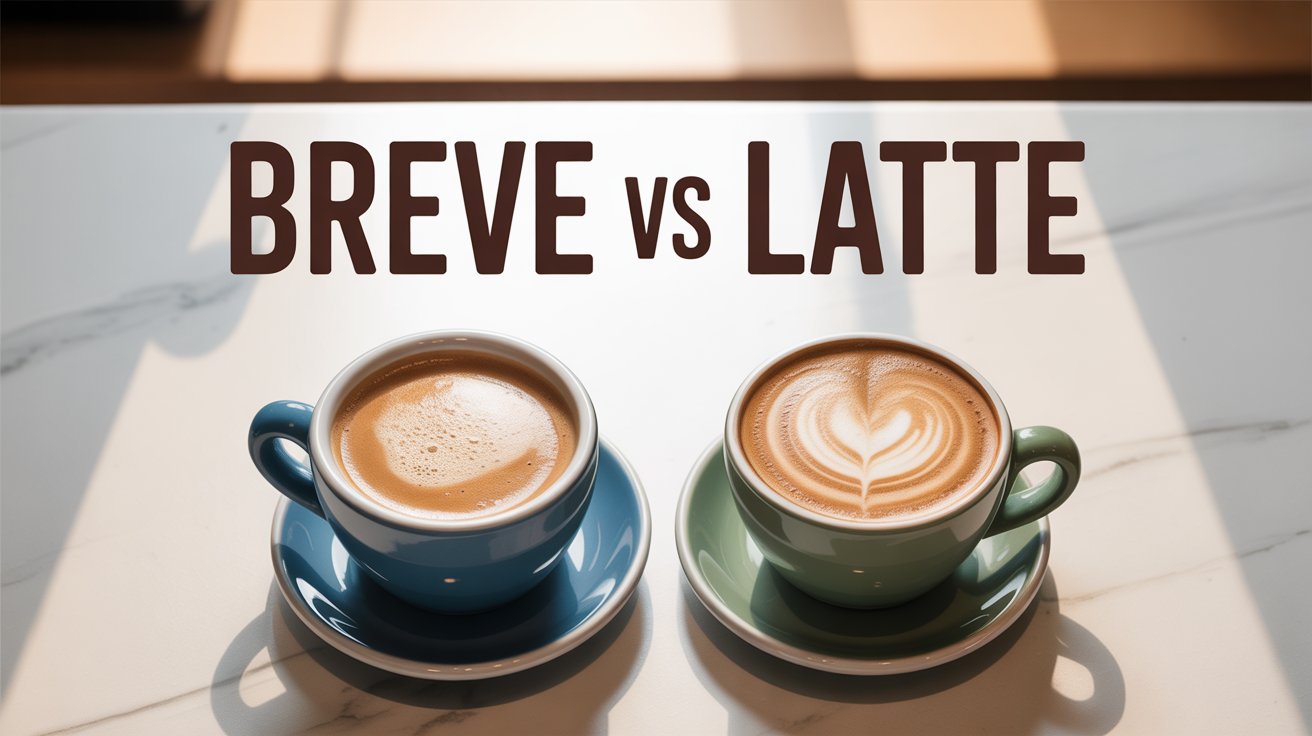
If you’re trying to decide breve vs latte, here’s the simple answer: a breve is richer, creamier, and way more indulgent — while a latte is smoother, lighter, and easier to drink every day.
Most people don’t realize this until they order the wrong one.
I’ve been there too — standing at the counter, scanning the menu, wondering why two drinks that look similar taste completely different. One feels like dessert. The other feels like your go-to morning drink.
The good news? Once you understand how just one ingredient swap changes the flavor, calories, and texture, choosing the right drink becomes effortless.
Let’s break it down so you never second-guess your order again.
What Is a Breve / What Is a Latte?
A breve and a latte look similar in the cup, but they behave like two completely different drinks. One leans rich and decadent. The other leans smooth and balanced. Before you compare them side-by-side, you need to understand the building blocks.
What a Breve Actually Is (and Why It Tastes So Rich)
A breve is an espresso drink made with steamed half-and-half instead of milk. That one ingredient swap changes everything—from texture to flavor to foam behavior.
The word “breve” comes from Italian for “short.” But in American coffee culture—especially in cafés across the Pacific Northwest—the breve evolved into a dessert-like espresso drink that packs a naturally sweet, buttery mouthfeel.
Brands like Bit of Cream and Spicecipes highlight this core trait: a breve isn’t “just a richer latte.” It’s its own category—half latte, half indulgent treat.
Ingredients Used (Espresso + Half-and-Half)
A standard breve contains:
1–2 shots of espresso
Steamed half-and-half
A dense, silky foam created by the higher fat content
The fat-heavy dairy changes how the steam wand interacts with the liquid. It introduces micro-bubbles faster, which is why companies like JavaPresse Coffee Company consistently describe breve foam as thicker, sweeter, and more custard-like.
Typical Serving Sizes & Ratios
Most cafés serve a breve in:
8 oz (traditional “cappuccino-sized” breve)
12–16 oz for American-style coffeehouse drinks
According to Crazy Coffee Bean, the most common ratio is 1:1 espresso to half-and-half, though some independent cafés tweak the proportion to deliver a creamier profile.
Breve takeaway: Think “espresso meets melted ice cream.”
What a Latte Means (Literally “Milk”)
A latte, short for caffè latte, translates directly to “coffee with milk” in Italian. In traditional Italian cafés—from Milan to Florence—the latte is a breakfast drink built around espresso, steamed milk, and microfoam.
Standard Latte Ingredients
A modern latte includes:
Espresso
Steamed milk (usually whole milk)
Microfoam designed for latte art
Crazy Coffee Bean notes that latte milk is intentionally stretched to create smooth, glossy microfoam—something you simply can’t achieve with half-and-half.
Variations & Serving Styles
Lattes adapt easily to:
Milk alternatives (oat, almond, soy)
Flavored syrups (vanilla, caramel, hazelnut)
Different sizes (8 oz to 20 oz depending on the café)
Tasting Table emphasizes that this flexibility is a core reason the latte dominates global café culture—it plays well with trends like oat milk, plant-based diets, and low-calorie preferences.
Latte takeaway: Your daily driver—balanced, smooth, and endlessly customizable.
Head-to-Head Comparison: Breve vs Latte
| Feature | Breve | Latte |
|---|---|---|
| Base | Espresso + half-and-half | Espresso + milk |
| Ratio | ~1:1 espresso to half-and-half | Espresso to milk (1:3–1:5) |
| Dairy Type | Half-and-half | Whole, 2%, or alt-milks |
| Foam | Dense, rich, heavy | Silky, microfoam-focused |
| Primary Effect | Creaminess | Smoothness |
The breve’s near 1:1 ratio creates a drink that feels smaller, richer, and heavier. The latte’s higher milk ratio dilutes intensity, producing a softer profile.
Foam Differences
JavaPresse Coffee Company explains why breve foam forms quickly: fat molecules stabilize bubbles and produce a velvet-like density. Milk foam, by contrast, prioritizes microfoam for latte art.
Texture & Mouthfeel
As Crazy Coffee Bean notes:
Breve = thick, luscious, coat-the-tongue texture
Latte = light, silky, easy-drinking texture
This is the first place most people notice the difference—and often where preferences split.
Flavor Profile
How Flavor Changes Between the Two
A breve delivers natural sweetness and a creamy, dessert-like flavor. Tasting Table calls it “a richer, heavier espresso drink that borders on indulgent.”
A latte stays smoother and more neutral, which lets espresso notes (chocolatey, nutty, fruity) shine through.
Sweetness Differences
According to Lifeboost Coffee:
Breve sweetness comes from the dairy itself.
Latte sweetness usually comes from added syrup.
So if you prefer no-syrup drinks but still like sweetness, breve wins.
Nutritional Comparison
Calories, Fat & Macros
Breve is the heavyweight. Latte is the lightweight.
Lifeboost Coffee and Daily Meal both note that a breve can contain 2–3× the calories and fat of a latte of the same size.
To make this concrete:
Example: Fego Caffé Nutritional Data (Approx.)
12 oz latte (whole milk): ~180–210 calories
12 oz breve: ~330–450+ calories
That’s a significant jump for daily drinkers.
Dietary Considerations
Coffeenatics points out:
Breve fits keto and high-fat diets perfectly.
Latte fits lower-calorie or high-volume drinkers.
Plant-based drinkers choose the latte by default (half-and-half isn’t usually available in alt versions).
Caffeine Content & Strength
Both drinks use the same espresso base, so caffeine levels match.
Origins & Culture
Latte
Lifeboost Coffee ties the latte to traditional Italian café culture—especially breakfast rituals across cities like Rome and Turin.
Breve
The breve, however, is uniquely American—born in U.S. specialty cafés where customers loved the “creamier, sweeter version of a latte.” Also per Lifeboost Coffee, the breve grew popular in Pacific Northwest shops long before it reached national chains.
How to Make Breve and Latte at Home
How to Make a Breve
A breve needs only two things to taste incredible: properly extracted espresso and perfectly steamed half-and-half.
Tools you need:
Espresso machine (Breville, De’Longhi, Gaggia — all work)
Steam wand or standalone milk frother
Stainless steel steaming pitcher
Thermometer (optional but helpful)
Step-by-step:
Pull a double shot of espresso using freshly ground beans. Medium-dark roasts work best for breve because the crema blends well with the heavier dairy.
Pour cold half-and-half into your pitcher. Cold dairy foams better — especially high-fat dairy like half-and-half.
Submerge the steam wand just under the surface. Introduce air slowly until the pitcher feels warm to the touch.
Keep steaming until the half-and-half becomes silky, glossy, and dense. The higher fat content creates naturally richer foam compared to whole milk.
Gently swirl to remove air pockets, then pour slowly over your espresso.
Common pitfalls (and how to avoid them):
Splitting: Happens when half-and-half overheats. Stop steaming at 150–155°F to prevent curdling.
Scalding: If it smells eggy or burnt, you steamed too long. Start with a colder pitcher next time.
No foam: High-fat dairy needs slower aeration. Stretch for 1–2 seconds longer than you would for a latte.
Pro Tip:
Brands like Straus, Organic Valley, or Kalona SuperNatural (high-fat, low-additive half-and-half) produce noticeably richer foam.
How to Make a Latte
A latte relies on microfoam, not thick foam — so smoothness matters more than volume.
Best milk choices for texture:
Whole milk: classic, sweet, best for microfoam
2% milk: lighter, still workable
Oat milk (Oatly Barista, Minor Figures): great for non-dairy latte art
Almond/soy milk: works, but less stable microfoam
Step-by-step:
Pull a double shot of espresso. A lighter medium roast gives a sweeter latte base.
Fill your pitcher with cold milk (⅓ full).
Position the steam wand at the surface to create microfoam — think tiny, velvety bubbles.
Once warm, raise the pitcher slightly so the wand stays submerged. Steam until 140–150°F.
Swirl vigorously to incorporate the foam and eliminate bubbles.
Pour in a steady stream, tilting your cup if you want latte art.
Tips for latte art:
Use whole milk or oat “barista blend.”
Keep the foam extremely fine — this is what creates clean contrast lines.
Start your pour high, finish low and close to the surface.
Pro Tip:
If you struggle with milk texture, practice with water + dish soap to simulate milk foaming — baristas at Blue Bottle and Stumptown use this trick for training.
Pros & Cons
Breve: Pros & Cons
Pros:
Ultra-creamy, indulgent, dessert-like flavor
Naturally sweeter due to higher fat content
Dense, luxurious foam — almost cappuccino-like
Great for occasional treats or when you want a richer drink
Cons:
Very high in calories and saturated fat
Not ideal for daily consumption (unless following keto or high-fat diets)
Can overpower subtle espresso flavors
Harder to foam consistently for beginners
Best use cases:
When you want a “treat drink”
When using bold espresso blends (Brazilian, Sumatran, medium-dark roasts)
For cold-weather comfort drinks or flavored specials (mocha breve, vanilla breve)
Latte: Pros & Cons
Pros:
Lighter, more balanced, easier to drink daily
Works well with flavored syrups (vanilla, caramel, hazelnut)
Flexible with dairy and non-dairy milk
Lower calorie and lower fat compared to breve
Cons:
Less creamy and less indulgent
Microfoam requires more technique
Can taste flat if steamed poorly or made with ultra-low-fat milk
Best use cases:
Everyday morning drink
Pairing with pastries (croissants, banana bread)
Latte art practice
Making flavored drinks or seasonal specials (pumpkin spice latte, chai latte)
Use Cases & Expert Tips
When to Order a Breve vs a Latte in a Café
Order a breve when you want something richer than a latte but less sugary than a flavored drink.
Think: dessert-in-a-cup without syrup.
A breve shines in:
Cold mornings when you want something heavy, warming, indulgent
Flavor-forward espresso blends (e.g., Stumptown Hair Bender, Blue Bottle Three Africas)
Low-carb diets where half-and-half fits better than milk
Small servings like cortados or 8 oz drinks — breve gets too heavy in large sizes
Order a latte when you want a smoother, balanced, everyday drink.
A latte works best for:
Daily caffeine routines
Bigger drink sizes (12–20 oz)
Pairing with pastries, especially at cafés like La Colombe or Intelligentsia
Flavored drinks where milk shouldn’t overpower syrups
For Home Baristas: When Breve Makes Sense vs When Latte Wins
At home, a breve makes sense when:
You want a treat or weekend drink
You follow keto, high-fat, or Bulletproof-style coffee habits
You like thick, glossy foam without perfect steaming technique
You’re drinking from small ceramic cups (demitasse, 6–8 oz)
A latte is the better home choice when:
You drink coffee daily
You want to practice latte art
You’re using alternative milk (oat, soy, almond)
You prefer a lower-calorie option that still tastes creamy
Pro Tip:
Half-and-half scorches easily on consumer machines (Breville Bambino, Gaggia Classic).
Milk is more forgiving — especially whole milk from brands like Straus Family Creamery or Horizon.
Barista & Roaster Insights: Real Tips from the Counter
Baristas agree: breve behaves differently because of fat content.
A few common insights:
“Half-and-half thickens fast. Keep your wand barely at the surface or you’ll end up with giant bubbles,” says one La Marzocco trainer.
Roasters at Verve note that darker espresso blends taste better in breve because “the dairy rounds off acidity.”
A veteran barista from a Seattle café adds: “If you want latte art, don’t pick breve. The foam is too dense.”
Trends, Stats & Data
Popularity Trends
Lattes remain one of the top 3 most-ordered espresso drinks in U.S. cafés, based on recurring data from the National Coffee Association (NCA).
Breve, by contrast, appears far less frequently on menus at Starbucks, Dunkin’, Pret A Manger, and Caffè Nero.
Independent cafés in the Pacific Northwest (Portland, Seattle, Boise) report higher breve orders — likely due to local café culture and preference for richer espresso drinks.
Nutrition & Dietary Trends
Since 2019, searches for “keto coffee” and “high-fat coffee” have spiked.
This indirectly boosted breve awareness, since half-and-half aligns with higher-fat dietary preferences.
However, mainstream consumers still favor lower-calorie lattes, especially with the rise of oat and almond milk.
Global Trends
In Italy, Australia, and the U.K., breve is rare.
The latte dominates menus, especially with the rise of the flat white, which fills a similar “smooth milk drink” niche.
Breve remains a distinctively American creation — similar to the mocha breve served in many U.S. specialty cafés.
Common Misconceptions & Myths
Myth 1: “Breve Is Just a Latte with More Milk.”
Not even close.
A breve uses half-and-half, not milk — which dramatically changes texture, sweetness, and calories.
Think:
Latte = espresso + steamed milk
Breve = espresso + steamed half-and-half
Switching the dairy changes everything.
Myth 2: “Breve Has More Caffeine Than a Latte.”
Both drinks usually use the same espresso base, so caffeine levels match.
The thicker mouthfeel of a breve can feel stronger, but the caffeine doesn’t change.
Myth 3: “Breve Means Half-and-Half for Every Drink.”
This confusion shows up constantly in Reddit barista threads.
One popular quote:
“A breve latte… my shop… the term ‘breve’ does NOT replace all uses of 1/2 n 1/2.” — Reddit r/barista
Breve refers to the milk style, not a general instruction for substituting half-and-half everywhere.
Myth 4: Pricing Confusion — ‘Why Is My Breve More Expensive?’”
Many cafés (especially specialty shops) charge extra for breve because:
Half-and-half costs more
Higher fat dairy produces less volume per carton
Breve requires more careful steaming
Reddit baristas frequently complain that customers “get mad about the upcharge,” especially at high-volume shops like Philz or Dutch Bros.
FAQ: Breve vs Latte
What does “breve” actually mean?
Breve refers to espresso made with steamed half‑and‑half, not milk — which makes it richer and creamier than a traditional latte.
Does breve have more caffeine than latte?
No — both typically use the same espresso base, so caffeine levels are similar.
Why do some baristas say “breve” doesn’t just mean half‑and‑half?
As one Reddit barista put it:
“the term ‘breve’ does NOT replace all uses of 1/2 n 1/2.”
In many shops, “breve” specifically means an espresso drink made with steamed half‑and‑half.
Is a breve just a latte with richer dairy?
Sort of — but not exactly. A latte is made with milk; a breve uses half‑and‑half. That fat difference gives breve a denser mouthfeel and a naturally sweeter flavor.
Why was I charged more for a “breve” at some coffee shops?
Because half‑and‑half costs more and breves require more careful steaming, many cafés (especially specialty ones) upcharge for breve versus milk-based lattes.
Conclusion
Now that you know the real differences between a breve and a latte, choosing your next cup becomes effortless. One delivers creamy indulgence, the other smooth, balanced comfort — and both have a place in your coffee routine.
Next time you order (or steam at home), pick the drink that fits your mood, your diet, or your craving — and taste the difference for yourself.

Shahriar brings a unique blend of storytelling prowess and digital expertise to Daily Coffee Guide. With a background in SEO and content strategy, he ensures our articles on Beans, Coffee, Tea, and Drinks are both engaging and discoverable. His passion for coffee culture drives him to explore and share the rich narratives behind every cup.