
Last updated on December 5th, 2025 at 11:19 pm
You want cleaner, smoother coffee without needing barista-level skills — and the Chemex pour-over coffee maker is the tool that actually makes that happen.
If your brews taste bitter, muddy, or “just okay,” it’s not your beans. It’s your method. The Chemex fixes that with one simple advantage: extreme clarity and control.
I’ve used it on rushed mornings and slow weekends, and the difference is immediate. You taste the coffee — not the paper, not the bitterness, not the guesswork.
And that’s why so many home brewers switch.
In the next few minutes, you’ll see exactly why the Chemex pour-over coffee maker produces café-level flavor, how it works, and whether it’s the right upgrade for your setup. No hype — just what actually matters for a better cup.
What Is a Chemex & Why It Matters
If you want cleaner, brighter, café-quality coffee at home, the Chemex gives you that in a way most brewers simply can’t.
It combines precision, design, and simplicity—a rare trio that turns even basic beans into something you actually look forward to drinking.
The Chemex matters because it removes guesswork and inconsistency. You get clarity, sweetness, and balance in the cup—every time.
What “Chemex” Means: Design, History & Philosophy
The Chemex is not just a brewer. It’s a design icon.
Created in 1941 by Dr. Peter Schlumbohm, a chemist who believed coffee could be brewed with scientific precision, the Chemex blends laboratory-level extraction with museum-level aesthetics.
The Museum of Modern Art (MoMA) still showcases it as an example of “perfected form meeting function.”
Key elements that define its identity:
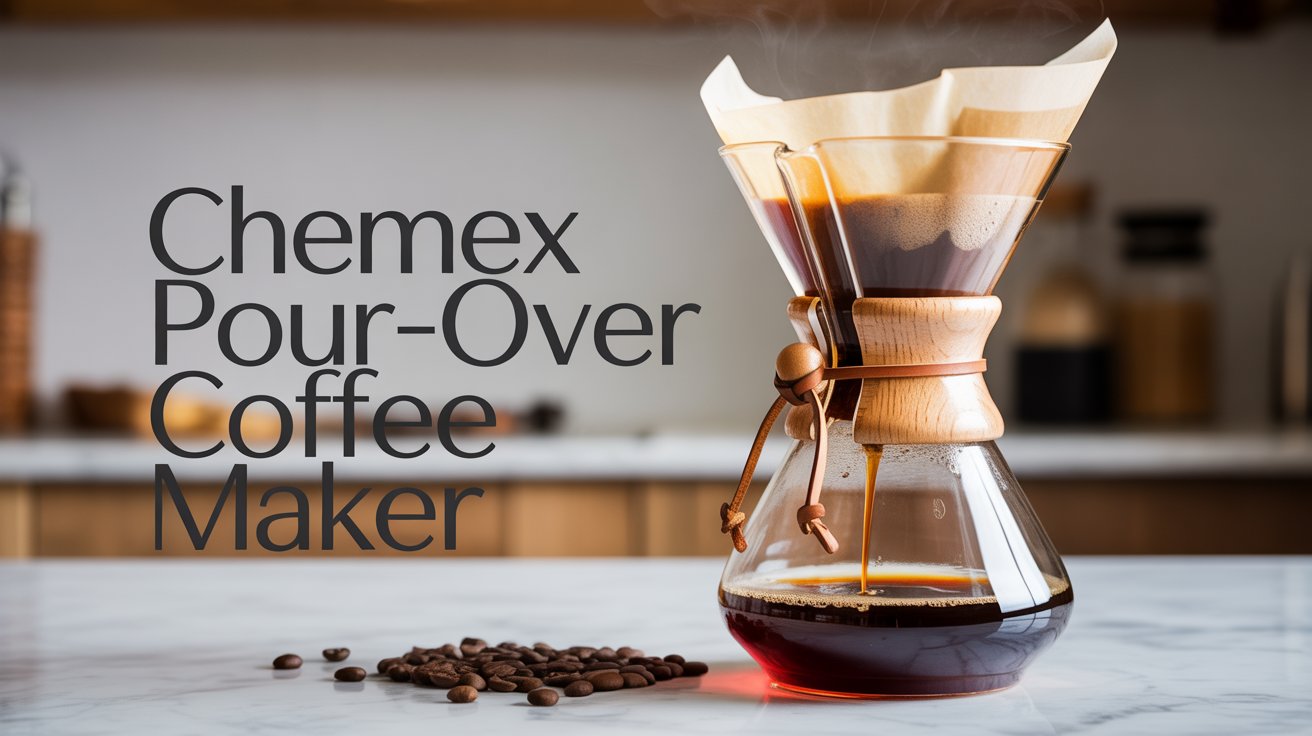
Borosilicate glass carafe (heat-resistant, flavor-neutral)
Patented bonded filters 20–30% thicker than standard pour-over filters
Wood-and-leather collar for safe handling
Hourglass body that naturally encourages even extraction
The underlying philosophy:
Great coffee shouldn’t require a machine—just the right variables controlled well.
What Makes Chemex Different From Other Pour-Over or Brew Methods
You can taste the difference immediately.
1. Proprietary Thick Filters (Chemex Bonded Filters)
These filters are the real differentiator. They remove more oils and micro-fines than Hario V60 filters or Kalita Wave filters.
The result:
A cleaner, brighter cup
Crisp acidity
Less bitterness
No sludge at the bottom (unlike French press)
2. A Single-Piece Glass Design
Because the Chemex uses non-porous borosilicate glass, it never absorbs flavors, oils, or old aromas.
Your next brew always tastes “fresh,” unlike plastic brewers that slowly pick up off-flavors.
3. Natural Pour-Over Control
You control everything:
Flow rate
Extraction time
Saturation
Agitation
The Chemex behaves like a hybrid between a pour-over and a carafe, giving you more control than a drip machine but more stability than a V60.
4. The Taste Difference
Chemex coffee tastes cleaner and smoother, with less oil and residue compared to traditional drip makers or the French press.
If you value clarity over heaviness, the Chemex becomes an instant upgrade.
Who the Chemex Is Best For
The Chemex fits specific types of coffee drinkers exceptionally well:
The Solo Purist who wants clarity and flavor nuance
The Small Household Brewer (2–4 cups) needing a reliable, repeatable method
The Design Lover who wants a kitchen piece that looks like art
The Ritual Person who enjoys the slow, intentional brewing process
The Flavor Explorer who drinks single-origin beans and wants transparency in the cup
If you enjoy brewing as much as drinking, you’re the Chemex audience.
How to Brew Great Coffee With a Chemex — Step-by-Step (Beginner → Intermediate)
What You’ll Need
Chemex brewer (6-cup or 8-cup is most common)
Chemex bonded filters (don’t substitute — it changes extraction)
Burr grinder (Baratza Encore, Fellow Ode, Timemore, etc.)
Gooseneck kettle (Hario Buono, Fellow Stagg EKG)
Digital scale (Acaia, Timemore, OXO)
Fresh coffee beans (light to medium roast shines most)
Timer (phone is fine)
Optional but helpful: a thermometer, agitation tool (like a bamboo stir stick), and a preheated mug.
Recommended Parameters & Base Recipe
These are your default, go-to settings for a balanced Chemex brew:
Coffee-to-water ratio: 1:15–1:16
(E.g., 30g coffee → 450–480g water)Grind size: Medium-coarse (similar to sea salt)
Water temperature: 195–205 °F (90–96 °C)
Brew time: 3:30–4:30 minutes total
Bloom: 45–50 seconds with 2–3× coffee weight in water
Pour schedule: Controlled spirals or concentric circles for even extraction
Example for 2–4 cups:
40g coffee
~640g water
Same temp & grind
Same 4-minute extraction target
Scale proportionally for larger brews.
Brewing Steps (With Why Each Step Matters)
1. Prep the Filter & Carafe
Fold the Chemex filter so the triple-thick side faces the spout.
Rinse thoroughly with hot water to remove paper taste.
Pour out the rinse water.
Why it matters:
Preheating & rinsing improve temperature stability and clarity.
2. Add Coffee & Start the Bloom
Add your ground coffee.
Start your timer.
Add water equal to 2–3× the coffee weight to saturate the grounds.
Wait 45–50 seconds.
Why it matters:
Blooming releases trapped CO₂ so coffee can extract evenly.
3. Main Pour (The Extraction Phase)
Pour slowly in spirals or controlled circles.
Hit your total water weight by the 2:00–2:30 mark.
Keep the water level consistent.
Avoid pouring directly on the filter edges.
Why it matters:
Even saturation reduces channeling and preserves clarity — a principle supported by guides such as Brew Smartly and Caffeine Park.
4. Finishing the Brew
Let the water fully drain without stirring or squeezing the filter.
The final drips matter for balance.
Why it matters:
Over-agitation adds bitterness. The Chemex’s design naturally prevents this when you let it finish cleanly.
5. Serve & Clean
Swirl the Chemex gently before pouring.
Rinse immediately after use.
Occasionally clean with mild soap or a bottle brush.
Why it matters:
Clean glass preserves flavor neutrality — one of the Chemex’s biggest advantages over metal or plastic brewers.
Pros & Cons of the Chemex Pour-Over Coffee Maker — What You Gain & What to Watch Out For
If you’re deciding whether the Chemex belongs in your daily coffee ritual, this section gives you the real-world advantages and the trade-offs—the exact clarity people look for before buying.
You’ll see where the Chemex shines, where it demands effort, and how it compares to alternatives like the Hario V60, Kalita Wave, AeroPress, and automatic drip machines.
Pros / Strengths
You get several unique benefits that many brewers—including high-end machines—struggle to match.
1. Incredibly Clean, Crisp, Aromatic Coffee
Chemex coffee tastes bright and refined.
The thick bonded filters remove oils and sediment that pass through French press mesh or standard paper filters.
Cleaner mouthfeel
More defined flavors
Reduced bitterness
Zero sludge at the bottom
This is the brewer I reach for when I want “clarity-first” coffee—especially single-origin beans.
2. Elegant, Timeless Glass Design
Chemex didn’t end up in the MoMA Design Collection by accident.
The hourglass carafe, wood collar, and lab-style glass create a piece that feels both functional and artistic.
It’s one of the few brewers people leave on the counter because it looks that good.
3. Full Control Over Variables
You get full command of:
Grind size
Water flow rate
Pour speed
Temperature
Brew time
Pour-over fans who love precision instantly click with the Chemex.
4. Glass Carafe = Zero Flavor Contamination
The Chemex uses non-porous borosilicate glass with no metal or plastic touching your brew.
You never get leftover flavors, chemical notes, or aftertastes.
Cons / Trade-Offs & What to Know Before Buying
Every manual brewer has limitations.
Here’s what matters before you commit.
1. Proprietary Filters Required
Chemex bonded filters cost more than standard V60 or Melitta filters.
They also may be unavailable at small local shops.
If you live outside major cities, keep a backup box on hand.
2. Fragile Glass — Handle with Care
The iconic carafe is gorgeous but breakable.
Drop it once and it’s done.
Storage, cleaning, and travel require extra attention.
3. Manual Brewing Takes Time
A Chemex brew takes 4–6 minutes of active involvement.
This isn’t the push-button convenience of a Breville Precision Brewer, Keurig, or Mr. Coffee machine.
4. Confusing Capacity Labeling
A Chemex “6-cup” doesn’t mean six café-sized mugs.
Chemex uses 5-oz “cups,” so real yield is lower than most buyers assume.
Comparing Chemex to Other Brew Methods & Alternatives
See how the Chemex stacks up against popular brewers like the V60, Kalita, AeroPress, French Press, and your everyday drip machine. This quick comparison shows where the Chemex shines, where it falls short, and which method fits your taste, time, and brewing style best.
Chemex vs Standard Pour-Over Drippers (V60, Kalita, Origami)
| Feature | Chemex | Hario V60 / Kalita Wave / Origami |
|---|---|---|
| Coffee clarity | Ultra-clean, low oils | Clean, slightly more body |
| Filters | Thick, proprietary | Standard, cheaper |
| Control | High | Very high |
| Brew speed | Slower | Moderate |
| Ease for beginners | High | Moderate (V60 has steeper learning curve) |
| Aesthetics | Iconic | Minimalist |
When to choose Chemex:
You want clarity, elegance, and brewing for 2–4 people.
When to choose V60/Kalita:
You want faster brews or more experimentation with extraction.
Chemex vs Automatic Drip Machines / French Press / AeroPress
Chemex vs Automatic Drip Machines
Better clarity, better control
Slower, more hands-on
Lower long-term cost
No heating plate (avoids burnt flavors)
Choose drip machines for convenience; Chemex for quality.
Chemex vs French Press
Chemex = clean, crisp, low-oil
French press = heavy, full-bodied, oily
Chemex is easier to clean
French press is quicker and sturdier
Choose French press for body; Chemex for clarity.
Chemex vs AeroPress
AeroPress = portable, easy, fast
Chemex = large batches, better for serving guests
AeroPress = low cost, very durable
Chemex = wins in visual elegance and flavor refinement
Choose AeroPress for travel or single cups; Chemex for multi-cup clarity.
When Chemex Might Not Be the Best Choice
Choose an alternative if you need:
Single quick cups (AeroPress or V60 shines here)
High-volume brewing (automatic machines win for 8–12 cups)
Durability (French press or plastic V60 handle drops better)
Zero involvement (smart brewers like the Breville Precision Brewer or Technivorm Moccamaster)
If your priority is speed or ruggedness, the Chemex isn’t the hero.
If your priority is flavor precision and aesthetics, it absolutely is.
Common Mistakes, Myths & How to Avoid Them
If your Chemex coffee tastes bitter, weak, or slow, it’s almost always technique—not the brewer.
Mistakes Beginners Make with Chemex
You can avoid 90% of Chemex issues by understanding the most common pitfalls.
1. Using the Wrong Grind Size
Most bad Chemex brews start here.
If the grind is too fine, the thick Chemex filter clogs and your brew chokes.
If it’s too coarse, water rushes through and creates a thin, sour cup.
Sweet spot: medium-coarse (similar to Kosher salt).
Use a Bonavita, Baratza Encore, or Fellow Ode for consistency.
2. Pouring Too Fast or Too Aggressively
Many new users “dump” water like they’re filling a mug.
The Chemex needs smooth, controlled spirals using a gooseneck kettle like the Fellow Stagg EKG or Hario Buono.
Light, even agitation helps extraction without collapsing the filter walls.
3. Skipping the Filter Pre-Wet
Skipping the rinse leaves papery flavors in the brew and keeps the carafe cold.
A 10–12 second rinse removes this and stabilizes brewing temperature.
Reddit users call the difference “night and day.”
4. Skipping or Rushing the Bloom
If you don’t allow the coffee to degas, the brew channel clogs or extracts unevenly.
Bloom with ~2× the dose of water for 30–45 seconds.
5. Using Knockoff Filters
Cheap filters aren’t designed for Chemex’s thickness standards.
They collapse, clog, or run too fast.
Stick to Chemex Bonded Filters.
They’re consistent, oxygen-cleaned, and tested for flow rate.
Myths vs Reality
Let’s clear up the misconceptions that keep people from getting the best results.
Myth #1: “Chemex Coffee Is Always Thin.”
Not true.
Thin coffee comes from:
Wrong grind size
Under-extraction
Too-fast pouring
Low water temps
When you dial parameters in, the Chemex delivers full clarity without losing body.
Myth #2: “It’s Too Fragile for Daily Use.”
The Chemex uses borosilicate glass, similar to laboratory beakers.
It’s durable under heat and normal use.
Breakage usually comes from:
Metal sinks
Tight cabinets
Accidental knocks
Daily Chemex users (myself included) rarely break one when treated like any glass kettle.
Myth #3: “Chemex Takes Too Long.”
A balanced brew takes 4–5 minutes.
That’s slower than a Keurig—but faster than many French press or siphon brews.
With a scale and kettle ready, it becomes routine.
Who Should Buy a Chemex — Buyer Guide & Use-Case Recommendations
Which Model / Size Fits Which User
Chemex sizing confuses many buyers because of the 5-oz “cup” measurement.
Here’s the real-world breakdown:
| Model | True Yield | Ideal For |
|---|---|---|
| 3-Cup Chemex | ~10–12 oz | Solo drinkers, small kitchens |
| 6-Cup Chemex | ~25–28 oz | Couples, 1–2 daily drinkers |
| 8-Cup Chemex | ~34–40 oz | Small households |
| 10-Cup Chemex | ~45–50 oz | Families, small offices, gatherings |
Rule of thumb:
If you brew only for yourself → 3-cup or 6-cup.
If you host or brew for multiple people → 8-cup or 10-cup.
What to Check Before Buying
Chemex isn’t plug-and-play.
A few factors matter upfront:
1. Filter Availability
Make sure bonded filters are available in your region.
International buyers (EU, Asia, Middle East) should check local pricing.
2. You’ll Need a Grinder
Pre-ground coffee kills Chemex clarity.
A conical burr grinder like the Baratza Encore or Timemore C2 is essential.
3. You’ll Need a Pour-Over Kettle
A gooseneck kettle offers the flow control the Chemex requires.
Electric options like the Fellow Stagg EKG work beautifully.
4. Handling & Storage
If you have a metallic sink or tight countertop, plan a safe storage space for the glass carafe.
Accessories / Setup Tips
Every great Chemex setup includes a few supporting tools.
Must-Have Add-Ons
Gooseneck kettle (Hario, Fellow, Brewista)
Accurate scale (Acaia Pearl, Timemore Black Mirror)
Chemex bonded filters
Burr grinder
Nice-to-Have Improvements
Filter storage sleeve (keeps filters clean and dry)
Chemex glass lid (keeps brew warm)
Coffee bean canister (Airscape or Fellow Atmos)
Cleaning Routine
Rinse immediately after use
Use Cafiza or baking soda weekly
Avoid dishwasher (especially wood-collar models)
Expert Tips & Advanced Use Cases — For Coffee Enthusiasts
If your goal is to optimize, experiment, and perfect your Chemex workflow, these are the expert-level levers that matter.
Tweaking Your Brew
You unlock the full potential of a Chemex when you learn to micro-adjust variables instead of relying on a fixed recipe.
Dial in grind size.
A slightly finer grind (think Baratza Encore #12–14 or Timemore Chestnut “mid-fine”) boosts sweetness for washed Ethiopian or light-roasted Kenyan beans.
A slightly coarser grind helps prevent clogging with dense, oily dark roasts from roasters like Stumptown or Intelligentsia.
Experiment with pour schedule.
Change your pour pattern to shape extraction:
Short, frequent pulses increase body and highlight chocolate/caramel notes (great for Colombia or Guatemala).
Larger, controlled pours promote clarity and high-acid profiles (ideal for Yirgacheffe, Sidamo, or Panama Gesha).
Shift bloom timing.
Blooming for 45–60 seconds helps freshly roasted beans degas fully.
Older beans (over 3–4 weeks past roast date) do better with a shorter bloom (~25–30 seconds) because they release less CO₂.
Adjust water temperature by roast level.
Light roast: 203–208°F to extract complex aromatics.
Medium roast: 198–203°F for balanced sweetness.
Dark roast: 190–198°F to avoid bitter over-extraction.
Enthusiasts using a Fellow Stagg EKG, Bonavita, or Hario Buono kettle get better consistency thanks to precise temperature control.
Batch Brewing vs Single Cups
Chemex shines as both a personal brewer and a small-batch workhorse — but the technique changes.
For single cups (1–2 servings):
Use a tighter brew radius.
Keep your pour centered to maintain temperature.
Smaller batches cool faster, so use hotter water (2–3°F higher).
For batch brewing (3–6 cups):
Increase grind size slightly to prevent slow drawdown.
Pour in a wider spiral to evenly saturate the larger coffee bed.
Increase total brew time by ~15–25 seconds to maintain proper extraction.
Rule of thumb:
6-cup Chemex: Ideal for 1–2 people.
8-cup Chemex: Perfect for households.
10-cup Chemex: Best for offices or hosting, often paired with Baratza Virtuoso+ or Ode Gen 2 grinders for consistent particle size at scale.
Batch brewers like the Ratio Six or Technivorm Moccamaster often reference Chemex-style extraction, so the method scales surprisingly well with the right adjustments.
Maintenance & Longevity Tips
Proper care keeps a Chemex performing like day one — and prevents the glass from cracking or retaining off-flavors.
Clean the glass intentionally.
Rinse immediately after brewing.
Use fragrance-free cleaners like Cafiza or Biocaf for a deep clean.
A bottle brush removes oils that cling to the hourglass shape.
Avoid thermal shock.
Never add boiling water to a cold Chemex.
Warm the glass with a quick swirl of hot water before brewing.
Chemex borosilicate glass is durable but still vulnerable to extreme temperature swings.
Handle the wood collar and leather tie correctly.
Remove the collar monthly to wash and dry both pieces properly.
This prevents odors and prolongs the leather’s life.
Store filters properly.
Keep Chemex bonded filters in an airtight container to avoid humidity absorption.
Moist filters flatten flavor and slow extraction — a common issue in tropical climates (e.g., Southeast Asia or coastal regions).
Bonus longevity tip:
If you travel or brew outdoors, consider the Chemex handblown series or a steel carafe alternative like the Fellow Clara. They’re more rugged without sacrificing clarity or flavor.
FAQ
Is Chemex really better than other pour-over makers?
It brews a cleaner, brighter cup thanks to its thick bonded filters. If you prefer clarity over heaviness, the Chemex usually wins.
Does Chemex coffee taste different?
Yes. The filters remove more oils and fines, so you get a smoother, more tea-like cup with pronounced flavors.
Is Chemex hard to use for beginners?
Not really. Once you dial in grind size and slow, controlled pours, it becomes very repeatable. Most beginners improve within 2–3 brews.
What grind size works best for Chemex?
Use a medium-coarse grind—slightly finer than French press but coarser than V60. It prevents clogging and keeps the flow steady.
Why does my Chemex drain too slowly?
You’re likely using too fine a grind or cheap/unfit filters. Try coarsening your grind or switching to official Chemex bonded filters.
Conclusion: The Chemex Pour-Over Coffee Maker — Clarity, Control & Craft in One Ritual
You now know exactly why the Chemex stands out: it gives you clarity in flavor, control in technique, and a brewing ritual that rewards attention instead of rushing. And the best part? Anyone can master it with a few smart adjustments.
If you want cleaner, brighter, more consistent coffee at home, the Chemex delivers — whether you brew one cup or a whole morning batch. It’s a simple tool that elevates your daily routine without complicating it.
Try a brew using the tips above, and if you want to dig deeper into brew methods, check out our guide on pour-over vs French press to compare flavor, workflow, and cost before your next upgrade.
Enjoy the ritual. And make each cup count.

Shahriar brings a unique blend of storytelling prowess and digital expertise to Daily Coffee Guide. With a background in SEO and content strategy, he ensures our articles on Beans, Coffee, Tea, and Drinks are both engaging and discoverable. His passion for coffee culture drives him to explore and share the rich narratives behind every cup.