
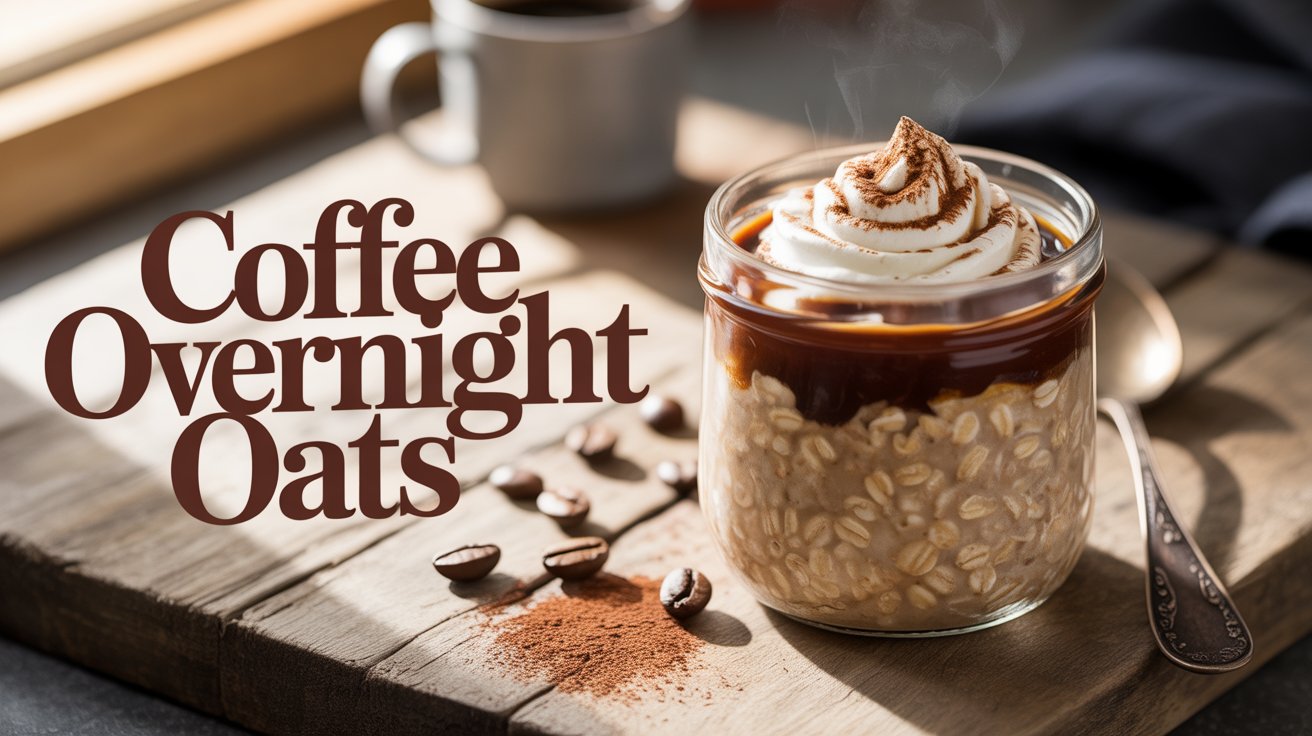
If you want a breakfast that gives you energy, saves you time, and actually tastes good, Coffee Overnight Oats is the fastest win you can make this week.
And yes — it really does replace your morning coffee and your breakfast in one shot.
Most people struggle with mornings: rushing out the door, skipping meals, downing coffee on an empty stomach… then wondering why they crash at 11 AM. I’ve been there too.
That’s why this simple, make-ahead recipe caught my attention. You mix it in 2 minutes the night before, wake up, and boom — creamy oats with a built-in caffeine boost. Zero prep stress. No morning mess. Breakfast ready before you even wake up.
In this guide, you’ll learn what actually works, what to avoid, and how to build a version that fits your routine (whether you need more protein, less sugar, or a smoother coffee flavor).
Let’s make your mornings a whole lot easier.
Why Coffee + Overnight Oats — What Makes This Combo Work
Coffee overnight oats give you steady energy + fast morning convenience without sacrificing nutrition, taste, or time.
Benefits of Oats: Fiber, Sustained Energy, Gut Health & Convenience
Oats work because they deliver slow-digesting carbs and beta-glucan fiber. Healthline notes that beta-glucan helps regulate digestion, supports heart health, and stabilizes blood sugar — ideal if you want long-lasting energy without the post-coffee crash.
I’ve relied on overnight oats for years because they solve one real problem: mornings are chaotic.
Rolled oats soak effortlessly overnight. They soak, swell, and turn luxuriously creamy — richer than you’d expect for such a simple breakfast.
You also get:
Gut-friendly prebiotics that help support a healthier microbiome.
Natural satiety thanks to fiber, which keeps hunger under control until lunch.
Zero cooking — just mix, soak, and eat.
Add chia seeds or Greek yogurt and you boost protein and texture instantly.
Add plant-based milk (like almond, soy, or oat milk) and you make it dairy-free without effort.
Oats do the heavy lifting so your morning routine stays frictionless.
Why Add Coffee: Energy Boost + Breakfast in One Shot
Coffee turns a basic jar of oats into a two-in-one morning accelerator.
Instead of drinking coffee and making breakfast, you combine them into a single, prepped-the-night-before meal.
Cold brew gives you a smoother, low-acidity flavor.
Brewed coffee adds deeper richness.
Instant espresso powder gives you concentrated flavor with zero extra liquid.
Here’s why this combo works so well:
You get caffeine + complex carbs — perfect for morning productivity.
You avoid the “coffee on an empty stomach” issue.
You save 5–10 minutes every day (huge for students and busy professionals).
You get a ready-made meal that waits for you — not the other way around.
Efficiency. Taste. Function. All in one jar.
Who This Is Great For
Coffee overnight oats fit seamlessly into the lives of:
Students who run out the door at 8 AM.
Busy professionals who want fuel, not fuss.
Meal-prep lovers who batch 3–5 jars at a time.
Caffeine lovers who want flavor + function.
Vegans and vegetarians who lean on plant-based dairy alternatives.
Fitness-focused eaters who want customizable macros without cooking.
Anyone who wants a reliable, easy, nutrient-dense breakfast.
If you love efficiency and flavor, this habit sticks fast.
How to Make Coffee Overnight Oats — Base Recipe + Variations
Wake up to breakfast done for you. In this section, we reveal the simple base formula for coffee overnight oats — just a few wholesome ingredients mixed the night before.
Then, we explore easy variations: vegan, high-protein, low-sugar, and creative flavor twists that turn your morning jar into a café-worthy treat.
Get ready to see how small tweaks can transform your oats from basic to brilliant.
Base Recipe: Your Minimum Viable Breakfast
Here’s the simplest version that always works:
Ingredients:
½ cup rolled oats (old-fashioned oats work best)
½ cup brewed coffee or cold brew
½ cup milk or plant-based milk (almond, soy, oat)
1 tbsp chia seeds (optional for thickness)
2–3 tbsp yogurt (optional for creaminess)
1–2 tsp maple syrup, honey, or sweetener (optional)
This base keeps it creamy, energizing, and flexible.
Use a mason jar or meal-prep container to make storage easier.
Step-by-Step Instructions
(Prep evening → fridge overnight → ready morning)
Add oats, coffee, and milk to a jar.
Stir in chia seeds, yogurt, and sweetener.
Mix until everything looks uniform.
Seal the jar.
Refrigerate for 6–12 hours (overnight works best).
Open in the morning. Add toppings. Eat cold or gently warm.
Prep time: 2 minutes.
Soak time: Overnight.
Serving suggestions: fresh fruit, nuts, cocoa nibs, nut butter, coconut flakes.
This is meal-prep at its easiest.
Variations & Customizations
Want to make coffee overnight oats uniquely yours? This section shows how to tweak the base recipe for vegan, high-protein, low-sugar, and flavor-packed versions.
From mocha, banana & nuts, to seasonal spices, small swaps and additions can turn a simple jar into a breakfast that fits your taste, goals, and lifestyle perfectly.
Vegan / Dairy-Free Versions (Our Nourishing Table–style)
Use:
Almond milk
Coconut milk
Soy milk
Cashew milk
Coconut yogurt or almond yogurt
Natural sweeteners like dates or maple syrup keep the flavor balanced without refined sugar.
2) High-Protein / Fitness-Friendly (The Almond Eater–style)
Boost with:
¼–½ scoop vanilla or mocha protein powder
1–2 tbsp peanut butter or almond butter
Greek yogurt or high-protein plant-based yogurt
Hemp seeds for extra amino acids
This turns the meal into a 300–500 calorie, macro-friendly fuel source for workouts or long mornings.
3) Low-Sugar / Weight-Management Friendly
Keep sweetness under control by using:
Maple syrup (1 tsp or less)
Mashed banana
Stevia or monk fruit
Unsweetened plant milk
Proper portion control (½ cup oats = ideal baseline)
Tradeoff: less sweetness means a slightly stronger coffee flavor — great for espresso lovers.
4) Flavor Twists
Elevate the experience with these proven add-ons:
Mocha: add 1–2 tsp cocoa powder.
Banana & Nuts: sliced banana + walnuts or pecans.
Fruit-forward: strawberries, blueberries, mango cubes.
Seasonal variants: pumpkin spice, cinnamon, nutmeg, gingerbread, peppermint mocha.
Coffeehouse-style: vanilla extract, caramel drizzle, chocolate chips.
Each variation gives a different “coffeehouse breakfast” vibe — without the $7 price tag.
Serving & Storage Tips
Serve directly from the jar or pour into a bowl for toppings.
Eat it cold for maximum creaminess or warm it for 20–30 seconds if you prefer a softer, cozier texture.
Storage:
Keeps 3–5 days in the fridge.
Add fruit only when serving to avoid sogginess.
Use airtight containers to maintain freshness.
Batch-prep multiple jars on Sunday for frictionless mornings.
These simple habits make overnight oats a sustainable routine, not a one-time experiment.
Nutrition & Health Considerations — What’s Good (and What to Watch For)
Not all breakfasts are created equal — and coffee overnight oats are no exception. In this section, we break down what’s truly nutritious about your morning jar, from fiber and protein to steady energy.
We also highlight what to watch for: caffeine timing, sugar content, and potential digestion pitfalls, so you can enjoy your oats safely and smartly.
Think of it as your quick guide to healthy, energizing mornings without the guesswork.
Typical Nutritional Profile of a Serving
You get a nutrient-dense breakfast that balances slow-burn carbs, solid fiber, and a caffeine boost.
Estimated Nutrition for 1 Serving (≈ 1 cup)
| Nutrient | Approx. Amount | Why It Matters |
|---|---|---|
| Calories | 280–380 | Depends on milk, yogurt, sweeteners, toppings |
| Carbohydrates | 40–55g | Rolled oats deliver complex carbs for long energy |
| Fiber | 6–9g | Oats contain beta-glucan → promotes satiety + gut health |
| Protein | 8–18g | Higher if using Greek yogurt or adding protein powder |
| Fat | 6–12g | Nuts, seeds, milk choices affect this most |
| Caffeine | 60–120mg | Similar to half–full cup of brewed coffee |
Oats shine because of beta-glucan, a soluble fiber with strong research behind it (blood sugar control, digestive support, and fullness). Pair that with coffee’s natural caffeine and polyphenols, and you get a breakfast that hits both energy and satiety.
Caffeine & Timing — When to Eat It
Coffee overnight oats work best in the morning, especially if you want stable energy without grabbing a second cup.
However, timing matters:
Avoid late afternoon or evening — caffeine can disrupt sleep cycles.
People with acid reflux, GERD, or caffeine sensitivity may feel discomfort when combining coffee + cold oats.
If you get the “coffee jitters,” reducing brew strength or using cold brew (lower acidity) helps.
A general rule:
If regular coffee affects your sleep, these oats will too.
Pros & Cons
A fast comparison for quick decision-making:
Pros
High in fiber → longer fullness
Built-in caffeine → morning energy without extra steps
Meal-prep friendly → perfect for busy weeks
Balanced macros (especially with Greek yogurt or protein powder)
Portable — ideal for office, campus, or travel
Cons
Can overdo caffeine if you also drink coffee
Sweeteners add up quickly — some recipes reach 20–25g sugar
Coffee can trigger acidity or stomach sensitivity
Not ideal for kids or caffeine-restricted diets
Who Must Be Cautious or Adapt
Small tweaks solve most issues:
Pregnant individuals: Follow recommended caffeine limits (usually ≤200mg/day).
Sensitive stomach / GERD: Use cold brew, add chia to thicken, avoid citrus or acidic add-ins.
Caffeine-sensitive: Try half-caf or decaf coffee.
Diabetic or low-sugar diets: Swap maple syrup for monk fruit, stevia, or rely on fruit sweetness.
Lactose-intolerant / vegan: Plant milk + coconut or almond yogurt works perfectly.
Coffee Overnight Oats vs Other Breakfasts — Comparisons & Alternatives
Not sure if coffee overnight oats are the best fit for your mornings? In this section, we compare them to plain overnight oats, hot oatmeal, smoothies, yogurt bowls, and toast + coffee.
Discover which breakfasts win for nutrition, convenience, satiety, and portability — and see why coffee overnight oats often come out on top for busy, energy-focused mornings.
Coffee Oats vs Plain Overnight Oats (No Caffeine)
Coffee Oats Win When:
You want breakfast + caffeine in one step
You prefer bold, mocha-like flavors
Mornings are chaotic (commute, early meetings)
Plain Oats Win When:
You’re avoiding caffeine
You want mild flavor + flexible add-ins
Kids or caffeine-sensitive people are eating the same batch
Verdict:
Coffee oats = efficiency + flavor.
Plain oats = gentler + more universally friendly.
Coffee Oats vs Hot Oatmeal + Separate Coffee
This comparison hits real-world routines.
Coffee Overnight Oats Advantages:
Zero morning prep
Cold → easier on digestion for many
Better for warm climates or summer
Portable without spills
Hot Oatmeal + Coffee Advantages:
Comforting in cold weather
Easier to digest for people with sensitive stomachs
Customizable texture
Coffee strength remains separate from the meal
Verdict:
If speed matters → overnight oats win.
If digestion or temperature preference matters → hot oatmeal wins.
Coffee Oats vs Other Quick Breakfasts
A realistic take on what busy people choose: smoothies, yogurt bowls, toast + coffee.
How They Compare
| Breakfast | Nutrition | Prep Time | Portability | Fullness |
|---|---|---|---|---|
| Coffee Overnight Oats | High fiber + caffeine | 3 min night before | Excellent | High |
| Smoothies | Variable; often low fiber | 3–5 min morning | Good | Medium |
| Yogurt Bowls | High protein | 2–3 min | Fair (less spill-proof) | Medium–High |
| Toast + Coffee | Low fiber, low protein | 2 min | Good | Low |
Verdict:
Coffee overnight oats offer the best balance of fiber, energy, prep efficiency, and grab-and-go convenience.
Common Mistakes & Myths — What to Avoid / Do Right
Even the best coffee overnight oats can go wrong if you make a few common mistakes. In this section, we uncover what to avoid — from using the wrong oats to over-sweetening or overloading on coffee.
Using the Wrong Oats
This is the #1 mistake beginners make.
Rolled oats (old-fashioned oats) absorb liquid evenly, hold structure overnight, and create that creamy-but-chewy texture you expect. Brands like Quaker, Bob’s Red Mill, and Nature’s Path formulate rolled oats specifically for soaking.
Steel-cut oats stay hard and chalky even after 12 hours.
Quick oats collapse into mush.
Creators like The Fit Peach highlight this repeatedly: rolled oats strike the perfect balance between absorption and texture.
Rule of thumb:
If the package says “old-fashioned”, you’re good. Anything else = inconsistent texture.
Too Much Coffee or Espresso
Dumping a full cup of strong coffee into a single serving sounds good… until it isn’t.
You risk:
Bitterness
An unpleasant “soupy” consistency
Caffeine overload that hits harder than expected
Stick to ½–¾ cup brewed coffee or use cold brew, which delivers smoother flavor and lower perceived acidity.
If you use espresso, limit it to 1 shot and add extra milk to balance the intensity.
Over-Sweetening
This one sneaks up on people.
Between maple syrup, honey, sweetened milk, flavored yogurt, and fruit, it’s easy to accidentally turn a healthy breakfast into a dessert.
The solution:
Start with 1–2 teaspoons sweetener.
Let fruit (bananas, berries, dates) do the heavy lifting.
Use vanilla extract or cinnamon for extra sweetness without sugar.
Track portions if you use calorie-dense sweeteners.
You get better flavor and better macros.
Poor Storage or Hygiene
Overnight oats are safe — if you treat them like refrigerated food.
Common missteps:
Leaving the jar out too long
Using milk past its prime
Letting oats sit 4+ days without checking freshness
Adding fruit too early (berries get mushy, bananas oxidize)
Follow this simple safety rhythm:
Refrigerate immediately after mixing
Keep for 3–5 days max
Add fresh toppings only at serving time
Use airtight containers like Ball Mason jars or Weck jars
Freshness matters for both taste and safety.
Expert Tips, Hacks & Use Cases — Make It Better Than Basic Recipes
Ready to take your coffee overnight oats from good to next-level? In this section, we share expert tips, creative hacks, and real-world use cases — from 5-day meal-prep jars to protein tweaks, flavor experiments, and dietary adaptations.
Meal-Prep 5-Day Jars
Batching saves the entire week.
Here’s the system:
Line up 5 jars.
Add dry ingredients (oats, chia, spices).
Pour in coffee + milk.
Refrigerate.
Add toppings right before eating.
This works perfectly for corporate workers, university students, and anyone with early commutes. The jars stack neatly and stay consistent for up to five days with the right fridge temperature.
Macro-Tracking & Nutrition Tweaks
You can tailor oats to your fitness goals:
Muscle gain:
Add 20–30g whey or plant protein
Use Greek yogurt for dense protein
Add nut butter for slow-release fuel
Weight management:
Use ½ cup oats instead of ⅔
Swap sweeteners for stevia or rely on fruit
Use almond milk to lower calories
Sustained energy:
Add chia seeds or flaxseed for extra fiber
Use cold brew for smoother caffeine
Apps like MyFitnessPal or Chronometer help dial in exact macros.
Flavor Hacks
This is where coffee overnight oats become next-level.
Coffee variations:
Cold brew → smooth, low-acid
Hot brewed coffee → stronger flavor
Instant espresso (Medaglia d’Oro; Nescafé Gold) → deepest coffee intensity
Flavor add-ins:
Cocoa powder → mocha vibe
Peanut or almond butter → richness
Pumpkin spice → fall flavor
Banana or mango → natural sweetness
Blueberries or cherries → antioxidant boost
Seasonal flavors (gingerbread, maple-cinnamon, chocolate-hazelnut) create variety for year-round meal prep.
How to Adapt for Dietary Needs
Coffee overnight oats adapt to nearly every dietary profile.
Vegan:
Plant milks (oat, almond, soy)
Coconut or almond yogurt
Gluten-Free:
Use certified gluten-free rolled oats (e.g., Bob’s Red Mill GF)
Low-Sugar:
Reduce sweeteners
Use berries or stevia
Avoid flavored yogurts
Dairy-Free / Lactose-Intolerant:
Substitute with coconut, oat, or soy yogurt
Pick unsweetened milk for better control
This flexibility is why overnight oats show up in diet frameworks like Mediterranean, DASH, flexitarian, and high-protein meal-prep guides.
Who Should/Shouldn’t Try Coffee Overnight Oats — When to Avoid
Wondering if coffee overnight oats are right for you? In this section, we outline who benefits most — busy professionals, students, meal-prep enthusiasts — and who should be cautious due to caffeine sensitivity, digestion issues, or dietary restrictions.
We also share smart alternatives for those who need a different breakfast solution, so everyone can start their day energized and satisfied.
Who Coffee Overnight Oats Are Perfect For
Coffee overnight oats hit the sweet spot for anyone who needs fast, filling, and predictable mornings.
Best matched for:
Busy professionals who want a grab-and-go breakfast that doubles as their morning caffeine.
Students who need stable energy for long lectures or study sessions.
Meal-prep lovers who batch jars for the whole week.
Fitness-focused eaters who track macros, add protein powder, or rely on oats for steady fuel.
Caffeine lovers who want a breakfast that won’t spike blood sugar.
Vegans or vegetarians who need dairy-free, plant-based morning options.
People with chaotic mornings who want to eliminate cooking and cleanup entirely.
If your goal is convenience + energy + satiety, this fits seamlessly.
Who Should Be Cautious or Avoid It
There are a few groups that need to adjust — or skip — coffee-based oats.
Consider avoiding or modifying if you:
Are caffeine-sensitive (anxiety, jitters, headaches).
Experience acid reflux or GERD, since coffee’s acidity can worsen symptoms.
Are pregnant, especially if tracking caffeine intake (limit 200 mg/day per ACOG guidelines).
Have IBS or sensitive digestion, as cold oats + coffee can be harder to tolerate.
Are managing blood sugar spikes, especially if you tend to add lots of sweeteners.
Don’t tolerate dairy, unless swapping for plant-based alternatives.
In these cases, you can still enjoy overnight oats — just switch the coffee base to decaf, roasted chicory coffee, Postum, or use cinnamon + cocoa for a faux “mocha” vibe without caffeine.
Smart Alternatives If You Want to Avoid Coffee
These swaps offer flavor and energy without the caffeine load.
Try instead:
Decaf cold brew → same flavor, minimal caffeine.
Matcha overnight oats → smoother caffeine curve, higher antioxidants.
Chai overnight oats → warming spices + moderate caffeine.
Golden milk overnight oats → turmeric, ginger, anti-inflammatory blend.
Plain overnight oats with fruit and yogurt → gentle on the stomach.
You still get the nutrition of oats without the coffee factor.
My Real-World Test: 7-Day Coffee Overnight Oats Challenge — What Actually Happened
Curious if coffee overnight oats really live up to the hype? In this section, we dive into a 7-day personal test, tracking energy, satiety, flavor, and convenience.
See what worked, what didn’t, and real-world takeaways you can apply to your own morning routine — no fluff, just honest results.
Day-by-Day: What I Noticed After 7 Days
I tested a simple base recipe for one full week: rolled oats, cold brew, almond milk, chia seeds, and a little maple syrup.
Here’s the unfiltered breakdown.
Day 1–2: Instant Convenience Boost
I saved 10–12 minutes each morning.
No brewing coffee. No cooking. Jar → spoon → done.
The cold brew gave cleaner energy than my usual espresso.
Day 3: Satiety Kicked In
The fiber from oats + chia made breakfast last until almost lunch.
No mid-morning snack. No crash.
This validated what Harvard School of Public Health notes about beta-glucan fiber and sustained glucose response.
Day 4–5: Flavor Lock-In
Using cold brew instead of hot coffee gave smoother flavor and less bitterness.
Mixing in cocoa powder created a mocha that felt like a cheat code.
Day 6: Nutrition Adjustments
I experimented with protein powder (vanilla whey).
The jar became a high-protein meal (~28g), which helped with lifting sessions.
Day 7: Routine Set
The biggest discovery wasn’t nutrition — it was mental bandwidth.
Having breakfast “pre-made” removed one decision from my morning, similar to the productivity frameworks used by James Clear and Tim Ferriss.
What I Learned (and What You Can Steal)
Use rolled oats only — texture stays reliable.
Cold brew beats hot coffee for smoothness.
Add toppings in the morning, not at night.
Batch 3–5 jars max; day 6 isn’t as fresh.
For energy-sensitive people, go half-and-half coffee + milk.
In short: coffee overnight oats actually work — but the secret is dialing your ratios and caffeine to match your body and goals.
Frequently Asked Questions
Can you put coffee in overnight oats?
Yes — you can. You just add chilled brewed coffee (or cold brew) instead of — or alongside — milk. It gives you the caffeine kick and coffee flavor while the oats soak overnight.
How long do coffee overnight oats stay good in the fridge?
If stored in an airtight container and refrigerated immediately, they stay safe and tasty for up to 3–5 days.
Can I eat coffee overnight oats cold — or do I need to heat them?
You can eat them cold straight from the fridge for a creamy, grab-and-go breakfast. If you prefer warmth, microwaving for 20–45 seconds or warming gently on the stove works fine.
Are coffee overnight oats healthy?
Yes — when built with balanced ingredients. With rolled oats, milk (or plant milk), chia or seeds, and minimal sweeteners, you get fiber, protein, and sustained energy. The coffee adds a light caffeine boost without extra calories.
Does the caffeine in coffee overnight oats make you jittery or impact sleep?
It might — especially if you’re sensitive to caffeine or eat these late in the day. Treat them like a regular cup of coffee: ideally morning or early afternoon, not late evening, to avoid sleep disruption.
Can I make coffee overnight oats dairy-free or vegan?
Absolutely. Use plant-based milk (almond, soy, oat) and non-dairy yogurt or skip yogurt entirely. Many recipes use almond or oat milk and still turn out creamy and satisfying.
Conclusion
If you’re after a breakfast that saves time, fuels your morning, and keeps you full until lunch — coffee overnight oats deliver on all counts. You get the fiber, nutrients, and slow‑burn energy of oats, plus a smooth caffeine kick — all prepped the night before for a no‑brainer morning.
Give it a try tomorrow: mix, refrigerate, and wake up to breakfast ready to go.

Shahriar brings a unique blend of storytelling prowess and digital expertise to Daily Coffee Guide. With a background in SEO and content strategy, he ensures our articles on Beans, Coffee, Tea, and Drinks are both engaging and discoverable. His passion for coffee culture drives him to explore and share the rich narratives behind every cup.