
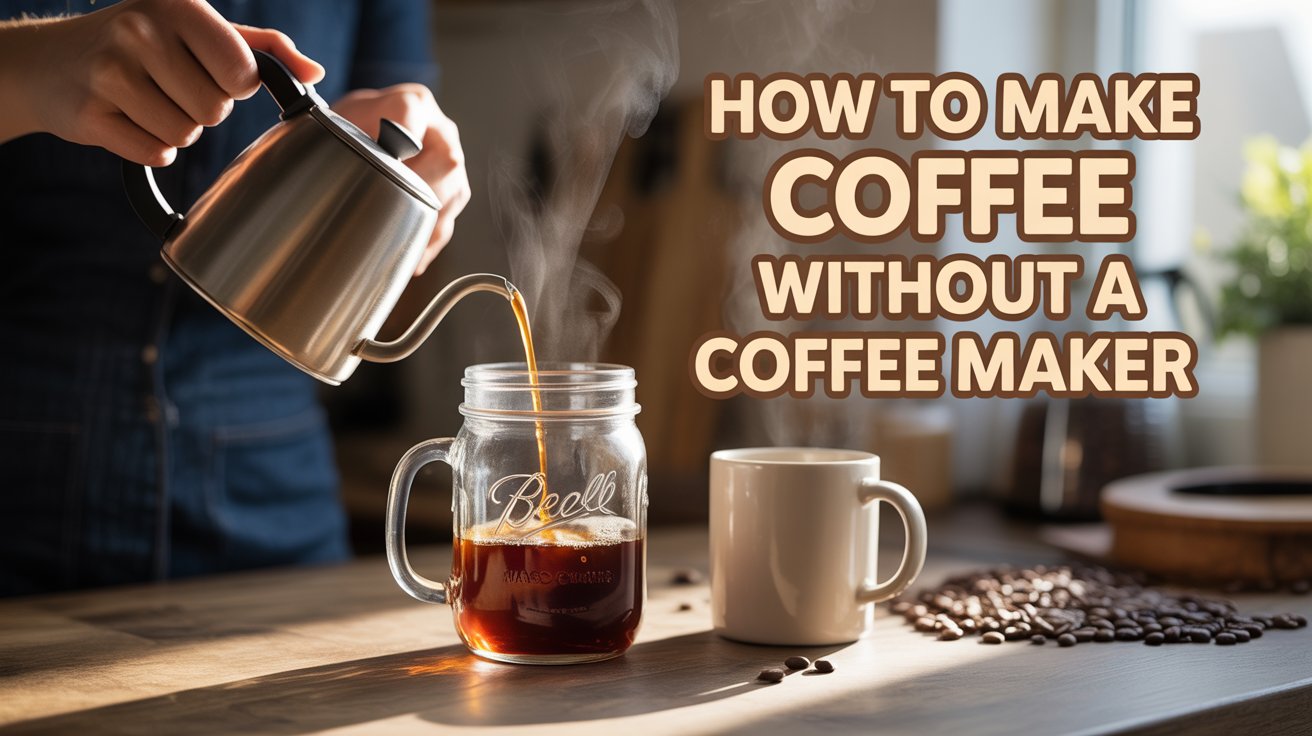
Ever found yourself craving a perfect cup of coffee… but your coffee maker is nowhere in sight? Don’t panic. You can brew a rich, satisfying cup without any fancy machine.
In this guide, I’ll show you exactly how to make coffee without a coffee maker, using simple tools you already have at home. These methods aren’t just hacks—they’re tried, tested, and guaranteed to give you a great cup every time.
Whether you’re camping, traveling, or just facing a broken machine, you’ll learn step-by-step techniques that save time, reduce mess, and keep your coffee strong and flavorful. Let’s dive in and turn your coffee crisis into a win.
Quick Answer
If you need coffee right now and don’t have a coffee maker, here’s the fast track:
No tools at all? Cowboy coffee is your best friend. Boil water, add grounds, let them settle, pour carefully. Strong, simple, no extras needed.
Want a cleaner cup? Use a fine mesh strainer or DIY pour-over with a cloth or paper filter. Smooth, sediment-free coffee.
On the go? Make a DIY coffee bag—steep like tea, then remove. Perfect for travel, office, or camping.
Prefer cold coffee? Cold brew overnight using a jar or pitcher. Mild, smooth, and easy to prepare ahead.
Each method has its pros. Your choice depends on tools, time, and desired flavor. Think of this as a mini coffee decision tree: tools → method → perfect cup.
What You’ll Need (Universal & Optional Tools)
Before you brew, let’s gather essentials. The core ingredients are simple:
Coffee grounds: Medium or coarse grind works best for non-machine brewing. Grind size affects extraction and sediment.
Water: Fresh, filtered, or bottled water ensures clean flavor. Avoid overly soft or heavily chlorinated tap water.
Optional tools make life easier:
Pot, saucepan, or kettle for boiling.
Fine mesh strainer or cheesecloth for filtering.
Paper filters or reusable cloth filters for a cleaner cup.
DIY coffee bags for portable steeping.
Mug, cup, or thermos for serving.
Tool Availability vs. Outcome Quality
| Tool / Item | Sediment Control | Flavor Quality | Convenience | Notes |
|---|---|---|---|---|
| Cowboy Coffee (no filter) | Low | Medium | High | Strong, rustic taste |
| Fine Mesh Strainer | Medium | High | Medium | Removes most grounds |
| Cloth/Paper Filter | High | Very High | Medium | Smooth cup, easy cleanup |
| DIY Coffee Bag | High | Medium-High | High | Portable, minimal mess |
| Cold Brew Jar | Medium | High | Medium | Requires planning, smooth flavor |
Expert Tip: A coarser grind reduces grit and bitterness in all methods. Fine grounds can clog filters and settle poorly, except in cold brew, where fine grounds can produce stronger extraction.
With these essentials in place, you’re ready to pick a method and start brewing. Each tool and technique has a purpose—choosing the right one lets you control strength, clarity, and flavor like a pro barista, even without a coffee maker.
Best Methods to Brew Coffee Without a Coffee Maker
When your coffee maker is out of commission—or you simply want a minimalist approach—you still have multiple ways to brew a satisfying cup. Below, we break down six reliable methods, complete with why they work, step-by-step instructions, pros and cons, and expert tips to get the best results.
1. Cowboy Coffee (Pot or Kettle Method)
What it is & why it works:
Cowboy coffee is the classic no-frills method. Hot water and coarse coffee grounds do all the work. It’s rugged, fast, and delivers strong flavor—perfect for camping or emergencies.
Step-by-step instructions:
Fill a pot or kettle with water.
Bring water to a boil.
Add coffee grounds (roughly 2 tablespoons per 6 oz water).
Let it boil briefly, then remove from heat.
Allow grounds to settle for 2–3 minutes.
Pour slowly into a mug, leaving grounds behind.
Pros: Strong, bold flavor; no special tools needed.
Cons: Sediment can settle at the bottom; slightly bitter if overcooked.
Quick tip: Add a pinch of cold water after boiling to help grounds settle faster. Stir gently if you prefer a slightly lighter brew.
2. Strainer or DIY Pour-Over Method
What it is & why it works:
This method mimics a traditional pour-over using household items. A fine mesh strainer or cloth/paper filter ensures a cleaner cup with minimal sediment.
Step-by-step instructions:
Place filter in a bowl, mug, or funnel.
Add 1–2 tablespoons of coffee grounds per 6 oz water.
Heat water to just below boiling (195–205°F).
Slowly pour water over grounds in a circular motion.
Let coffee drip fully through the filter before removing.
Pros: Cleaner, smoother cup than Cowboy coffee; more control over extraction.
Cons: Requires filter alternative; slightly slower.
Pro tip: If you don’t have a funnel, place the filter in a bowl and pour carefully—works just as well and avoids mess.
3. DIY Coffee Bag (Tea Bag Style)
What it is & why it works:
Turn coffee grounds into a portable “tea bag” for steeping. Great for travel, office, or camping.
Step-by-step instructions:
Place 1–2 tablespoons of medium grind coffee in a clean cloth or paper filter.
Tie securely with string to create a bag.
Steep in hot water for 3–5 minutes.
Remove the bag and enjoy.
Pros: Portable, mess-free, easy to control strength by steeping time.
Cons: Slightly less robust flavor than full immersion methods.
Expert tip: Pre-weigh bags for consistent strength every time.
4. Cold Brew Without Equipment
What it is & why it works:
Cold brew extracts flavor slowly in cold water, producing a smooth, low-acidity coffee. No special gear required—just a jar or pitcher.
Step-by-step instructions:
Combine 1 cup coarse coffee grounds with 4 cups cold water in a jar.
Stir gently and cover.
Let steep in the fridge for 12–18 hours.
Strain through a fine mesh strainer or cloth filter.
Pros: Smooth, easy on the stomach; great for hot weather.
Cons: Long brew time; requires planning ahead.
Tip: Use filtered water for a cleaner flavor, and experiment with steeping time for strength preference.
5. Turkish-Style Coffee (Traditional Brew)
What it is & why it works:
Finely ground coffee is boiled directly with water, sometimes with sugar, in a small pot (cezve/ibrik). Produces rich, aromatic coffee with sediment at the bottom.
Step-by-step instructions:
Add 1–2 teaspoons of fine coffee per 3 oz water to a small pot.
Optional: add sugar to taste.
Slowly bring to a boil over low heat.
Remove just before it boils over, pour into cup carefully.
Pros: Strong, authentic flavor; no filter needed.
Cons: Leaves sediment; requires attention during boiling.
Expert tip: Let the coffee sit 1–2 minutes after pouring for grounds to settle.
6. Microwave Method (Quickest)
What it is & why it works:
Ideal for instant coffee or minimal grind brewing. Quickest method when time is tight.
Step-by-step instructions:
Add water to a microwave-safe mug.
Heat until hot (1–2 minutes depending on microwave).
Stir in coffee grounds or instant coffee.
Let sit 1 minute to settle grounds (if using real coffee).
Pros: Extremely fast; convenient in office or dorm.
Cons: Less filtered; weaker flavor with regular grounds.
Tip: Use medium grind and let sit a minute before drinking to reduce sediment.
Method Comparison — Best Way for Your Situation
| Method | Tools Needed | Time | Cleanliness | Strength | Grit Risk |
|---|---|---|---|---|---|
| Cowboy Coffee | Pot/kettle | 5–10 min | Low | High | Medium |
| Strainer / DIY Pour-Over | Filter/strainer | 5–8 min | Medium-High | Medium-High | Low |
| DIY Coffee Bag | Cloth/paper | 3–5 min | High | Medium | Low |
| Cold Brew | Jar/pitcher | 12–18 hrs | Medium | Medium | Low |
| Turkish-Style Coffee | Small pot/cezve | 5–7 min | Medium | High | Medium-High |
| Microwave | Mug | 2–3 min | Medium | Low-Medium | Medium |
Common Mistakes & Myths
Even without a coffee maker, small missteps can ruin a cup. Knowing what to avoid ensures every brew hits the mark.
1. Adding boiling water immediately ruins the coffee
Pouring water straight off a rolling boil extracts bitter compounds quickly. Aim for 195–205°F (90–96°C) for optimal flavor. A little patience makes a world of difference.
2. Not letting grounds settle before pouring
Cowboy coffee or Turkish-style brews can be gritty if you pour too quickly. Wait 2–3 minutes for grounds to sink naturally. This simple step drastically reduces sediment in your cup.
3. Using too fine a grind without a proper filter
Fine grounds clog DIY filters and create sludge. Stick to coarse or medium grind when brewing without a machine. Fine grind works only for methods designed for it, like Turkish coffee.
4. Myth: Instant coffee is the only alternative
Some think instant coffee is the only solution, but stovetop, immersion, and DIY bag methods produce richer flavor, better aroma, and customizable strength. Don’t settle for flat, pre-packaged taste.
5. Myth: All coffee without machines tastes bad
The reality? Proper technique trumps equipment. With correct ratios, water temperature, and timing, any method can produce a satisfying, full-bodied cup. Experience proves it every time.
Pro tip: Experiment with small batches first. Adjust grind size and steeping time to suit your taste before scaling up.
Expert Tips for Better Coffee
Mastering coffee without a machine is about control. Small tweaks elevate flavor, texture, and clarity.
1. Water temperature ranges for optimal extraction
195–205°F hits the sweet spot. Below this, coffee under-extracts and tastes weak; above, it becomes bitter. Use a thermometer for precision if you’re serious about quality.
2. Grind size guidelines
Coarse: Cowboy coffee, cold brew.
Medium: DIY pour-over, coffee bags.
Fine: Turkish-style coffee.
Adjust based on method to balance strength and sediment.
3. Steeping time for preferred strength
Shorter brew → lighter, milder coffee.
Longer brew → stronger, more intense flavor.
Cold brew: 12–18 hours for smooth, low-acid extraction.
4. Reducing sediment without a machine
Use a fine mesh strainer, cheesecloth, or paper filter.
Let grounds settle before pouring.
Pre-wet grounds to help even extraction and reduce clumping.
5. Barista-style tweaks
Pre-wet grounds: Start with a splash of water to bloom coffee—enhances aroma and flavor.
Bloom stage: Let coffee release trapped gases for 30–45 seconds before adding remaining water.
Pro tip: Taste along the way. Adjust steeping, grind size, and water temperature gradually to find your perfect cup. Small refinements make a huge difference.
Frequently Asked Questions
Can I make coffee without a coffee maker?
Yes. You can brew a satisfying cup using methods like stovetop boiling, DIY pour‑over, or cold brew—no machine required. You only need hot water, ground coffee, and a way to separate grounds.
What’s the easiest way to brew coffee without any tools?
The simplest is the cowboy or stovetop method: boil water with grounds in a pot, let them settle, then pour off the liquid into your mug.
How do I filter coffee without a paper filter?
Use a fine mesh strainer, cloth, or even a DIY paper towel filter to separate grounds from brew. A strainer gives cleaner coffee than letting grounds settle alone.
Can I make cold brew without any special equipment?
Absolutely. Soak coarse coffee grounds in cold water in a jar or pitcher for 12–24 hours, then strain with a sieve or cloth for a smooth, low‑acid brew.
How much coffee do I need without a coffee maker?
A good rule of thumb is roughly 1–2 tablespoons of ground coffee per 6–8 oz of water, but adjust to your strength preference.
Conclusion
Now you know exactly how to brew a great cup without a coffee maker—whether it’s Cowboy coffee, a DIY pour-over, or smooth cold brew. Each method is simple, reliable, and tailored to the tools you have on hand.
Pick a method, experiment with grind size and steeping time, and enjoy coffee that’s every bit as satisfying as machine-made.

Shahriar brings a unique blend of storytelling prowess and digital expertise to Daily Coffee Guide. With a background in SEO and content strategy, he ensures our articles on Beans, Coffee, Tea, and Drinks are both engaging and discoverable. His passion for coffee culture drives him to explore and share the rich narratives behind every cup.