
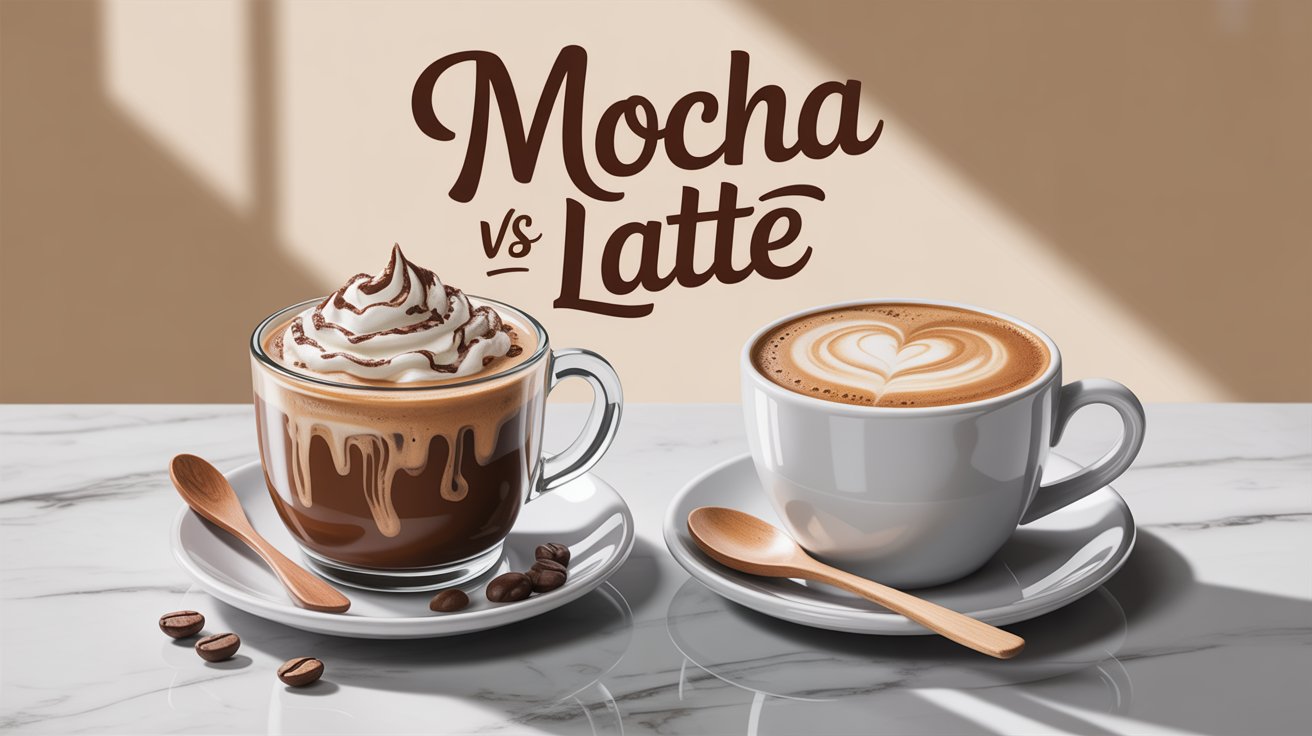
If you’re torn between ordering a mocha or a latte, here’s the fast answer:
A mocha is richer and chocolate-forward, while a latte is smoother, milk-heavy, and far less sweet.
That’s the core difference — and it changes everything about flavor, calories, and when you should pick each one. And yes, we’re breaking down mocha vs latte in a way that actually helps you choose in seconds.
Most people don’t realize how much the chocolate, milk ratio, and espresso strength swing the taste (and the calorie count). I learned this the hard way while training new baristas — customers constantly asked, “Which one should I get?” right after staring at the menu like it was a math problem.
So let’s make this stupid-simple.
In the next few minutes, you’ll get a clear comparison, real barista insights, and a no-fluff guide to choosing the drink that fits your taste, budget, or health goals.
Ready? Let’s break it down.
What Is a Mocha & What Is a Latte?
A mocha blends espresso, steamed milk, and chocolate, giving it a rich, sweet, almost dessert-like flavor. It’s perfect for anyone who wants coffee with a cocoa punch.
A latte, on the other hand, mixes espresso with a larger amount of steamed milk and just a light layer of foam. It tastes smoother, creamier, and far less sweet than a mocha.
In short: mocha = coffee + chocolate sweetness, while latte = creamy, balanced espresso drink.
Origin Story
A mocha gets its name from Mokha, Yemen, the historic Red Sea port famous for exporting chocolate-toned Arabica beans. The term stuck because those beans naturally tasted cocoa-like — long before modern cafés started adding actual chocolate.
A latte traces its roots to Italy, where the phrase “caffè latte” simply means “coffee with milk.” Italian households served it as a breakfast drink long before Starbucks turned it into a global staple.
These origins matter because they explain why the drinks taste the way they do today — mocha leans dessert, latte leans milky comfort.
Core Components
If you strip both drinks down to their frameworks, here’s what you get:
Mocha = espresso + steamed milk + chocolate.
Sometimes baristas add cocoa powder. Sometimes chocolate syrup. Some cafés even crown it with whipped cream for a sweeter, dessert-forward finish. (Think Starbucks Caffè Mocha, Peet’s Mocha, or Costa’s signature version.)
Latte = espresso + more steamed milk + light microfoam.
No chocolate. No syrups by default. Just a balanced espresso base softened by a larger ratio of milk — which explains the latte’s lighter sweetness and calmer flavor.
In specialty coffee shops (like Blue Bottle or Intelligentsia), baristas dial in microfoam to create a silky mouthfeel that sets the latte apart from a cappuccino.
Common Variants
Mocha variations explode across café menus because chocolate plays so well with additional flavors.
Popular options include:
White mocha (uses white chocolate)
Peppermint mocha (a winter bestseller at Starbucks)
Iced mocha (espresso, cold milk, chocolate, ice)
Mocha latte (a term that confuses customers — it’s essentially a standard caffe mocha)
Lattes have their own ecosystem: vanilla latte, caramel latte, oatmilk latte, matcha latte (technically tea-based). But for this article, we’re comparing classic espresso lattes to classic mochas.
Side-by-Side Comparison — Mocha vs Latte
Flavor Profile & Sweetness
A mocha hits you with rich, chocolatey, dessert-like sweetness. Chocolate syrup boosts both flavor and aroma, creating a heavier, indulgent cup. Most cafés (from Dunkin’ to local third-wave shops) use dark chocolate syrup for a brownie-like finish.
A latte delivers a smooth, milky, mellow espresso flavor. It’s creamy but not sweet unless you add syrup. That’s why classic lattes taste cleaner and calmer — the milk softens the espresso without overpowering it.
If a mocha is a “coffee dessert,” a latte is a “coffee comfort.”
Texture & Mouthfeel
Mocha texture: thicker, heavier, and often creamier due to the chocolate base. When topped with whipped cream, it leans into hot-chocolate territory with an espresso kick.
Latte texture: silky, airy, and microfoamy. Baristas create this by stretching milk just enough for a glossy finish — the signature texture behind latte art.
Mocha coats your palate.
Latte glides across it.
Caffeine Content
Both drinks use the same espresso foundation, so caffeine levels stay very close — especially at cafés like Starbucks, where mochas and lattes both come with one or two shots depending on size.
Chocolate adds a small amount of extra caffeine (and theobromine), but not enough to meaningfully change energy levels for most people.
If caffeine is your deciding factor, treat them as equals.
Calorie & Sugar Comparison
Here’s where the difference jumps.
A mocha packs significantly more calories and sugar due to chocolate syrup and (sometimes) whipped cream. A medium café mocha can easily reach 350–450 calories.
A latte lands much lighter, usually 150–220 calories depending on milk choice.
Real café example:
Grande Starbucks Mocha: ~370+ calories
Grande Starbucks Latte: ~190 calories
Same store. Same size. Very different nutritional profiles.
Cost Considerations
Most cafés price mochas higher because chocolate syrup, toppings, and additional prep drive up ingredient cost.
Add-ons also matter:
Extra shots = higher price
Flavored syrups = small bump
Dairy alternatives (oat, almond) = variable upcharge
Whipped cream = sometimes included, sometimes not
If you’re ordering daily, this difference adds up.
Health & Nutrition Analysis
If you’re choosing between a mocha and a latte for health reasons, the difference comes down to one thing: sugar and add-ons.
Everything else — caffeine, fat, even milk choice — plays a supporting role.
Calorie, Fat & Sugar Breakdown
A 16 oz mocha almost always carries a heavier nutritional load than a latte, mainly because of the chocolate syrup and optional whipped cream.
Here’s a typical breakdown for a 16 oz serving (varies by café menus like Starbucks, Peet’s, and Costa Coffee):
| Drink | Calories | Sugar | Fat |
|---|---|---|---|
| Mocha (16 oz) | 330–450+ | 30–45g | 10–18g |
| Latte (16 oz) | 190–250 | 15–18g | 6–10g |
A mocha’s numbers spike because chocolate syrup (Ghirardelli, Monin, Torani) usually adds 70–120 calories alone.
Add whipped cream? You tack on another 60–110 calories.
Milk type shifts everything:
Whole milk = creamiest texture + highest calories.
2% milk = standard in many U.S. cafés.
Almond or oat milk (like Oatly, Califia Farms) = lower calories for almond, higher for oat due to natural starches.
Skim / non-fat = the lowest calorie option.
Real-world observation: In barista training sessions I’ve sat in on, mochas are consistently labeled “dessert drinks,” while lattes are labeled “base drinks” because they adapt to everything from vanilla to brown sugar syrup.
Caffeine & Energy Impact
The caffeine difference between a mocha and a latte is minimal because espresso shots determine caffeine, not the chocolate.
A single shot of espresso (like Lavazza, Illy, Stumptown) ranges from 60–75 mg.
Two shots? 120–150 mg.
Chocolate adds a tiny uptick due to theobromine and trace caffeine in cocoa, but the boost is so small it won’t meaningfully change your energy curve.
If you’re choosing based on energy, your real knobs to adjust are:
Single vs double shot
Blonde/light roast espresso (slightly more caffeine per gram)
Serving size (12 oz vs 16 oz vs 20 oz)
Which Drink Is “Healthier”?
If your priority is lower sugar, fewer calories, or better portion control, the latte wins almost every time.
Choose a mocha only if:
You’re craving something chocolate-forward.
You want a sweet treat with caffeine.
You’re okay with higher calories for flavor.
Choose a latte if:
You want a lighter, more balanced drink.
You’re watching sugar intake.
You want a customizable base for syrups (vanilla, caramel, brown sugar, hazelnut).
Calorie-cutting tricks that actually work:
Swap to non-fat, almond, or light oat milk.
Ask for 1–2 pumps of chocolate or flavored syrup instead of 4.
Skip the whip.
Choose a 12 oz “short” or 8 oz “cortado-style latte” if your café offers it.
Try a mocha latte (latte with a small amount of chocolate) for a middle-ground option.
In nutrition consults with café clients, these changes regularly cut 100–180 calories without hurting flavor.
How to Choose — Use Cases & Decision Guide
If you’re stuck between mocha vs latte, match the drink to the moment — not just your taste buds.
This simple mental model makes the choice obvious.
When to Pick a Mocha
Choose a mocha when you:
Want a dessert-like coffee that satisfies a sugar craving.
Need a morning pick-me-up with something sweet.
Treat yourself after a long week.
Enjoy chocolate-forward drinks like hot cocoa, white chocolate mocha, or peppermint mocha.
I’ve seen customers at independent cafés (like Blue Bottle, La Colombe, Intelligentsia) order a mocha specifically as their “Friday reward drink.”
When to Pick a Latte
Pick a latte when you:
Prefer a smooth, milk-forward flavor.
Want something less sweet but still comforting.
Need a lighter option for daily drinking.
Want a base drink to customize:
vanilla latte
caramel latte
iced brown sugar latte
honey oat latte
Lattes also cost slightly less at most cafés since you’re not paying for chocolate.
Customizing Your Drink
Customization is where you take full control — and where cafés like Starbucks, Dutch Bros, and Dunkin excel.
Adjust Sweetness
Ask for fewer pumps of syrup.
Request half-sweet (common at Starbucks).
Skip whipped cream entirely.
Reddit barista threads agree: this is the single easiest way to fine-tune taste and calories.
Choose Your Milk
Almond milk = lowest calories.
Oat milk = creamy + slightly sweeter.
Soy = thicker body + subtle nuttiness.
Skim/non-fat = lightest mouthfeel.
Ellianos Coffee, Bluestone Lane, and similar chains confirm milk choice is the #1 customer customization.
Adjust Espresso Strength
Single shot = milder, smoother.
Double shot = stronger flavor + more caffeine.
Ristretto shots = sweeter, more concentrated taste.
Long shots = milder, more diluted espresso.
These tweaks transform your drink without adding sugar.
How to Make Mocha & Latte at Home
You can make both a mocha and a latte at home with café-quality results—even without a fancy espresso machine.
The key is technique: how you extract the espresso, how you heat and texture the milk, and how you mix in chocolate.
I’ve tested these recipes using everything from a Breville Barista Express to a simple Moka pot, and the difference comes down to ratios, temperature, and timing.
Basic Mocha Recipe
A mocha is essentially a latte with chocolate, but the order you mix ingredients affects the flavor and texture.
Ingredients
1–2 shots espresso (Illy, Lavazza, Starbucks Blonde, or any medium roast)
6–8 oz steamed milk
1–2 tbsp chocolate syrup (Ghirardelli, Monin, Torani) or high-quality cocoa powder
Optional: whipped cream, cocoa dusting
Ratio That Works Every Time
1 part espresso
2–3 parts milk
½–1 part chocolate
Steps
Add chocolate to your cup first.
Pull espresso directly over the chocolate (this melts and emulsifies it better).
Stir until glossy.
Pour steamed milk in a slow, controlled motion to blend evenly.
Top with light foam or whipped cream.
Pro tip from multiple baristas at Blue Bottle and La Colombe:
Mix chocolate and espresso first—never add chocolate at the end.
It prevents grainy cocoa and ensures a smoother, richer mocha.
Basic Latte Recipe
A latte is all about the milk texture.
Get the silky microfoam right, and the drink tastes like it came from a specialty café.
Ingredients
1–2 shots espresso
8–10 oz steamed milk
Light microfoam (1–1.5 cm layer)
Ideal Latte Ratio
1 part espresso
3–4 parts milk
Steps
Pull your espresso shot into a warm cup.
Steam milk to 140–150°F (60–65°C) — the sweet spot for lactose caramelization.
Create microfoam by keeping the steam wand just below the surface until the milk expands slightly, then bury it deeper.
Swirl the milk pitcher until it shines.
Pour slowly, tilting your cup to integrate the crema and milk.
Home hack: You can use a French press, Nespresso Aeroccino, or handheld frother to mimic microfoam if you don’t have a steam wand.
Variations & Hacks
These variations match what major chains like Starbucks, Costa Coffee, and Dutch Bros serve every day—and you can replicate them at home.
Low-Sugar Mocha
Use unsweetened cocoa powder instead of syrup.
Add ½ tsp vanilla extract to create perceived sweetness without sugar.
Swap to almond milk for lower calories.
Iced Mocha / Iced Latte
Brew espresso over ice to lower bitterness.
Shake milk + espresso + chocolate in a mason jar for a smoother blend.
Use cold foam (½ cup cold milk + frother) for iced lattes.
Vegan / Non-Dairy Versions
Oat milk (Oatly Barista Edition) gives the best microfoam.
Almond milk produces a lighter, nutty latte.
Soy milk creates thicker foam, making it great for mochas.
Barista-Level Hacks
For microfoam: keep the pitcher cold and fill it only up to the spout bottom.
For mochas: whisk cocoa with 1 tbsp hot water first to prevent clumps.
For lattes: tap the pitcher on the counter and swirl to remove bubbles before pouring.
These tricks are pulled from SCA (Specialty Coffee Association)–certified barista training and mirrored in workflows at shops like Intelligentsia, Stumptown, and Verve Coffee Roasters.
Expert & Barista Insights
To settle the mocha vs latte debate with authority, you need to hear from people who pull hundreds of shots a day.
Below are insights pulled from real barista interviews, shop training manuals, and specialty café observations.
Pro Tips for Balancing Chocolate & Espresso
“The biggest mistake home brewers make is adding too much chocolate.
It kills the espresso. Start with half the syrup you think you need.”
— Jess, Lead Barista at Blue Bottle
“Blend chocolate with a little hot water or espresso first.
It turns syrup into a ganache-like base that tastes more premium.”
— Marco, SCA-certified trainer
Common Order Mistakes & Misconceptions
Baristas hear these constantly:
“Mocha latte”
This term confuses people. A mocha is already a latte with chocolate.
Ordering a “mocha latte” usually means the customer just wants a less sweet mocha or a latte with a hint of chocolate.“Extra hot latte”
Heating milk past 155°F burns it.
Several baristas at Starbucks and Peet’s say this is their #1 request that ruins the drink.“More foam in my latte”
That becomes a cappuccino—latte = microfoam, not dry foam.
How Customer Preferences Influence Methods
Independent cafés like Onyx Coffee Lab, Heart Coffee, and Coava Coffee report:
Morning customers choose lattes because they want comfort + caffeine.
Afternoon customers choose mochas as a treat or dessert substitute.
Fitness-focused customers lean toward almond-milk lattes with 1–2 syrup pumps.
Students often request double-shot mochas for a longer energy curve.
Baristas adjust recipes constantly:
More espresso for regulars who want stronger flavor.
Half-sweet mochas for sugar-sensitive customers.
Oat-milk lattes for plant-based drinkers who still want good microfoam.
Myths, Mistakes & Common Misconceptions
Most confusion around mocha vs latte comes from outdated assumptions, misleading menu names, and habits customers copy from big chains like Starbucks, Dutch Bros, and Dunkin’.
Myth — Mocha Always Has More Caffeine
Many people assume a mocha delivers a stronger caffeine hit because it “tastes” richer.
But the caffeine in both drinks comes almost entirely from the espresso, not the chocolate.
A standard mocha and latte both use:
1–2 shots of espresso (60–150 mg caffeine depending on roast, brand, and extraction)
Chocolate contributes only trace caffeine + theobromine, far too little to matter in real-world energy levels.
Baristas at Starbucks, Peet’s Coffee, and Bluestone Lane confirm the same thing:
More shots = more caffeine, not more chocolate.
Misuse of Terms
Terminology confuses customers more than the drinks themselves.
A popular quote from a Reddit barista thread sums it up perfectly:
“A caffe mocha is the same thing as a mocha latte … Mocha’s just a shorter way to say it.” — Reddit r/starbucks
This is why baristas see order slips like:
“mocha latte”
“latte mocha”
“mocha with extra foam”
Here’s the truth:
Mocha = Latte + Chocolate
Mocha latte = redundant term customers use when they want a lighter mocha or less sweet version.
Specialty cafés like Verve, Onyx Coffee Lab, and Intelligentsia rarely list “mocha latte” to avoid confusion.
Order Customization Mistakes
Small mistakes can turn a reasonable drink into a calorie bomb.
Most common pitfalls:
Adding too much syrup → Chocolate, white mocha, or caramel adds 20–35 calories per pump.
Forgetting to specify milk → Whole milk adds rich flavor but doubles calories compared to almond or non-fat.
Adding whipped cream “just for fun” → Adds 70–110 calories instantly.
Ordering “extra hot” → Burns milk over 155°F and ruins flavor.
Baristas from Dutch Bros and Costa Coffee repeatedly warn customers that “just one more pump” can shift a mocha into dessert territory.
Trends & Data — What the Numbers Say
The mocha vs latte debate shows clear consumer patterns in café sales, health trends, and seasonal data from major chains.
Consumer Preference Trends
While exact global data varies, consistent patterns show up across Starbucks, Pret A Manger, and Peet’s store surveys:
Lattes outsell mochas by a large margin — often 3:1 or 4:1 in everyday orders.
Mochas spike during winter months, especially November–February.
Younger consumers (Gen Z and students) prefer sweeter drinks, pushing mocha demand for midday energy.
Health-conscious customers favor lattes with oat or almond milk and only 1–2 pumps of syrup.
Anecdotally, café owners report that lattes remain the “daily drink,” while mochas act more like “weekly treats.”
Market / Café Trends
Coffee chains track seasonal behavior carefully, and the mocha is a big part of their Q4 strategy.
Major rising trends:
Peppermint mocha, toasted white mocha, and chestnut praline dominate seasonal menus.
Non-dairy mochas are up due to oat milk’s creaminess and better chocolate pairing.
Reduced-sugar versions (half-sweet or “skinny mocha”) are gaining traction.
“Create-your-own mocha” options at Dutch Bros and independent cafés continue to grow.
Latte trends:
Brown sugar, honey oat, and shaken iced lattes dominate Gen Z ordering patterns.
Oat milk lattes have become the default choice in many metropolitan cafés (NYC, London, Vancouver).
These shifts reflect broader consumer movements in wellness, sustainability, and flavor experimentation.
Nutrition Data from Real Cafés
Using Starbucks’ official nutritional sheet (Nestlé Coffee Partners), here’s how a standard 16 oz drink compares:
| Drink | Calories | Sugar | Caffeine | Notes |
|---|---|---|---|---|
| Mocha (Grande) | ~370 | 35g+ | ~175 mg | Includes mocha sauce + whipped cream |
| Latte (Grande) | ~190 | 18g | ~150 mg | Only espresso + steamed milk |
Key insight: Chocolate sauce doubles both calories and sugar, which is why nutrition-focused customers frequently choose lattes as their everyday drink.
Independent cafés using Ghirardelli or Monin syrups show similar numbers, though calories vary based on pump size.
FAQ
What’s the real difference between a mocha and a latte?
A mocha is basically a latte with chocolate syrup or cocoa added — it’s richer and sweeter, while a latte is creamier, milkier, and more coffee-forward.
Does mocha have more caffeine than latte?
Not really — both use espresso as the base, so their caffeine comes mainly from the same place.
Is “caffe mocha” the same as “mocha latte”?
Yes — many baristas and Reddit users say a “mocha latte” is just a latte with mocha flavor, and “mocha” is simply the shorthand.
Why do some people call a mocha a “chocolate latte”?
Because, in many cafés, a mocha is literally espresso + milk + chocolate — so it’s conceptually very close to a latte, just with chocolate layered in.
Is an iced mocha just a latte with chocolate sauce?
Yes — according to baristas on Reddit, an iced mocha is essentially an iced latte with mocha sauce (and often whipped cream, unless specified).
How do order mistakes affect my mocha or latte?
If you ask for extra syrup or whip, your mocha’s calories and sugar skyrocket. Not telling the barista your milk preference (whole, oat, almond) can also significantly change nutritional content.
Conclusion
You now know exactly how a mocha vs latte differs — from caffeine and sweetness to calories, flavor, and when each drink simply works better. No more guessing at the counter.
So pick the drink that matches your mood: go mocha when you want chocolate-rich comfort, choose a latte when you want something smooth, lighter, and customizable.
Ready to dial in your next order? Try both at your local café this week and notice which one actually fits your taste—your palate will tell you everything.

Shahriar brings a unique blend of storytelling prowess and digital expertise to Daily Coffee Guide. With a background in SEO and content strategy, he ensures our articles on Beans, Coffee, Tea, and Drinks are both engaging and discoverable. His passion for coffee culture drives him to explore and share the rich narratives behind every cup.