
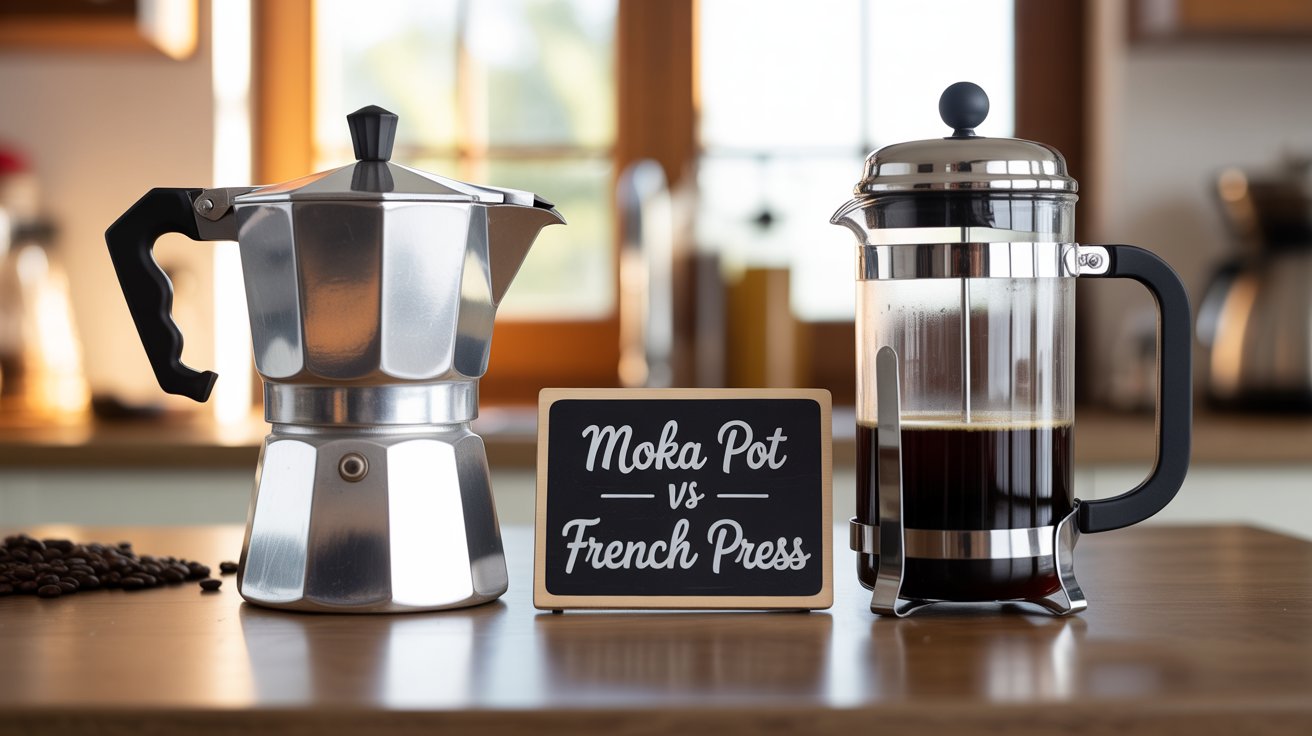
Choosing between a moka pot and a French press comes down to how you like your coffee: strong and concentrated or smooth and full-bodied. A moka pot is a stovetop brewer that uses pressure to produce a bold, espresso-like coffee, while a French press uses an immersion method to extract rich flavors and natural oils for a softer, more balanced cup.
In This Article
ToggleIf you’re comparing Moka Pot vs French Press for taste, caffeine, and ease of use, each method offers clear advantages. The moka pot delivers intensity and works well for milk-based drinks, while the French press is simpler to use and produces a cleaner, less bitter flavor profile.
In this guide, you’ll get a direct, side-by-side comparison of Moka Pot vs French Press—including taste, caffeine content, grind size, and usability—so you can confidently choose the right coffee maker based on your brewing style and preferences.
Moka Pot vs French Press (Quick Answer)
A moka pot produces strong, concentrated coffee with an espresso-like intensity using stovetop pressure. A French press makes smooth, full-bodied coffee through immersion brewing. Choose a moka pot if you prefer bold, rich flavor and higher strength, and choose a French press if you want a balanced, less bitter, and easy-to-brew cup.
What Is a Moka Pot?
A moka pot is a stovetop coffee maker that brews coffee by using steam pressure to push hot water through finely ground coffee. As the water heats in the lower chamber, pressure forces it upward through the coffee grounds into the top chamber, resulting in a concentrated brew.
The flavor is bold, rich, and slightly intense, often compared to espresso but with a bit less pressure and crema. It highlights deeper, roasted notes and can become slightly bitter if over-extracted.
A moka pot is best for people who enjoy strong, espresso-style coffee at home, especially if they want a powerful base for drinks like lattes or cappuccinos without using an espresso machine.
What Is a French Press?
A French press is an immersion coffee maker that brews by steeping coarse coffee grounds in hot water for several minutes, then separating them using a metal mesh plunger.
It produces a rich, full-bodied cup with natural oils and a heavier mouthfeel. The flavor is smooth and less acidic, though some fine sediment may remain in the cup.
A French press is best for those who want smooth, balanced coffee with minimal equipment and full control over brewing time.
Moka Pot vs French Press: Key Differences
| Feature | Moka Pot | French Press |
|---|---|---|
| Brewing Method | Pressure brewing (stovetop steam pressure) | Immersion brewing (steeping + pressing) |
| Taste | Strong, bold, slightly bitter | Smooth, rich, full-bodied |
| Caffeine | Higher per ounce (concentrated) | Higher per cup (larger serving size) |
| Grind Size | Medium-fine | Coarse |
| Brew Time | 4–7 minutes | 4–5 minutes |
| Ease of Use | Moderate (requires heat control) | Easy (simple steep and press) |
| Cleanup | More effort (multiple parts, rinsing) | Easy (remove grounds, quick rinse) |
Moka Pot vs French Press Taste
Coffee brewed with a moka pot is bold, strong, and concentrated due to pressure-based extraction. This results in a heavier intensity with pronounced roasted, chocolatey, and sometimes slightly bitter notes—especially if the heat is too high or the grind is too fine. It resembles espresso in strength but lacks the same crema and pressure level.
French press coffee is smooth, rich, and full-bodied due to immersion brewing and the use of a metal filter that allows natural oils and fine particles into the cup. This creates a thicker mouthfeel and more complex flavor, often highlighting subtle notes like fruitiness, nuttiness, or sweetness with lower perceived bitterness.
Which tastes better depends on preference. If you enjoy strong, punchy coffee with intensity, moka pot is the better choice. If you prefer a balanced, smooth, and naturally rich flavor with more clarity, French press is more suitable.
Moka Pot vs French Press Caffeine
Moka pot coffee contains a higher caffeine concentration per ounce because it brews a smaller, more concentrated volume of coffee. On average, a 1-ounce serving from a moka pot can contain around 60–80 mg of caffeine, depending on the coffee and brew strength.
French press coffee has a lower caffeine concentration per ounce but typically delivers more total caffeine per cup because it uses more water and coffee grounds. An 8-ounce cup of French press coffee usually contains around 80–120 mg of caffeine.
A common misconception is that moka pot coffee always has more caffeine. In reality, it is stronger in concentration, not necessarily in total caffeine per serving. French press often provides more overall caffeine because people drink it in larger quantities.
Moka Pot vs French Press Grind Size
Moka pot requires a medium-fine grind, slightly coarser than espresso but finer than drip coffee. This allows proper pressure extraction without clogging the filter or producing bitter flavors. Using too fine a grind can over-extract and create a harsh, bitter taste, while too coarse a grind leads to weak, under-extracted coffee.
French press requires a coarse grind to prevent coffee grounds from passing through the metal mesh filter. A coarse grind ensures even extraction during the 4–5 minute steep and avoids excessive sediment. Using a fine grind in a French press results in over-extraction, sludgy coffee, and a bitter, gritty cup.
Grind size directly affects flavor, strength, and mouthfeel. Matching the correct grind to each method ensures optimal extraction and prevents bitterness or weak coffee.
Moka Pot vs French Press for Latte
Moka pot produces a concentrated, espresso-like coffee that works well as a base for lattes, cappuccinos, and macchiatos. Its high strength and intensity allow milk to blend without diluting flavor.
French press coffee is weaker and less concentrated, making it unsuitable as a latte base. The resulting milk-based drink is often thin and lacks the bold coffee flavor needed for traditional lattes.
Practical recommendation: use a moka pot if your goal is milk-based drinks. French press is better for black coffee or casual, smooth coffee drinking.
Moka Pot vs French Press: Ease of Use
Moka pots require multiple steps: filling the bottom chamber with water, adding medium-fine coffee to the filter, assembling the pot, and heating it on the stove while monitoring pressure. Heat control is important to avoid over-extraction, burning, or boiling over. This makes moka pots moderately challenging for beginners.
French press is simple: add coarse coffee, pour hot water, steep for 4–5 minutes, and press the plunger. Cleanup involves discarding grounds and rinsing the pot. This straightforward process makes it beginner-friendly and low-maintenance.
Cleaning comparison: moka pots have multiple parts (chamber, filter basket, gasket) that require thorough rinsing to prevent buildup and metallic taste. French press usually has only a plunger and carafe, which are easier to clean and maintain.
Moka Pot vs French Press: Pros and Cons
Moka Pot
Pros
- Produces strong, espresso-like coffee
- Affordable alternative to an espresso machine
- Compact and durable for stovetop use
Cons
- Requires careful heat management
- Coffee can taste bitter if over-extracted
- Multiple parts make cleaning slightly cumbersome
French Press
Pros
- Easy to use, minimal steps
- Full-bodied, rich flavor with natural oils
- Quick cleanup and low maintenance
Cons
- Some fine sediment may remain in the cup
- Weaker coffee concentration, not ideal for milk-based drinks like lattes
- Less suitable for small, concentrated servings
This gives a direct, fully informative comparison of usability and advantages for both brewing methods.
Moka Pot vs French Press vs Pour Over
Pour over coffee produces a clean, bright, and lighter cup because hot water slowly drips through a paper filter, removing oils and sediment. Compared to moka pot and French press, pour over sits between the two in strength and body: it is less intense than moka pot but more filtered and crisp than French press.
Choose pour over if you value clarity, delicate flavors, and precise control over brewing variables like water temperature, pour speed, and extraction time. It highlights subtle notes in specialty beans that may be masked in moka pot or French press coffee.
Moka Pot vs French Press vs AeroPress
AeroPress is a versatile coffee maker that combines immersion and pressure methods. It produces a clean, balanced cup with adjustable strength depending on coffee-to-water ratio and brew time. Brewing is fast (1–3 minutes), and cleanup is simple due to its compact, all-in-one design.
AeroPress works well for espresso-style coffee, pour over-style clarity, or cold brew. It is the best all-round option for users who want a strong, smooth, and customizable cup without needing multiple brewing devices.
Moka Pot vs French Press vs Drip Coffee
Drip coffee makers offer convenience and consistent brewing with minimal effort. Water passes through medium-ground coffee at a controlled rate, producing a predictable, mild cup.
Compared to moka pot, drip coffee is weaker and less concentrated, lacking espresso-like intensity. Compared to French press, it is cleaner with less sediment but also less full-bodied. Moka pot provides bold, strong flavor, French press delivers rich body and oils, while drip coffee emphasizes ease and consistency over strength or complexity.
Percolator vs Moka Pot vs French Press
Percolators brew coffee by cycling boiling water through the grounds repeatedly, producing very strong and sometimes bitter coffee.
Moka pot offers controlled strength with stovetop pressure, giving a concentrated, espresso-like cup without excessive bitterness.
French press produces smooth, full-bodied coffee with natural oils and lower perceived acidity. It is easier to control and less intense than percolator coffee.
Bialetti Moka Pot vs French Press
Bialetti moka pots are known for high-quality aluminum construction, durability, and consistent stovetop espresso-style coffee. Their design ensures proper pressure and even extraction, making them a reliable choice for concentrated coffee at home.
Compared to a standard French press, Bialetti moka pots deliver a stronger, more intense coffee, ideal for espresso-style drinks and milk-based beverages. French presses provide smoother, fuller-bodied coffee with more natural oils, easier brewing, and simpler cleanup, but lack the concentrated strength of a moka pot.
Which One Should You Choose?
Choose a moka pot if you want:
- Strong, concentrated, espresso-style coffee
- A reliable base for lattes, cappuccinos, and milk-based drinks
- A bolder, more intense flavor profile
Choose a French press if you want:
- Smooth, rich, full-bodied coffee with natural oils
- Easy and forgiving brewing without precise heat control
- A larger serving per brew with minimal effort
Your choice depends on whether you prioritize strength and espresso-style intensity (moka pot) or simplicity and balanced flavor (French press).
Final Verdict
The French press is the best overall coffee maker for most users due to its balance of flavor, ease of use, and consistent full-bodied coffee. It delivers smooth, rich coffee without requiring precise heat control or multiple brewing steps, making it ideal for everyday use.
The moka pot is the best choice for those seeking strength and espresso-style intensity. It produces bold, concentrated coffee that works well for milk-based drinks like lattes and cappuccinos, though it requires careful heat control and attention to grind size to avoid bitterness.
In summary, choose French press for simplicity and balanced flavor, and moka pot for strong, concentrated coffee and espresso-style drinks.

Shahriar brings a unique blend of storytelling prowess and digital expertise to Daily Coffee Guide. With a background in SEO and content strategy, he ensures our articles on Beans, Coffee, Tea, and Drinks are both engaging and discoverable. His passion for coffee culture drives him to explore and share the rich narratives behind every cup.