
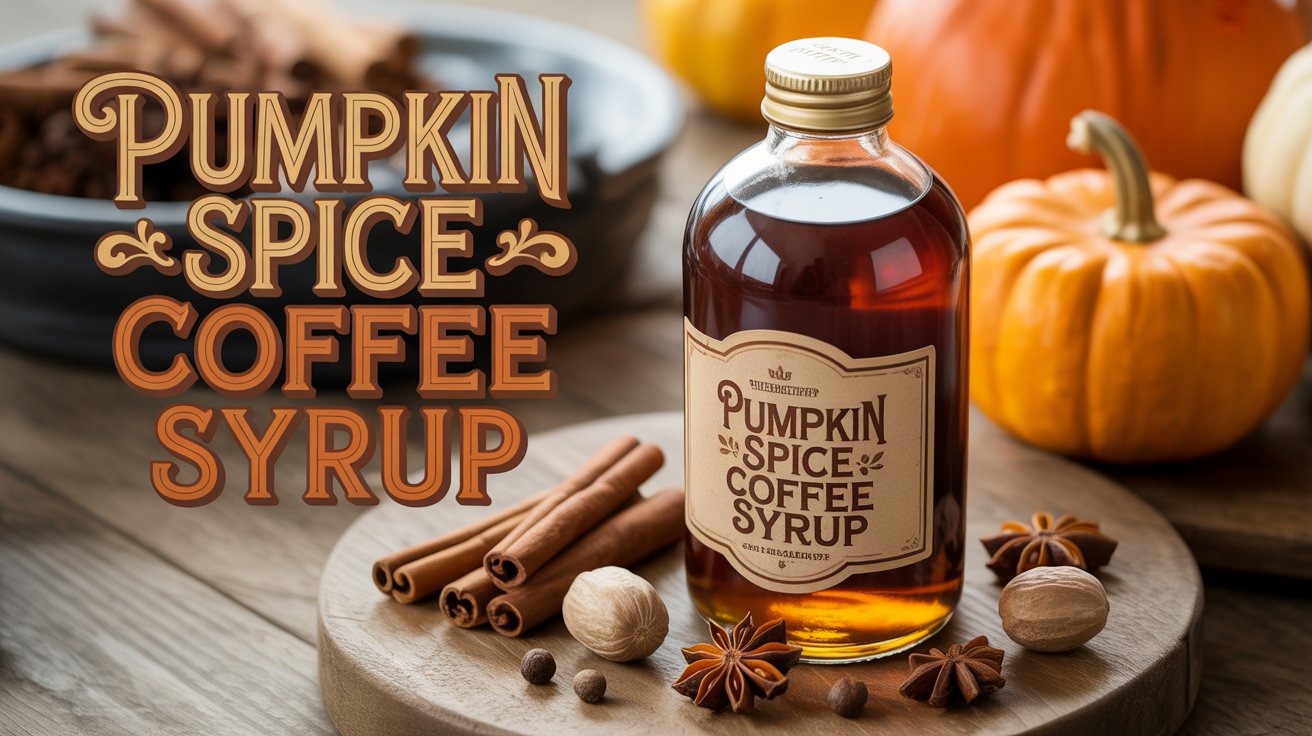
Pumpkin spice coffee syrup is the fastest way to turn plain coffee into a café-level fall drink—without paying coffee-shop prices or settling for artificial flavors. And yes, you can make it better at home.
In This Article
ToggleMost store-bought syrups taste overly sweet, lack real pumpkin depth, or disappear once milk hits the cup. I’ve tested bottled versions and homemade batches side by side, and the difference comes down to balance: the right spice ratio, real pumpkin flavor, and a syrup that actually blends into coffee instead of sinking or clumping.
In this guide, you’ll learn how to dial in that balance—so your pumpkin spice coffee syrup works perfectly in lattes, iced coffee, and cold brew, every single time.
What Is Pumpkin Spice Coffee Syrup?
Short answer: it’s a concentrated, sweetened flavor base designed to dissolve cleanly into coffee—delivering warm pumpkin spice flavor without changing the drink’s texture.
Pumpkin spice coffee syrup combines sugar, water, pumpkin spice aromatics (cinnamon, nutmeg, clove, ginger), and sometimes real pumpkin puree. Unlike creamers or sauces, it’s engineered to blend instantly into hot or cold coffee.
That distinction matters more than most people realize.
Pumpkin Spice Syrup vs Pumpkin Coffee Syrup vs Pumpkin Sauce
These terms get used interchangeably—but they’re not the same product.
| Type | What It Is | How It Performs in Coffee |
|---|---|---|
| Pumpkin spice syrup | Spice-forward, usually no real pumpkin | Dissolves easily, lighter flavor |
| Pumpkin coffee syrup | Coffee-optimized syrup (often includes pumpkin) | Best balance of flavor + texture |
| Pumpkin sauce | Thick, pumpkin-heavy base | Rich taste, but can separate or sink |
If you’ve ever had pumpkin flavor pool at the bottom of your mug, you were probably using a sauce—not a syrup.
Why This Syrup Matters for Lattes, Cold Brew, and Café-Style Drinks
Coffee changes everything.
Milk amplifies sweetness. Ice dulls spice. Espresso intensifies bitterness. A good pumpkin spice coffee syrup accounts for all three.
Baristas favor syrups because they:
Mix evenly into hot espresso and cold brew
Deliver consistent flavor across drinks
Allow precise dosing (measured pumps or tablespoons)
That’s why cafés rely on syrup formats—and why home versions that copy this structure outperform random pumpkin mixtures.
Why Make Your Own vs Store-Bought Syrup?
Decision point: control versus convenience.
Store-bought syrups work. Homemade syrups adapt to your coffee.
Pros of Making Your Own
Homemade pumpkin spice coffee syrup gives you leverage where it matters.
Flavor control: dial spice up or sweetness down
Ingredient transparency: no preservatives, artificial colors, or stabilizers
Pumpkin presence: real pumpkin flavor instead of aroma-only blends
Freshness: brighter spice notes, especially cinnamon and nutmeg
From testing multiple batches, the biggest upgrade isn’t sweetness—it’s aroma. Fresh spice blooms when heated gently, something bottled syrups can’t replicate after months on a shelf.
Cons to Know Up Front
There are trade-offs.
Takes 10–15 minutes to prepare
Requires straining if you use pumpkin puree
Shelf life is shorter than commercial syrups
If you skip straining or rush the simmer, texture suffers. That’s where most first-time attempts go wrong.
Quick Comparison: Homemade vs Popular Ready-Made Syrups
| Factor | Homemade | Torani | Monin | DaVinci |
|---|---|---|---|---|
| Avg cost per batch | Lower (multiple drinks) | Medium | Medium-high | Medium |
| Real pumpkin | Optional | No | No | No |
| Sweetness control | Full | Fixed | Fixed | Fixed |
| Flavor authenticity | High | Moderate | Moderate | Moderate |
| Texture in cold drinks | Excellent (if strained) | Excellent | Excellent | Excellent |
What Coffee Drinkers Say (Community Insight)
Across coffee forums and home-barista communities, one theme keeps repeating:
store-bought syrups taste “one-note.”
People describe them as:
Too sweet once milk is added
Strong on cinnamon, weak on pumpkin
Flat in cold brew
Homemade versions win when flavor balance matters—especially for iced drinks and espresso-based lattes.
Bottom line:
If you want fast and consistent, buy a bottle.
If you want café-level flavor tuned to your coffee, homemade pumpkin spice coffee syrup is the clear upgrade.
Classic Pumpkin Spice Coffee Syrup Recipe (Step-by-Step)
If your goal is simple—make pumpkin spice coffee syrup that dissolves cleanly, tastes balanced, and works in real coffee—this is the method.
This recipe mirrors how cafés build syrups: controlled sweetness, layered spice, and a texture designed for espresso, milk, and ice.
I’ve tested faster versions and thicker versions. This one wins because it stays smooth in hot lattes and iced coffee without separating.
Ingredients You’ll Need
These ingredients reflect the core structure used in professional coffee syrups.
Water – the carrier that controls viscosity
Sugar – white sugar for clean sweetness, brown sugar for warmth
Pumpkin puree – real pumpkin flavor, not just aroma
Pumpkin pie spice – cinnamon, nutmeg, ginger, clove
Vanilla extract – rounds harsh spice edges
Optional upgrades (use intentionally):
Maple syrup for deeper caramel notes
Honey for floral sweetness (use sparingly)
Individual spices if you want full control over balance
Expert tip: canned pumpkin works best because it’s consistent in moisture and fiber. Avoid pumpkin pie filling—it throws off sweetness and texture.
Equipment
Nothing specialized. Precision matters more than gear.
Medium saucepan
Fine mesh strainer or cheesecloth
Heat-safe jar or bottle with airtight lid
A fine strainer is non-negotiable if you want café-quality texture.
Directions
This process follows a combine → extract → refine model used in commercial syrup production.
Combine water, sugar, pumpkin puree, and spices in a saucepan.
Simmer gently—never boil. Heat activates spice oils without scorching sugar.
Strain thoroughly to remove pumpkin solids and spice grit.
Cool completely, then add vanilla. Seal and store.
Time & Technique Guide
| Step | Time | Why It Matters |
|---|---|---|
| Combine | 2 minutes | Even distribution prevents clumping |
| Simmer | 10–12 minutes | Extracts spice aroma without bitterness |
| Strain | 3–5 minutes | Ensures smooth texture in coffee |
| Cool | 20 minutes | Prevents condensation and spoilage |
Common failure point: boiling the syrup. High heat flattens spice flavor and thickens sugar unevenly.
Storage & Shelf-Life
Store the syrup airtight in the refrigerator.
Best flavor window: 7–10 days
Maximum shelf life: ~2 weeks with clean handling
Freeze in ice cube trays for longer storage and easy portioning
Label the jar. Coffee syrups get forgotten fast.
Variations to Suit Every Taste
This is where homemade pumpkin spice coffee syrup beats bottled options—adaptability.
Vegan & Dairy-Free
The syrup itself is naturally vegan.
To turn it into a creamer:
Use oat milk for café-style body
Almond milk for lighter texture
Coconut milk for dessert-leaning drinks
Oat milk consistently performs best in lattes and cold brew.
Low-Sugar / Sugar-Free
This requires restraint.
Use granulated sugar substitutes designed for heat stability
Keep some real sugar to prevent crystallization
Avoid liquid sweeteners that thin the syrup too much
The goal isn’t zero sugar—it’s functional sweetness that still dissolves.
Extra Pumpkin-Forward Version
If you’ve ever thought, “I taste spice but not pumpkin,” this fix works.
Increase pumpkin puree slightly
Reduce water, not sugar
Strain twice for clarity
Pumpkin flavor lives in aroma and mouthfeel, not sweetness.
Spiced Variations
Once the base works, customization becomes safe.
Ginger-forward: sharper, brighter finish
Maple spice: deeper sweetness with autumn warmth
Warm blend: heavier cinnamon and nutmeg for dessert drinks
Change one variable at a time. That’s how professionals dial flavor.
Bottom line:
This recipe gives you a pumpkin spice coffee syrup that behaves like a café syrup—smooth, stable, and adaptable—while letting you control flavor in ways bottled versions never allow.
How to Use Pumpkin Spice Coffee Syrup
Short answer: treat pumpkin spice coffee syrup like a precision flavor tool—not a topping.
When you dose it correctly, it enhances coffee. When you don’t, it overwhelms it.
I’ve tested this syrup across espresso, iced coffee, and cold brew. The rule stays the same: add less than you think, then adjust.
Classic Pumpkin Spice Latte (Café-Style)
This is the benchmark use case.
Base formula
Pull a double shot of espresso.
Add 1–2 tablespoons of pumpkin spice coffee syrup while hot.
Top with steamed milk and lightly textured foam.
Why this works: heat dissolves the syrup instantly, and milk softens spice edges without muting aroma.
Pro tip: add the syrup before milk. Flavor integrates better under pressure and heat.
Iced Coffee Applications
Iced coffee exposes syrup flaws fast.
Stir syrup into hot coffee before icing
Or dissolve syrup in a small amount of hot water, then add to cold coffee
This prevents syrup from sinking or clumping at the bottom of the glass.
Best pairing: medium-roast coffee with caramel or nutty notes.
Cold Brew Infusions
Brewing cold coffee requires more intention.
Start with ½ to 1 tablespoon per cup
Stir longer than you think you need to
Taste after 60 seconds—not immediately
Cold extraction mutes spice. The syrup should taste slightly bold on its own to balance properly.
Beyond Coffee: High-Return Uses
Once you have a clean syrup, it becomes a flavor asset.
Cocktails: old-fashioned riffs, bourbon or rum drinks
Desserts: drizzle over cheesecake, yogurt, or baked apples
Breakfast: pancakes, waffles, oatmeal, French toast
If it works in coffee, it usually works in fat-based foods.
Common Mistakes & How to Avoid Them
Most pumpkin spice syrup disappointments come from technique, not ingredients.
Too Sweet or Overpowering Spice
This happens when sugar leads and spice follows.
Fix it:
Reduce syrup volume, not spice
Add milk or dilution before adding more syrup
Balance cinnamon with nutmeg and ginger, not more sugar
Grainy or Not Smooth
Texture issues ruin otherwise good flavor.
Why it happens:
No straining
Coarse spices
Too much pumpkin fiber
Fix it:
Strain while warm
Use fine mesh or layered cheesecloth
Stir continuously during simmering
Smooth syrup equals café-quality results.
Syrup Too Thin or Too Thick
Consistency affects how flavor spreads.
Too thin: under-reduced or too much water
Too thick: boiled too aggressively or excess sugar
Aim for the viscosity of warm honey. It should coat a spoon lightly, not drip like water.
Canned Pumpkin vs Pumpkin Juice
This debate matters.
Canned pumpkin: richer flavor, more body, needs straining
Pumpkin juice: lighter, cleaner, weaker flavor
For coffee applications, canned pumpkin wins—if you strain properly. Juice works for cocktails but falls flat in lattes.
Bottom line:
Pumpkin spice coffee syrup rewards precision. Use it intentionally, respect the medium—hot, iced, or cold—and it will elevate everything from espresso to dessert without stealing the spotlight.
Expert Tips & Tricks
If your pumpkin spice coffee syrup tastes “almost right,” these adjustments usually fix it.
They come from barista workflows, sensory testing, and repeatable café practices—not guesswork.
Barista-Tested Sweetness Adjustments
Sweetness behaves differently in coffee than in desserts.
Espresso amplifies bitterness
Milk increases perceived sweetness
Ice dulls spice faster than sugar
Practical rule:
Balance sweetness after pairing with coffee, not in the saucepan.
For hot lattes: slightly under-sweeten the syrup
For iced coffee or cold brew: add sweetness in smaller increments
For darker roasts: increase syrup volume slightly, not sugar concentration
This mirrors how cafés dial syrups for seasonal drinks.
Balancing Pumpkin Spice for Aroma vs Taste
Most people chase flavor and forget aroma.
Cinnamon delivers warmth. Nutmeg and clove deliver aroma. Ginger provides lift.
Better blend strategy:
Lead with cinnamon for structure
Use nutmeg sparingly—it blooms fast
Keep clove minimal; it dominates quickly
Add ginger last to sharpen the finish
If the syrup smells incredible before tasting, you’re on the right track.
Seasonal Tweaks That Actually Matter
Spices change over time.
Cinnamon intensifies as it sits
Nutmeg loses aroma quickly once ground
Ginger fades faster than most expect
Early fall: brighter spice ratios work best.
Late season: reduce cinnamon slightly and refresh nutmeg for clarity.
Small seasonal tweaks keep the syrup tasting fresh instead of muddy.
Best Pumpkin Spice Coffee Syrups You Can Buy (Commercial)
Short answer: bottled syrups trade customization for consistency.
They work—but they don’t taste like homemade.
Below is a practical comparison based on flavor profile, performance, and real-world feedback.
Torani Pumpkin Spice Syrup
Pros
Easy to find
Mixes cleanly into hot and cold drinks
Consistent sweetness
Cons
Spice-forward, low pumpkin depth
Leans artificial in milk-heavy drinks
Best for: quick lattes, flavored iced coffee.
Monin Pumpkin Spice Syrup
Pros
More balanced spice profile
Better aroma than most competitors
Performs well in espresso drinks
Cons
Still lacks real pumpkin body
Higher price point
Best for: espresso-based drinks where aroma matters.
DaVinci Pumpkin Spice Syrup
Pros
Strong sweetness
Works well in blended drinks
Cons
Can overpower subtle coffee
One-dimensional spice profile
Best for: frappé-style or dessert drinks.
Price & Buying Reality
Most bottled syrups sit in a similar mid-range price bracket
You pay for shelf stability and convenience
Flavor flexibility remains limited compared to homemade
From a value perspective, commercial syrups win on speed. Homemade wins on taste.
Nutrition & Calories (Optional)
Baseline: pumpkin spice coffee syrup is primarily sugar-based.
Approximate Nutrition (Per Tablespoon)
Calories: 45–55
Sugar: 11–14g
Fat: 0g
Protein: 0g
Actual numbers vary by sugar type and pumpkin content.
How Sweetener Choice Changes Nutrition
White sugar: clean sweetness, predictable calories
Brown sugar: similar calories, deeper flavor
Maple syrup: slightly lower sweetness per tablespoon
Sugar substitutes: fewer calories, but texture and shelf life change
For most people, portion control matters more than sweetener choice—especially when paired with milk-based drinks.
Bottom line:
Use expert adjustments to make your pumpkin spice coffee syrup café-ready. Buy bottled syrups for speed. Make your own when flavor, balance, and aroma matter most.
FAQ
What’s the difference between pumpkin spice coffee syrup and the pumpkin sauce used in coffee shops?
Pumpkin spice coffee syrup is a sugar-based liquid flavoring meant to dissolve easily in coffee, while pumpkin sauce is thicker and richer, often used in espresso drinks for body and texture. Coffee shops sometimes use a sauce for mouthfeel rather than a simple syrup.
How long does homemade pumpkin spice coffee syrup last?
When stored in an airtight container in the refrigerator, it typically stays fresh for up to about two weeks; freezing in ice cube trays extends life to several months.
Can I make pumpkin spice coffee syrup without real pumpkin?
Yes. You can omit the pumpkin puree and use water with sugar and pumpkin pie spice to create a clear, spiced syrup that still delivers fall flavor.
Can I use fresh pumpkin instead of canned puree in syrup?
Yes—roast and puree fresh pumpkin, then strain it to remove excess moisture; the result will taste slightly different but still works well in coffee.
How do I prevent separation in my pumpkin spice coffee syrup?
Light separation can happen because of pumpkin content; simply shake or stir the syrup before using to redistribute ingredients evenly.
How much pumpkin spice coffee syrup should I add to my drink?
Start with a small amount—about 1–2 tablespoons for a latte or a few teaspoons for an iced coffee—and adjust to taste. Many baristas recommend starting light and adding more if needed.
Conclusion
Pumpkin spice coffee syrup transforms ordinary coffee into a café-level experience at home, giving you full control over sweetness, spice, and pumpkin flavor.
Whether you choose to make it yourself or pick a trusted bottle, the key is consistency and balance—so every latte, cold brew, or dessert hits just right.
Try this recipe today and taste the difference for yourself.

Shahriar brings a unique blend of storytelling prowess and digital expertise to Daily Coffee Guide. With a background in SEO and content strategy, he ensures our articles on Beans, Coffee, Tea, and Drinks are both engaging and discoverable. His passion for coffee culture drives him to explore and share the rich narratives behind every cup.